
Uncategorized
Thermage for Skin Tightening: What to Expect
May
Loose skin rarely appears all at once. It tends to show up in quieter ways first – softer jawline definition, a slight heaviness around the lower face, creasing that lingers longer than it used to. For many patients, thermage for skin tightening becomes appealing at exactly this stage, when the goal is not to look different, but to look firmer, fresher, and more refined without surgery.
Thermage has earned its place in aesthetic medicine because it addresses one of the most common concerns in a measured, clinically credible way. It is a non-invasive radiofrequency treatment designed to heat the deeper layers of the skin, where collagen remodeling takes place, while protecting the surface. The result is not an artificial lift or an abrupt change. When properly selected and thoughtfully planned, it supports gradual tightening that can look elegant and very natural.
How thermage for skin tightening works
Thermage uses monopolar radiofrequency energy to deliver controlled heat into the dermis and deeper fibrous layers of tissue. This thermal effect stimulates existing collagen fibers to contract and encourages new collagen production over time. That is why some patients notice an initial sense of firmness soon after treatment, while fuller improvement develops progressively in the following months.
The appeal of this approach lies in its restraint. Thermage does not rely on injectables, incisions, or extended downtime. Instead, it works with the skin’s own regenerative response. For patients who want visible improvement but prefer a discreet treatment journey, that matters.
This also explains why expectations should be realistic. Thermage can improve mild to moderate skin laxity, soften early sagging, and refine contours, especially around the face, jawline, neck, and eye area. It is not a replacement for surgical lifting in cases of pronounced skin excess. The best outcomes usually come when treatment is chosen at the right stage, rather than after laxity has become advanced.
Who is a good candidate for thermage for skin tightening?
The ideal candidate is often someone beginning to notice structural changes rather than dramatic aging. Skin may feel less resilient, the lower face may seem heavier in photographs, or the area under the chin may have lost definition. Some patients are in their 30s and want to stay ahead of collagen decline. Others are in their 40s, 50s, or beyond and want a non-surgical option that fits a polished, professional lifestyle.
Thermage can suit men and women across different skin tones because radiofrequency is not targeting pigment in the same way some light-based treatments do. That makes it a versatile option for a broad range of patients.
Still, suitability is never one-size-fits-all. If skin laxity is significant, if there is very heavy tissue in the lower face, or if volume loss is the real issue rather than looseness, another approach may be more appropriate. Sometimes the most refined result comes from combination planning rather than relying on a single treatment. A careful consultation should look at skin quality, fat distribution, facial proportions, and how much lifting is realistically achievable without surgery.
What treatment day actually feels like
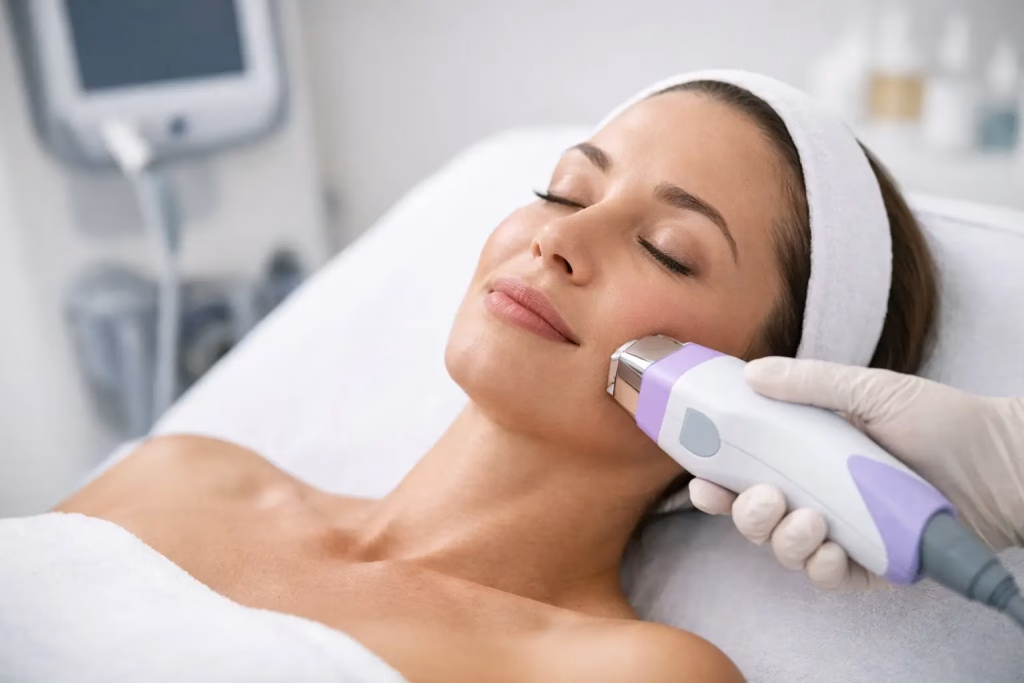
One reason Thermage remains popular among busy patients is that the process is straightforward. The skin is cleansed, a treatment grid may be applied for precision, and the device delivers radiofrequency energy in a series of pulses across the selected area. Most modern protocols are designed with comfort measures built in, including cooling before and after each pulse.
Patients describe the sensation differently. Some feel a brief burst of heat followed by cooling, while others notice deeper warmth and mild discomfort in more sensitive zones such as the jawline or forehead. It is generally tolerable, but this is not usually described as a spa facial. Comfort can often be managed with thoughtful pacing and, when appropriate, supportive measures recommended by the provider.
Treatment length depends on the area being addressed. A full face session will naturally take longer than the eyes or a small body area. Afterward, most patients return to normal activities the same day. There may be temporary redness, mild swelling, or a sensation of tightness, but significant downtime is uncommon.
When will you see results?
This is where patience becomes part of the process. Some patients notice a subtle tightening effect relatively soon, driven by immediate collagen contraction. The more meaningful change, however, tends to develop gradually over two to six months as collagen remodeling continues.
That slower timeline is often a strength rather than a drawback. Results do not usually announce themselves all at once. Instead, the face can look more rested, contours may appear cleaner, and the skin may seem firmer in a way that feels believable. For patients who value discretion, this kind of progression is often exactly the point.
Longevity varies. Many patients enjoy improvement for around a year or longer, depending on age, baseline skin condition, lifestyle, and how quickly collagen breakdown is occurring. Maintenance treatments may be advised as part of a broader skin longevity plan.
Where Thermage works best
The face is the most requested area, especially the cheeks, jawline, lower face, and neck. The eye area is also a frequent focus, as subtle tightening here can help soften hooding and crepiness without changing natural expression.
Body applications can also be valuable in carefully selected cases. Thermage may be used to improve mild laxity on areas such as the abdomen, arms, or thighs, particularly when skin has become looser after weight changes or pregnancy. Expectations remain important here as well. Mild to moderate laxity responds more predictably than significant looseness.
Thermage vs other tightening treatments
Patients often compare Thermage with ultrasound-based lifting or treatments that improve texture through resurfacing. Each serves a different purpose.
Thermage is particularly well known for collagen stimulation and skin tightening through radiofrequency heating. Ultrasound-based treatments may target deeper structural layers with a different mechanism and may be recommended when more lift is the priority. Fractional lasers and microneedling radiofrequency can help with texture, pores, scars, and fine lines while also offering some tightening, though their recovery profile and treatment goals can differ.
The right choice depends on what is bothering you most. If the main concern is laxity and softening contours with minimal downtime, Thermage can be very compelling. If the concern is etched lines, acne scarring, or pigmentation, another treatment may be more relevant, or Thermage may become one piece of a more complete plan.
At a doctor-led clinic such as Kelly Oriental Aesthetic Clinic, this distinction matters. Good treatment planning is not about steering every concern toward one device. It is about matching the technology to the anatomy, the lifestyle, and the result the patient actually wants.
What makes results look refined, not overdone
The most beautiful outcomes in aesthetics are rarely the most aggressive. With Thermage, refinement comes from proper patient selection, experienced technique, and a realistic understanding of what non-invasive tightening can achieve.
Patients who tend to be happiest are those looking for polish rather than transformation. They want better definition, not a different face. They want skin that reflects energy and self-care, not obvious intervention. Thermage fits that preference well because it supports the architecture of the skin instead of masking it.
It also pairs naturally with a more comprehensive approach to skin quality. Sun protection, collagen-supportive skincare, hydration, and maintenance treatments all influence how long results last and how well the skin continues to age. A single treatment can be valuable, but an elegant result is often the product of consistency.
Questions worth asking before you book
Before committing to treatment, it helps to ask how much laxity is present, what level of improvement is realistic, how many sessions are recommended, and whether Thermage is the best match for your goals or simply one option among several. You should also ask who will assess your skin, how comfort is managed, and what your provider considers a successful result for your specific anatomy.
Those answers tell you a great deal about the quality of care. In aesthetics, luxury is not only about environment. It is also about being guided carefully, treated honestly, and having a plan that feels bespoke rather than standardized.
If your skin has started to feel less firm and you want a treatment that respects both your schedule and your natural features, Thermage may be a thoughtful next step. The best results rarely look dramatic in the treatment room. They reveal themselves later, when your reflection simply looks a little more lifted, a little more defined, and unmistakably well cared for.
