
Uncategorized
How to Use Sylfirm X for Aesthetics
May
Patients rarely ask for “RF microneedling”. They ask for calmer skin, smaller-looking pores, softer acne scars, less redness, and a fresher overall texture without an obvious recovery period. That is where How to use Sylfirm X for Aesthetics becomes relevant – not as a one-size-fits-all treatment, but as a highly adaptable option for skin rejuvenation when precision matters.
Sylfirm X is not simply another microneedling device. It combines pulsed wave and continuous wave radiofrequency with microneedling, which allows practitioners to address different concerns at different skin depths. In practice, that means treatment can be tailored for redness and vascular-related concerns, post-acne textural changes, mild skin laxity, enlarged pores, and certain pigmentation patterns. The sophistication of the technology is only part of the story. Results depend just as much on patient selection, treatment planning, technique, and aftercare.
What Sylfirm X is designed to treat
Sylfirm X is often chosen when the skin concern is more complex than simple surface dullness. It can be useful for patients dealing with diffuse redness, acne scars, uneven tone, rough texture, enlarged pores, and early signs of aging such as crepiness or fine lines. Many aesthetic doctors also consider it for melasma-prone skin because its pulsed wave mode is designed to target abnormal vessels and tissue changes linked to recurring pigmentation, although outcomes still vary from patient to patient.
That nuance matters. Not every concern responds equally, and not every patient should be treated with the same settings or frequency. Someone with active inflammatory acne, for example, may need inflammation controlled before moving into a collagen remodeling protocol. Someone with melasma may benefit from Sylfirm X as part of a broader management strategy rather than as a standalone fix. In aesthetics, the best use of the device is rarely aggressive treatment for its own sake. It is thoughtful treatment matched to the skin in front of you.
How to use Sylfirm X for Aesthetics safely and effectively
The first step is a proper consultation. This is where skin history, current concerns, downtime tolerance, and treatment goals are clarified. A doctor-led assessment is particularly valuable for patients with rosacea-like redness, recurrent pigmentation, sensitive skin, or mixed concerns, because these cases often require a more conservative and layered approach.
Skin preparation should be practical, not excessive. Patients are commonly advised to pause potentially irritating actives such as retinoids, exfoliating acids, or harsh scrubs in the days leading up to treatment. If the skin barrier is compromised, it is usually wiser to restore calm first rather than proceed immediately. Well-hydrated, stable skin tends to tolerate RF microneedling better and recover more predictably.
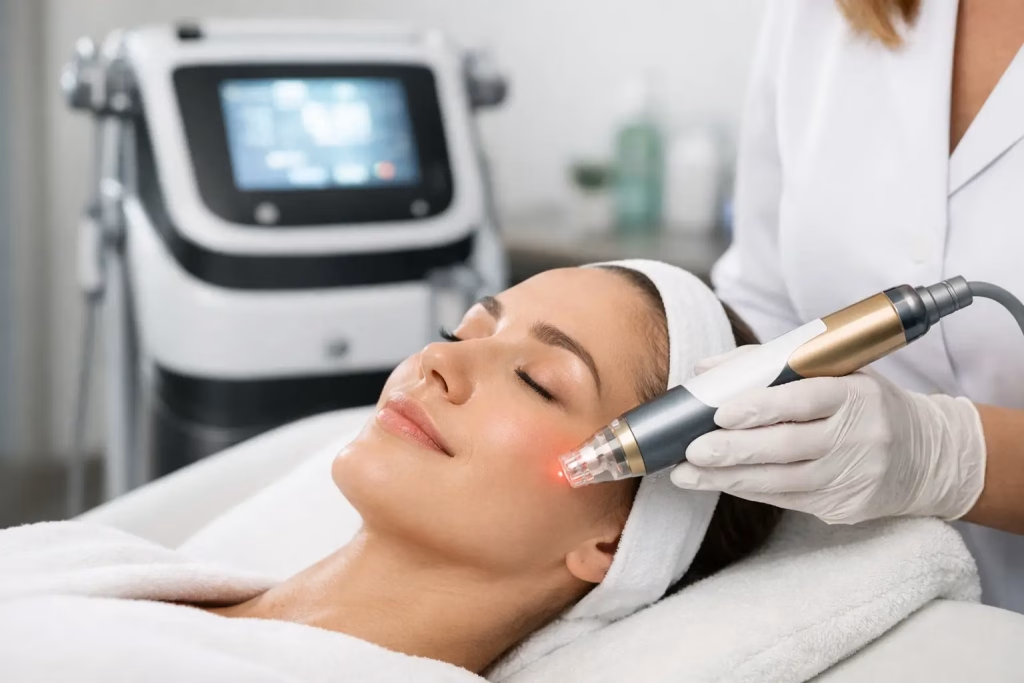
On treatment day, the skin is cleansed thoroughly and numbing cream is usually applied for comfort. Once the skin is ready, the practitioner selects the appropriate mode, needle depth, energy level, and pass pattern based on the concern being treated. This is where expertise makes a visible difference. Deeper, more collagen-focused settings may be considered for acne scars or laxity, while redness-prone or pigment-prone skin may call for gentler calibration and deliberate coverage.
The device delivers insulated microneedles into the skin, followed by radiofrequency energy at selected depths. Because Sylfirm X offers both pulsed wave and continuous wave options, it gives the practitioner flexibility. Pulsed wave is often discussed in relation to vascular and pigmentation-related indications, while continuous wave is more commonly used for texture, pores, and tightening support. The treatment itself is methodical. Coverage needs to be even, but not indiscriminate. Certain zones, such as the cheeks, jawline, under-eye region, or forehead, may each need different settings depending on skin thickness and the desired outcome.
Immediately after treatment, mild redness and a warm sensation are common. Some patients also notice a grid-like pattern, light swelling, or a sandpapery feel for a few days. These responses are generally expected and short-lived when treatment is performed appropriately. Most people return to regular social activity quite quickly, though skin may still look slightly flushed for a short period.
Where Sylfirm X fits best in an aesthetic treatment plan
One of the most effective ways to think about Sylfirm X is not as an isolated session, but as part of a curated skin strategy. For texture refinement and pore appearance, it may be scheduled as a series spaced several weeks apart. For acne scars, improvement is usually gradual and cumulative, often requiring multiple sessions and realistic expectations. For redness or melasma-prone skin, the goal may be control and visible refinement rather than complete eradication.
This is also why combination planning matters. Some patients do well with Sylfirm X alongside hydrating facials, skin boosters, doctor-guided pigment management, or collagen-focused devices in a broader anti-aging program. Others should avoid stacking too many energy-based procedures too quickly, especially if their skin is reactive. More treatment does not always mean better treatment.
At a premium clinic setting such as Kelly Oriental Aesthetic Clinic, this personalized sequencing is part of the value. The device is important, but the more important question is when to use it, where to use it, and what not to combine it with at the wrong time.
The treatment areas that respond well
Sylfirm X is most commonly used on the face, but it is not limited to facial rejuvenation. The neck can benefit when crepey texture and mild laxity are present. Certain patients also seek treatment on the jawline, under-eye area, or even selected body zones where texture and skin quality are concerns.
That said, thin skin and high-movement areas require careful handling. Under-eye treatment, for instance, can be rewarding in the right hands, but it is not a casual add-on. Conservative settings and experienced technique matter because the aim is refinement, not unnecessary trauma.
What results to expect, and when
Some patients notice early changes in skin freshness and smoothness within days to weeks, largely because of temporary swelling and initial tissue response. More meaningful collagen-related improvement usually takes longer. Texture, pores, and scar softening tend to evolve progressively over several weeks and become clearer after a treatment series.
Results also depend on the starting condition. Mild pores and early laxity often respond faster than deep acne scars. Redness may reduce unevenly before it stabilizes. Pigment-prone skin can improve and still require maintenance. Aesthetic medicine works best when expectations are refined as carefully as the skin itself.
Common mistakes when using Sylfirm X for aesthetics
One of the biggest mistakes is treating the device like a universal answer. It is a strong option, but not every concern is best managed with RF microneedling. Deep tethered scars may need subcision or other scar-focused methods. Significant laxity may call for ultrasound or monopolar radiofrequency. Active melasma may flare if the skin is overheated or overtreated.
Another mistake is choosing settings based on intensity rather than indication. Patients sometimes assume that more aggressive treatment guarantees better results. In reality, poorly judged energy levels can increase downtime, irritation, and post-inflammatory pigmentation risk, especially in Asian skin types. Precision is more elegant than aggression.
Poor aftercare is another common issue. Immediately after treatment, the skin barrier is temporarily vulnerable. Heavy exfoliation, frequent touching, excessive heat exposure, intense workouts, and direct sun can all interfere with recovery. The skin needs calm support, not a crowded routine.
Aftercare that supports refined results
Post-treatment care should be simple and barrier-focused. Gentle cleansing, a soothing moisturizer, and diligent sun protection are the essentials. Makeup is usually postponed for a short period depending on the practitioner’s advice and the skin’s response. Patients should also avoid strong active ingredients until the skin has settled.
Hydration helps, but so does restraint. It is tempting to resume every serum and brightening product immediately, especially when treating pigmentation or pores. A better approach is to reintroduce active skincare gradually and only when the skin is no longer sensitized. This reduces the risk of irritation and supports a cleaner recovery.
Who is a good candidate
The strongest candidates are patients looking for visible improvement in texture, pore appearance, redness, mild laxity, and acne scar refinement without surgical downtime. It suits those who appreciate progressive results and understand that skin remodeling usually happens over a series rather than a single dramatic session.
Patients who are pregnant, actively infected in the treatment area, prone to poor wound healing, or managing certain medical conditions may not be suitable at that moment. Those with very inflamed skin, recent sunburn, or poorly controlled pigmentation issues may need stabilization first. Good aesthetic outcomes begin with knowing when to pause.
Why technique matters more than trends
Sylfirm X has earned attention because it is versatile, but versatility can be misunderstood. The best outcomes come from measured customization, not hype. When used well, it can refine skin quality in a way that looks polished rather than obvious – calmer tone, smoother texture, softer lines, and healthier-looking skin that still looks like you.
For patients considering how to use Sylfirm X for aesthetics, the smartest next step is not chasing the highest settings or the fastest promise. It is choosing a treatment plan built around your skin history, your tolerance, and the kind of result you want to wear well over time.
