

Uncategorized
Does Thermage Hurt? What to Expect
May
If you are considering skin tightening, one of the first questions that usually comes up is simple and honest – does Thermage hurt? The short answer is that Thermage can feel uncomfortable, but for most patients it is tolerable, brief, and very manageable when performed with the right technique, settings, and treatment approach.
That distinction matters. Thermage is not designed to be a spa facial. It is a radiofrequency treatment that delivers controlled heat deep into the skin to support collagen remodeling and tightening. Because it works below the surface, you will feel more than just a mild warming sensation. At the same time, the experience is often more nuanced than patients expect.
Does Thermage hurt during treatment?
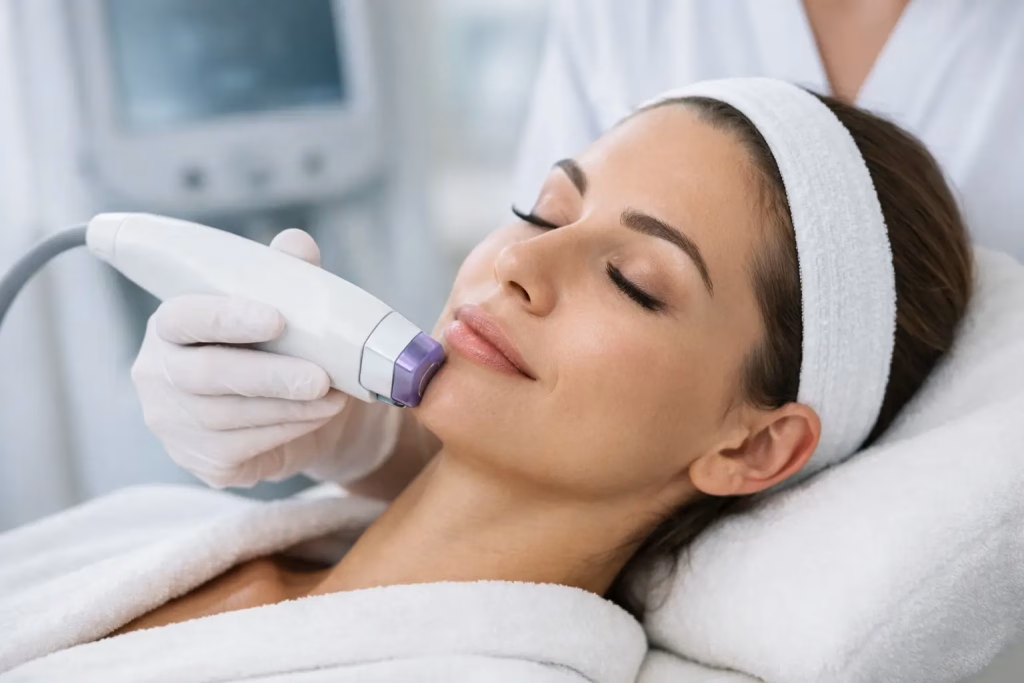
Most patients describe Thermage as a series of quick pulses that alternate between heat and cooling. The heat can feel intense for a moment, especially over areas where the skin is thinner or closer to bone, such as the forehead, jawline, or around the eyes. Then the cooling follows, which helps make the treatment more comfortable.
Pain tolerance varies, so there is no single answer that fits everyone. One person may call it mildly uncomfortable, while another may say certain sections feel sharp or hot. What is consistent is that the sensation comes in short bursts rather than one long, continuous wave of pain. That pattern makes a difference psychologically and physically. Patients usually manage the treatment pulse by pulse.
The face is also not uniform. Cheeks often feel easier than the temples or jawline. Around the eyes, the treatment can feel more intense simply because the tissue is delicate. On the body, areas with denser tissue may be tolerated differently from leaner zones.
Why Thermage can feel uncomfortable
Thermage works by delivering monopolar radiofrequency energy into deeper skin layers while protecting the surface with cooling. That deeper heating is what stimulates the collagen response the treatment is known for. In practical terms, the same mechanism that supports tightening is also the reason you feel those bursts of heat.
This is why comfort should never be treated as an afterthought. Proper technique, thoughtful energy delivery, and patient communication all shape the experience. A rushed treatment or a one-size-fits-all approach can make the session feel harder than it needs to be.
In a premium clinical setting, comfort is usually managed through pacing, real-time feedback, and careful calibration rather than simply pushing through discomfort. That doctor-led judgment is especially valuable for patients treating sensitive areas or addressing early laxity around the eyes and lower face.
What does Thermage actually feel like?
The most accurate answer is that Thermage feels hot, brief, and repetitive. You may feel a deep flash of heat followed by a cooling sensation on the surface. Some patients also notice a mild pressure from the handpiece or a prickly sensation in certain areas.
It does not typically feel the same from start to finish. Early pulses may feel surprising simply because they are new. After the first few minutes, many patients settle into the rhythm of the treatment. Others feel more sensitivity as the session progresses, particularly in areas that are naturally more tender.
Anxiety can amplify discomfort too. If you go into treatment expecting severe pain, your body may tense up and make each pulse feel stronger. When the treatment is explained clearly and performed with a calm, attentive approach, patients often report that it was easier than they had imagined.
Does Thermage hurt more than other tightening treatments?
This depends on the treatment being compared and on your individual sensitivity. Thermage is often considered more intense than low-energy maintenance treatments because it reaches deeper and is intended to create meaningful collagen stimulation. Compared with some other non-surgical lifting treatments, opinions are mixed. Some patients find Thermage easier because of the built-in cooling. Others find the heat more pronounced.
The better question is not whether it hurts more in a universal sense, but whether the treatment is suitable for your goals, anatomy, and tolerance. A treatment can be effective and still require thoughtful comfort management. There is always a balance between results, downtime, and how the session feels in the moment.
What affects how much Thermage hurts?
Several factors influence your experience. The area being treated is one of the biggest. Bony areas and thinner skin often feel more intense than fuller areas. Your own pain threshold matters too, along with stress levels, sleep quality, and even where you are in your menstrual cycle.
Treatment settings and technique are equally important. Experienced providers know that effective treatment is not about being aggressive for the sake of it. It is about delivering energy in a controlled, strategic way that aligns with your skin condition and treatment goals.
Hydration, skin sensitivity, and recent cosmetic procedures can also affect comfort. If your skin is already irritated or inflamed, you may be more reactive during treatment. This is one reason a proper consultation matters before booking any energy-based procedure.
How comfort is usually managed
A well-run Thermage appointment starts before the first pulse. Your provider should assess the treatment area, explain what the sensation is likely to feel like, and set realistic expectations. That alone can reduce anxiety and help you stay relaxed.
During treatment, the session can be paced according to your tolerance. Short pauses, provider feedback, and careful attention to sensitive zones all help. Some clinics may also use comfort measures when appropriate, depending on the treatment area and individual needs.
What patients often appreciate most is not the promise of a completely painless session, but the feeling that they are being looked after carefully. In a clinic such as Kelly Oriental Aesthetic Clinic, where medical precision is paired with a refined patient experience, comfort is part of the treatment design rather than an afterthought.
What about after the treatment?
For most patients, Thermage does not leave lingering pain after the session. The skin may feel warm, slightly tender, or subtly tight for a short period, but significant post-treatment pain is not typical. Some patients notice mild redness or a flushed appearance, which usually settles.
A temporary sensation similar to mild sensitivity or warmth can occur, especially if a larger area has been treated. This is generally short-lived. If you have had more intensive body treatment or are naturally more sensitive, you may feel aware of the area for a little longer, but that is different from ongoing pain.
The appeal of Thermage is partly that it offers skin tightening without the recovery profile of surgery. You may have an intense treatment window, but most people return to normal activities quickly.
When discomfort may be a sign to speak up
You should always communicate during treatment if the sensation feels too intense. Thermage should be challenging but still manageable. If pain feels excessive, your provider should reassess rather than simply continue at the same pace.
After treatment, severe or persistent pain is not something to ignore. While uncommon, any response that feels well beyond mild tenderness deserves review. Good aesthetic care is never just about delivering technology. It is about monitoring your response and adjusting when needed.
Is Thermage worth it if you are worried about pain?
For many patients, yes – especially if the goal is firmer, tighter-looking skin with little downtime. The treatment experience is brief, while the collagen-building process continues over time. That trade-off is often acceptable for patients who want non-surgical rejuvenation without stepping into a more invasive category.
Still, Thermage is not for everyone. If you are extremely pain-sensitive, highly anxious about heat-based treatments, or expecting a completely soothing experience, it is worth discussing alternatives. The right treatment is not only the one that can deliver results. It is the one you can comfortably and confidently go through.
A thoughtful consultation helps put this in perspective. Instead of asking only does Thermage hurt, it is better to ask how it will feel on your specific treatment area, how comfort will be managed, and whether Thermage is the best match for your goals in the first place.
That is usually where confidence begins – not in assuming a treatment will be painless, but in knowing exactly what to expect and who is guiding you through it.
