

Uncategorized
How LDM Facial Calms Redness
Jun
Redness has a way of making skin feel unpredictable. One day it is a mild flush across the cheeks, and the next it lingers, feels warm, and refuses to settle under makeup or skincare. For many patients, understanding how LDM facial calms redness starts with one simple truth – irritated skin does not always need a more aggressive approach. Sometimes it needs precision, restraint, and support.
LDM facial is often chosen for skin that looks reactive, feels sensitized, or has been pushed out of balance by stress, over-exfoliation, environmental triggers, or underlying inflammation. It is a treatment that fits particularly well into a modern aesthetic plan because it works with the skin’s repair process rather than overwhelming it.
What makes redness so difficult to treat
Redness is not a single condition. It can come from sensitivity, a weakened skin barrier, acne-related inflammation, rosacea-prone skin, post-procedure irritation, or even heat and friction from daily habits. That is why one person responds well to a hydrating facial, while another needs a more medically guided plan.
This is also where many people get frustrated. They assume any treatment that feels active must be effective, but redness often behaves differently from pigment or congestion. Skin that is already inflamed can become more reactive when exposed to harsh exfoliation, excessive heat, or strong ingredients. In these cases, calming the skin becomes the first priority before moving on to texture, tone, or anti-aging goals.
How LDM facial calms redness at the skin level
LDM stands for Local Dynamic Micro-massage. It uses advanced dual-frequency ultrasound to create a controlled, targeted treatment effect within the skin. While that may sound highly technical, the patient experience is generally gentle and comfortable, which is part of its appeal for redness-prone complexions.
A gentler way to address inflammation
One reason LDM facial is valued for sensitive skin is that it is designed to support tissue recovery without the intensity associated with more abrasive procedures. The treatment works by delivering ultrasound energy in a dynamic pattern that encourages micro-circulation, supports fluid movement, and helps regulate inflammatory activity in the skin.
When redness is tied to inflammation, this matters. Skin that remains in an irritated state often struggles to repair itself efficiently. LDM can help create conditions that are more favorable for recovery, so the complexion appears less flushed and feels less reactive over time.
Support for the skin barrier
Redness and barrier impairment often go together. When the outer layer of the skin is compromised, moisture escapes more easily and irritants penetrate more readily. That can lead to stinging, dryness, roughness, and visible pinkness that lingers.
LDM facial can be useful here because it supports a healthier skin environment without stripping or traumatizing the surface. In a treatment plan for reactive skin, that makes it an attractive option. Rather than forcing visible change through aggression, it helps the skin function better, which is often what reduces redness in a more lasting way.
Why it feels different from harsher treatments
Patients who are used to treatments that peel, sting, or leave the skin visibly heated are often surprised by how comfortable LDM feels. That gentleness is not a weakness. For the right candidate, it is exactly the point.
A lot of redness-prone skin does not need more stimulation. It needs a controlled modality that can soothe while still delivering meaningful clinical benefit. LDM sits well in that category, especially when the goal is to calm visible inflammation and strengthen skin resilience.
Who tends to benefit most
Not every red complexion is the same, but LDM facial is commonly considered for patients with sensitive or reactive skin, mild to moderate rosacea tendencies, post-acne redness, dehydrated skin with inflammation, and skin recovering from more intensive procedures.
It can also be appealing for people who want treatment results without significant downtime. Busy professionals often want their skin to look calmer and more refined without taking several days off for recovery. In that setting, LDM offers a practical and elegant solution.
That said, the phrase how LDM facial calms redness should not be read as a promise that every type of redness can be solved with one facial. Persistent vascular redness, broken capillaries, or advanced rosacea may require a broader strategy that includes physician assessment, medical-grade skincare, and in some cases laser-based treatment. The best results usually come from matching the cause of redness to the right intervention.
What to expect during treatment
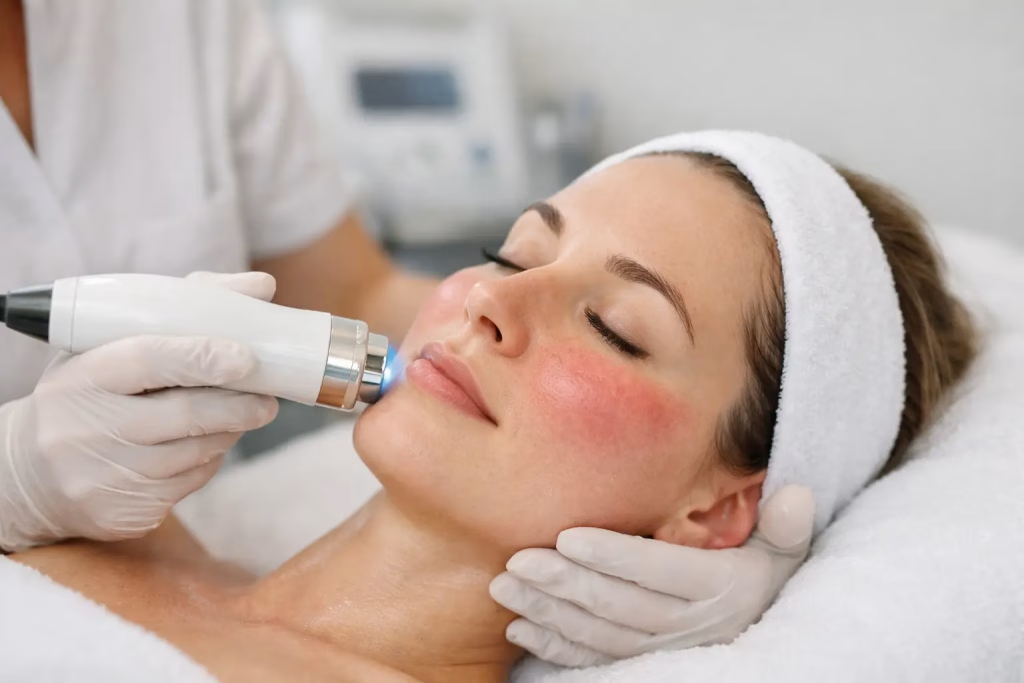
An LDM facial is generally a comfortable, low-stress experience. After the skin is assessed and prepared, the handpiece is moved across the treatment areas while ultrasound energy is delivered. Patients often describe the sensation as warm, soothing, and relaxing rather than intense.
This matters more than it may seem. When skin is already in a sensitized state, the overall treatment experience should feel calming, not provocative. At a premium clinic setting, that therapeutic comfort becomes part of the value – not just for relaxation, but because overstimulated skin often responds better to a measured approach.
After treatment, many patients notice that the skin looks less aggravated and feels more settled. Some see an immediate improvement in visible redness, while others experience a gradual change over a series of sessions. The timeline depends on how long the inflammation has been present, the strength of the skin barrier, and whether any triggers are still active in daily life.
How many sessions are usually needed
For occasional or mild redness, a few sessions may be enough to noticeably calm the complexion. For more persistent sensitivity or rosacea-prone skin, a course of treatments is often more realistic. Skin that has been inflamed for months does not always normalize after one appointment.
This is where personalized planning becomes essential. In a clinic-led setting such as Kelly Oriental Aesthetic Clinic, treatment is most effective when it is adjusted to the patient’s baseline sensitivity, lifestyle, and long-term skin goals. Some patients benefit from regular maintenance sessions, while others use LDM as part of a recovery plan between more corrective treatments.
How LDM facial calms redness compared with other options
LDM is not the only way to address redness, but it fills an important role. Compared with chemical peels or strong resurfacing treatments, it is generally better suited to fragile, inflamed, or easily triggered skin. Compared with vascular lasers, it is often less specific for visible blood vessels but more comfortable for patients whose primary issue is sensitivity and inflammation.
That distinction matters. If redness comes mainly from broken capillaries, flushing, or deeper vascular activity, another modality may be more effective. If the skin is red because it is stressed, compromised, or stuck in a cycle of irritation, LDM can be an excellent starting point.
In practice, combination plans often work best. A patient may begin with calming treatments like LDM to restore skin stability, then later move into targeted treatments for pigmentation, texture, or vascular concerns once the skin is stronger and less reactive.
What helps results last longer
Treatment can do a great deal, but daily habits still shape the outcome. Redness-prone skin usually benefits from a disciplined routine built around barrier support and trigger reduction. That means gentle cleansing, consistent hydration, daily sunscreen, and restraint with exfoliating acids or retinoids if the skin is currently irritated.
Heat exposure, spicy foods, alcohol, stress, and overuse of active skincare can also keep redness cycling. Not every trigger applies to every person, which is why observation matters. The patients who do best are often the ones who treat their skin less like a laboratory experiment and more like a system that needs consistency.
When to seek a professional assessment
If redness is persistent, worsening, or paired with stinging, flushing, bumps, or sensitivity that seems disproportionate, it is worth having the skin properly evaluated. The goal is not just to choose a soothing treatment, but to understand what is driving the problem.
That is the quiet advantage of doctor-led aesthetic care. It creates room for nuance. A patient may come in asking for help with redness, only to learn that the underlying issue is a damaged barrier, inflammatory acne, early rosacea, or irritation from the wrong skincare routine. Once the cause is clearer, treatment becomes more refined and results are usually more satisfying.
Skin does not always need to be challenged to improve. Sometimes the most sophisticated choice is the one that calms, supports, and gives the complexion space to recover with confidence.
