
Uncategorized
LDM Versus Hydrafacial for Clearer, Calmer Skin
A polished complexion does not always need a more aggressive treatment. For many patients, the choice between LDM versus hydrafacial comes down to what the skin is asking for right now: gentle decongestion and glow, or a more restorative approach to inflammation, sensitivity, and barrier support. Both treatments can play an elegant role in a well-considered skin plan, yet they work in distinctly different ways.
Hydrafacial is often chosen when the skin looks dull, congested, dehydrated, or uneven before an important occasion. LDM, or Local Dynamic Micromassage, is frequently favored when the complexion feels reactive, persistently red, acne-prone, or slow to recover. The most appropriate option depends on your skin condition, your current routine, and the visible result you wish to prioritize.
What Is a Hydrafacial?
A Hydrafacial is a multi-step, noninvasive skin treatment designed to cleanse, exfoliate, extract surface congestion, and replenish moisture. Using a controlled vortex-based delivery system, it combines gentle resurfacing with hydration and the application of targeted serums.
The treatment begins by lifting away dead skin cells and surface impurities that can leave the complexion looking tired or textured. It then focuses on clearing pores before infusing the skin with hydrating and antioxidant-rich solutions. Rather than relying on manual extraction alone, the device performs these steps with consistent suction and fluid delivery, which many patients find more comfortable than traditional facial extractions.
The immediate appeal is easy to understand. Skin often looks fresher, smoother, and more luminous shortly after treatment, with little to no downtime. For professionals with a busy calendar, it can be a refined maintenance treatment before a social event, holiday, or presentation.
Who May Benefit Most From a Hydrafacial?
Hydrafacial is particularly well suited to skin that is dehydrated yet oily, visibly congested, or lacking radiance. It can also be valuable for those who notice makeup sitting unevenly over dry patches or enlarged pores. Because treatment can be tailored with different serum options and intensity levels, it may be adapted for a range of skin concerns.
That said, more exfoliation is not always the answer. If the skin is actively inflamed, severely sensitized, peeling from prescription products, or experiencing a rosacea flare, the exfoliation and suction components may need to be adjusted or postponed. A clinical assessment helps determine whether a Hydrafacial will refresh the complexion or place unnecessary stress on a compromised barrier.
What Is LDM Treatment?
LDM stands for Local Dynamic Micromassage, an ultrasound-based treatment that uses rapidly alternating frequencies to support skin recovery and encourage a calmer, more balanced-looking complexion. Unlike a Hydrafacial, it is not primarily an exfoliating or pore-clearing procedure. Its focus is skin wellness beneath the surface, especially when inflammation, sensitivity, or impaired recovery is part of the picture.
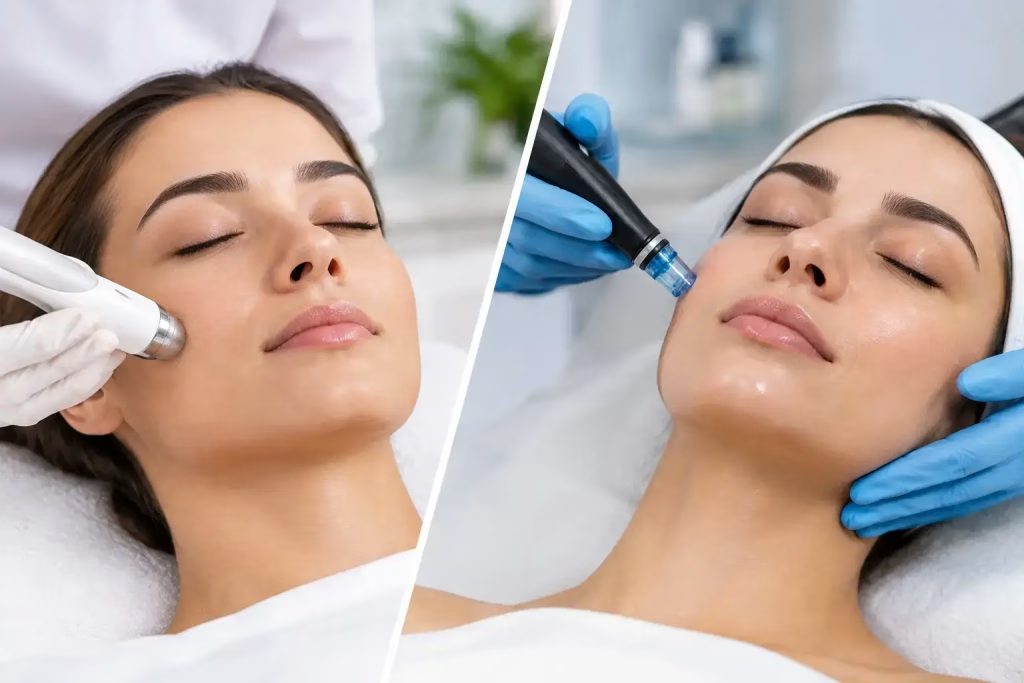
During treatment, a therapist glides an ultrasound handpiece over the skin with a conductive gel. The sensation is typically gentle and comfortable, making LDM an appealing option for those who prefer a restorative experience without abrasion, extractions, needles, or visible downtime.
LDM is often incorporated into plans for acne-prone skin, redness, irritated complexions, and skin that needs added support after selected aesthetic procedures. It can also complement anti-aging programs by helping the skin appear more settled, hydrated, and resilient. Results tend to be subtle after a single session, while a series may be recommended when treating ongoing concerns.
Who May Benefit Most From LDM?
LDM can be especially appropriate for patients whose skin feels easily triggered. This may include those with persistent redness, inflammatory acne, post-breakout sensitivity, or a weakened skin barrier from overuse of active products. It is also valued as a soothing adjunct when the skin needs a measured recovery period after certain doctor-led treatments.
Its strength is not instant pore extraction or dramatic surface polish. Patients seeking to clear blackheads before an event may see a more immediate match with Hydrafacial. LDM is more often selected when the long-term priority is supporting a calmer skin environment and reducing the cycle of irritation that can make other concerns more difficult to manage.
LDM Versus Hydrafacial: The Key Difference
The simplest distinction is this: Hydrafacial works primarily from the surface inward, while LDM is designed to support skin function through ultrasound-based treatment. Hydrafacial concentrates on exfoliation, cleansing, extraction, and hydration. LDM concentrates on soothing support, circulation, and recovery-focused care.
For congested skin with visible buildup, blackheads, and a lack of luminosity, Hydrafacial may provide the more satisfying immediate result. The skin can look cleaner and better hydrated on the same day. For reactive skin with redness, inflammation, or frequent sensitivity, LDM may be the more considered first step because it does not rely on exfoliation or suction.
Neither treatment should be viewed as universally superior. A patient with oily, acne-prone skin may benefit from both at different points in their treatment journey. For example, Hydrafacial may be used when congestion is the main concern, while LDM sessions can support the skin when inflammation or irritation becomes more prominent.
Comparing Results, Comfort, and Downtime
Both treatments are generally comfortable and require little disruption to daily life, but the experience and visible outcome differ.
A Hydrafacial usually delivers a noticeable post-treatment glow. The skin may appear more hydrated, smoother, and less congested, although mild temporary redness can occur, particularly after extractions. It is often suitable shortly before an event, provided your skin has tolerated the treatment well in the past. First-time patients should avoid scheduling any new procedure immediately before a major occasion.
LDM is usually more understated in its immediate cosmetic effect. Many patients describe their skin as feeling calmer, softer, and more comfortable after treatment. Its value is often more apparent over time, particularly as part of a plan for acne, redness, or post-procedure skin support. There is typically no peeling, and most patients can return to normal activities immediately.
For either treatment, professional aftercare matters. Keep the routine gentle, use broad-spectrum sunscreen consistently, and avoid introducing strong acids, retinoids, or scrubs if the skin feels sensitive. Your provider may recommend specific adjustments based on the treatment performed and the current state of your barrier.
Can LDM and Hydrafacial Be Combined?
They can, but not automatically and not always in the same appointment. Combining treatments should have a purpose. A complexion that is congested but also sensitive may benefit from carefully timed Hydrafacial sessions alongside LDM, rather than frequent exfoliation alone. The exact sequence should be based on skin tolerance, active concerns, and any medical aesthetic treatments planned around them.
At Kelly Oriental Aesthetic Clinic, personalized planning begins with looking beyond the label of a treatment. A doctor-led consultation can identify whether dehydration, inflammation, oil imbalance, acne activity, pigmentation, or barrier disruption is the real driver behind what you see in the mirror. This prevents the common mistake of treating surface texture while overlooking the reason it keeps returning.
When to Choose One Over the Other
Choose Hydrafacial when your main goals are a cleaner-looking complexion, smoother texture, improved hydration, and visible radiance. It is a sophisticated option for regular skin maintenance when congestion and dullness are recurring concerns.
Choose LDM when your skin is reactive, red, acne-inflamed, or in need of gentle recovery support. It is particularly compelling for patients who find that their skin worsens when they over-exfoliate or pursue overly intensive treatments.
If you are unsure, avoid choosing solely based on what looks most dramatic on social media. The treatment that produces the most beautiful result is the one that respects your skin’s condition on the day of your appointment. A calm, well-supported complexion has a way of looking luminous long after the immediate glow has passed.
