
Uncategorized
A Guide to Preventive Aesthetic Treatments
Jul
A well-timed treatment should never make you look like someone else. The purpose of a guide to preventive aesthetic treatments is to help you make considered choices before pigmentation, dehydration, textural change, and loss of firmness become more difficult to address. It is less about chasing a younger face and more about preserving the rested, refined quality that already feels like you.
For many professionals, prevention becomes relevant not because they see one dramatic concern in the mirror, but because their skin no longer reflects how energized or well they feel. Makeup may settle differently, pores may appear more visible, or the jawline may look softer in photographs. A thoughtful aesthetic plan can support skin health and facial balance gradually, with discretion and medical guidance at every stage.
What Preventive Aesthetic Care Really Means
Preventive aesthetics is the practice of supporting skin quality and facial structure before visible concerns become deeply established. It may include professional skin treatments, energy-based procedures, injectables, and a tailored home-care routine. The right combination depends on your age, skin condition, lifestyle, genetics, and goals.
Prevention is not a fixed treatment menu for every person in their twenties, thirties, or forties. Someone with frequent sun exposure and early pigmentation may benefit from a different approach than someone whose main concern is acne scarring, facial volume changes, or sensitivity. A doctor-led consultation brings this context into the decision, rather than treating a single photograph or trend.
The best preventive work is often subtle. It supports collagen, improves hydration, maintains a clear and even complexion, and softens the appearance of early lines without erasing expression. Results should look harmonious in natural light, across video calls, and at close range.
A Guide to Preventive Aesthetic Treatments by Concern
Skin clarity, hydration, and texture
A clear, hydrated complexion is a strong foundation for every other treatment. Regular facials and skin-conditioning treatments can help lift surface buildup, replenish moisture, and create a more luminous finish. Hydrafacial treatments, for example, may be appropriate when congestion, dehydration, or dullness are the immediate priorities.
For skin that is reactive, dry, or recovering from stress, LDM treatments can be considered as part of a gentler care plan. These treatments may support hydration and skin comfort while complementing other clinical procedures. The frequency should reflect your skin’s needs, not a rigid schedule. Over-treating sensitized skin can be counterproductive.
Skin boosters may also be an option for patients seeking a more lasting improvement in hydration and fine texture. Rather than adding dramatic volume, they are designed to improve the skin’s overall quality, making them especially relevant when the goal is a fresh, well-rested appearance.
Pigmentation, pores, and early signs of photoaging
Sun exposure is one of the clearest reasons to think preventively. Brown spots, uneven tone, rough texture, and fine lines can develop gradually, especially in bright climates and among those who spend time outdoors, drive frequently, or sit near windows.
Pico Laser treatments can be part of a personalized plan for pigmentation and uneven skin tone. For enlarged pores, acne-prone skin, and early textural changes, treatments such as Sylfirm X may be considered where clinically suitable. These technologies work differently, and a proper assessment matters. Some pigmentation concerns require a conservative approach, particularly for deeper skin tones or skin prone to post-inflammatory discoloration.
No laser or device replaces daily sun protection. The most sophisticated clinic treatment will be compromised if UV exposure is not managed consistently. Broad-spectrum sunscreen, thoughtful reapplication, and protective habits are essential to maintaining results.
Collagen support and skin firmness
Collagen declines naturally over time, but the visible pace of change varies. You may notice it first as fine lines around the eyes, mild laxity at the lower face, creasing around the mouth, or skin that seems less resilient after a late night or busy period.
Non-surgical energy-based treatments can be considered before laxity becomes more pronounced. Thermage uses radiofrequency technology to support collagen remodeling, while Ultherapy uses focused ultrasound to target deeper layers associated with lifting and firmness. Neither is an instant substitute for surgery, and each has different strengths, comfort considerations, and downtime expectations.
Timing is particularly important here. Starting when there is mild change can allow for natural-looking maintenance, while waiting for significant laxity may require more intensive intervention or different expectations. A personalized plan should also account for facial anatomy. A treatment that enhances one patient’s jawline may not be the best choice for another whose concern is primarily cheek support or skin quality.
Expression lines, volume, and facial balance
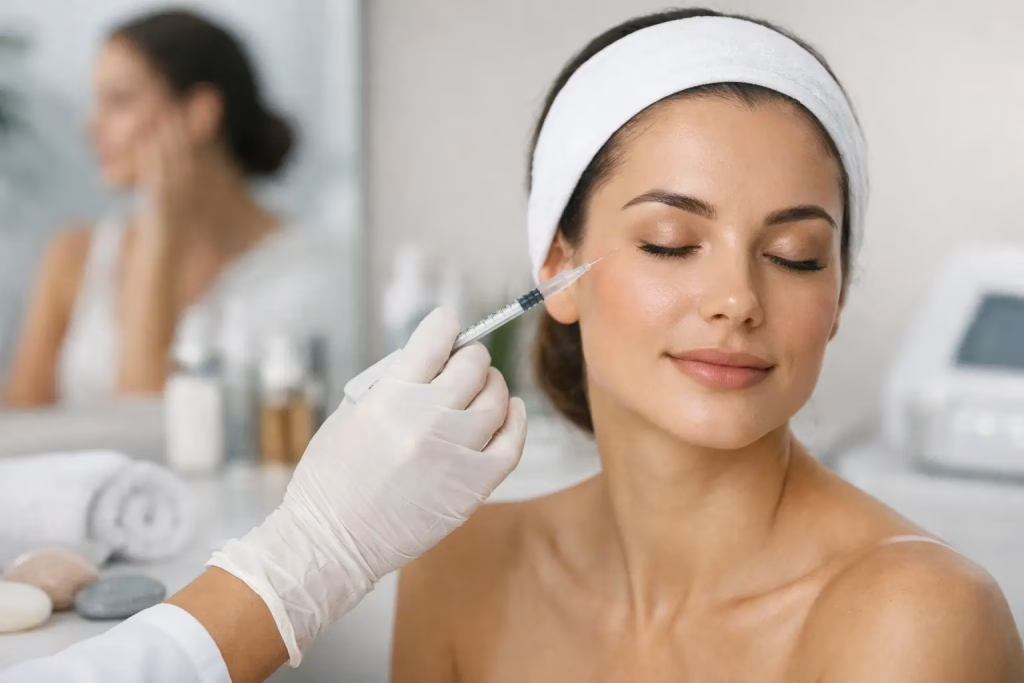
Injectables can play a measured role in preventive care when used with restraint. Neuromodulators may soften repetitive expression lines before they become more etched, while carefully selected fillers can restore or maintain balance where early volume changes are present.
The goal is not to freeze every movement or create unnecessary fullness. In fact, treating too early, too frequently, or without a complete facial assessment can lead to results that feel less natural over time. An experienced doctor will look beyond one line or one area, considering proportion, muscle movement, skin thickness, and the way your face changes when you smile and speak.
For some patients, the most refined decision is to defer filler and focus first on hydration, skin texture, or collagen support. Prevention should be purposeful, never automatic.
When Should You Start?
There is no ideal age that applies to everyone. Preventive aesthetic care may begin in the twenties for acne management, pigmentation prevention, and consistent professional skin maintenance. In the thirties, many people begin to address early expression lines, dehydration, and collagen decline. In the forties and beyond, the focus may shift toward preserving skin quality, facial definition, and a rested appearance while treating existing changes thoughtfully.
What matters more than age is the pattern you are seeing. If concerns return quickly after facials, if makeup no longer wears as it once did, or if you notice subtle change in photographs over time, it may be worth arranging a professional assessment. Starting early should mean starting intelligently, not doing more than your skin requires.
Building a Bespoke Preventive Plan
A considered plan begins with a clear consultation. Your practitioner should ask about your medical history, prior treatments, current skincare, allergies, lifestyle, and comfort with downtime. They should also examine your skin in person rather than relying only on a stated concern.
At Kelly Oriental Aesthetic Clinic, preventive care is approached as a curated journey rather than a one-time correction. A plan may combine regular skin maintenance with strategically timed energy-based treatments or injectables, allowing results to develop gradually and remain aligned with your features.
Spacing treatments appropriately is part of good care. Some procedures work best as a series, while others are performed once a year or at longer intervals. Your calendar also matters. If you have an important event, wedding, presentation, or travel date, plan ahead rather than scheduling an unfamiliar treatment at the last minute.
Safety, Expectations, and the Value of Restraint
Preventive treatments are medical or clinical decisions, even when they are non-surgical. Choose a setting that prioritizes consultation, treatment suitability, hygiene, and experienced providers. Be candid about medications, active skin conditions, pregnancy, recent procedures, and past reactions. These details can change what is appropriate and when.
It is equally valuable to discuss what a treatment cannot do. Lasers may improve tone but not replace volume. Skin boosters can enhance hydration but will not lift significant laxity. Ultherapy and Thermage can support firmness, but results develop over time and vary by individual. Honest expectations protect both your confidence and your investment.
The most elegant preventive aesthetic plan leaves room for life. It evolves as your skin, schedule, and goals change, with enough restraint that your face remains recognizably yours. When care is personalized and medically guided, prevention becomes a quiet form of confidence: polished, considered, and never overdone.
