

Uncategorized
The Future of Personalized Skin Treatments
Aug
A treatment that worked beautifully for a friend may do very little for your skin. The future of personalized skin treatments is moving beyond broad labels such as “dry,” “oily,” or “aging” and toward a more precise understanding of what your skin needs, when it needs it, and how it responds over time.
For patients who expect both discernment and results, this is a meaningful shift. Skin is not static. It changes with hormones, stress, travel, sun exposure, sleep, medications, lifestyle, and the natural aging process. The most considered aesthetic care recognizes those changes and adjusts the plan accordingly.
The Future of Personalized Skin Treatments Is More Precise
Personalization is often mistaken for choosing a facial based on a single concern. True personalization begins with a clinical assessment of the skin’s condition, history, sensitivities, and priorities. It considers not only what is visible in the mirror, but also what may be contributing to it.
For example, pigmentation can be influenced by sun exposure, inflammation, hormonal changes, and previous acne. Enlarged pores may be connected to oil production, congestion, loss of collagen support, or all three. Fine lines may be made more apparent by dehydration, repetitive movement, volume changes, and thinning skin. Treating every concern with one device or one product is rarely the most refined approach.
The next generation of care will rely on a thoughtful combination of doctor-led judgment, detailed skin analysis, and advanced treatment technologies. Rather than pursuing the strongest possible intervention, the focus will be on selecting the right modality, intensity, timing, and sequence for the individual.
Data Can Inform Care, but Expertise Gives It Meaning
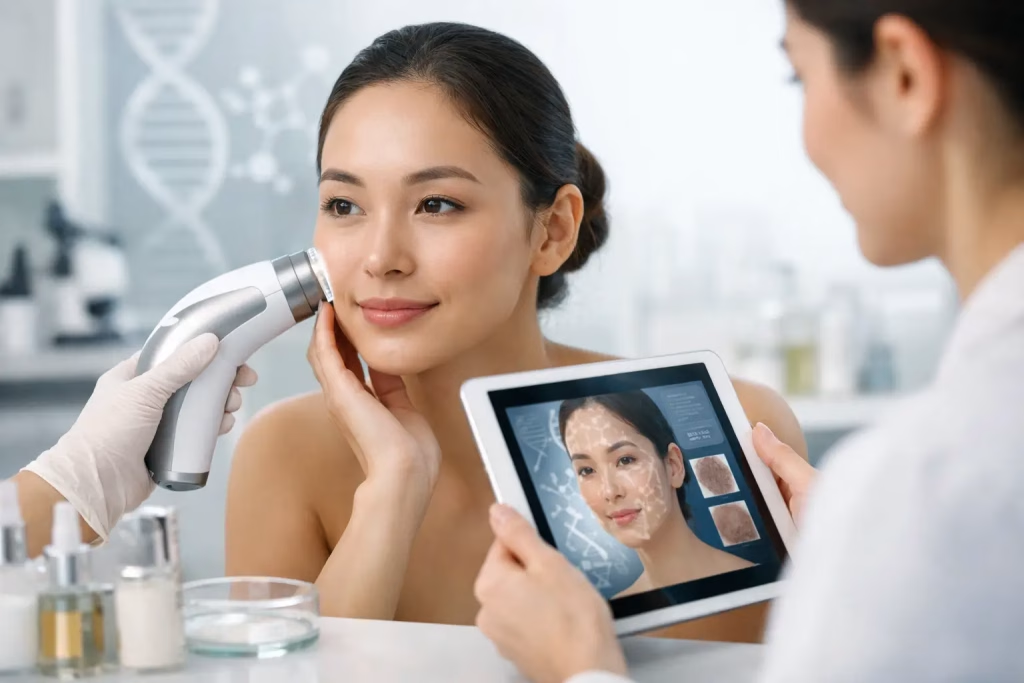
Skin imaging and diagnostic tools are becoming increasingly sophisticated. They can help identify pigment beneath the surface, assess pore visibility, map areas of redness, and track changes in texture or hydration. Over a series of visits, this information can provide a more objective view of progress than photographs taken in different lighting.
Yet a device does not replace clinical judgment. A scan can show pigment, but it cannot fully determine whether a patient is better suited to Pico Laser, a gentler maintenance approach, medical-grade skincare, or a period of skin barrier repair before any energy-based procedure. It cannot account for a recent holiday in the sun, an active flare of rosacea, or how much downtime fits into a demanding professional calendar.
The most elevated personalized care will use technology as a guide, not a substitute for the doctor-patient conversation. That conversation should include a patient’s comfort level, budget, schedule, previous treatments, and definition of a successful result. For some, the goal is a brighter, more even complexion before an important event. For others, it is a gradual, discreet improvement in acne scars or laxity over several months.
A Treatment Plan Should Have a Sequence
A well-designed aesthetic journey has an order. If the skin barrier is compromised, beginning with aggressive resurfacing may create more irritation than improvement. If active acne is driving post-inflammatory pigmentation, treating the pigment alone may not deliver lasting clarity. If skin laxity is the primary concern, repeated hydrating treatments may improve glow but will not create the structural change a collagen-stimulating device is designed to support.
This is where combination planning becomes valuable. A patient with dullness, fine lines, and early loss of firmness may benefit from skin hydration and barrier support alongside collagen-focused treatments such as Thermage, Ultherapy, or Sylfirm X, depending on the clinical assessment. Someone managing acne scars may require a different blend of energy-based treatment, targeted scar techniques, and a carefully paced recovery plan.
The goal is not to do everything at once. It is to create a plan where each step supports the next, while respecting the skin’s ability to recover.
Personalization Will Be More Preventive, Not Just Corrective
Many patients seek treatment after a concern becomes difficult to conceal: pigmentation that no longer responds to home care, lines that settle into the skin, or a loss of facial definition that changes how they feel in photographs. Future-focused aesthetic care places equal value on prevention and maintenance.
This does not mean every patient needs intensive procedures early. Prevention should be proportionate. Consistent sun protection, appropriate active skincare, hydration, and periodic professional treatments can be highly effective for maintaining healthy-looking skin. For others, early collagen-supporting treatments may be appropriate when assessed and performed thoughtfully.
The key is to avoid a one-size-fits-all idea of “anti-aging.” A 30-year-old with acne, congestion, and post-inflammatory marks has different priorities from a 50-year-old experiencing dryness, laxity, and deeper wrinkles. Even two patients of the same age may need entirely different care because their skin biology, lifestyle, and goals are not the same.
The Rise of Adaptive Treatment Journeys
The most compelling development is not a single new device. It is the move toward adaptive treatment journeys that evolve with the patient.
A plan may begin with Hydrafacial or LDM to restore hydration and settle reactive skin, then progress to treatment for pigmentation or texture once the skin is better prepared. A patient may respond exceptionally well to a series of skin boosters, while another sees greater value in alternating skin hydration with laser-based pigment management. Seasonal changes may also matter. Skin that tolerates active treatments comfortably in one period may need a gentler approach after increased sun exposure or travel.
Progress reviews are central to this model. They make room to assess what is improving, what has plateaued, and whether the original plan remains suitable. This protects patients from continuing a protocol simply because it was prescribed months earlier. Personalization is not a one-time consultation. It is an ongoing process of observation and adjustment.
Natural Results Require Restraint
As aesthetic technology becomes more capable, restraint becomes even more important. The aim of personalized care should not be to chase every line or alter every facial feature. It should be to preserve expression, strengthen skin quality, and create results that look harmonious with the individual.
This is particularly relevant for injectables and facial contouring. The right treatment may be subtle refinement rather than a dramatic change. A carefully placed skin booster can improve luminosity and hydration. A measured approach to wrinkle-relaxing injections may soften expression lines while retaining natural movement. In other cases, noninvasive lifting technology may better suit the patient’s concern than adding volume.
A premium aesthetic experience should make space for these distinctions. Patients deserve clear explanations of what a treatment can achieve, what it cannot, the expected timeline, and any recovery considerations. Realistic expectations are not a limitation of excellent care. They are part of it.
Safety and Skin Health Will Remain the Foundation
Personalized treatment does not mean endlessly layering procedures. More is not always better, especially when energy-based treatments, exfoliating products, and injectables are involved. Over-treatment can compromise the skin barrier, prolong redness, worsen sensitivity, or create results that no longer look balanced.
A responsible plan weighs benefit against risk. It takes skin tone, pigment history, active inflammation, medical background, and recovery tolerance seriously. It also leaves adequate time for healing and collagen remodeling, which can take weeks to months depending on the treatment.
At Kelly Oriental Aesthetic Clinic, this philosophy is reflected in a doctor-led, tailored approach where advanced technology is selected to serve the patient’s skin, rather than the other way around. The experience should feel considered from consultation through follow-up: clinically precise, calm, and attentive to the details that matter.
What to Look for in a Personalized Skin Plan
The strongest plans are clear enough for patients to understand. They identify the primary concerns, explain why certain treatments are recommended, and distinguish between immediate improvements and longer-term goals. They also include a realistic home-care strategy, because professional treatments and daily habits work best together.
Ask whether your provider will reassess your skin as it changes. Ask how treatments will be spaced, what signs would prompt an adjustment, and whether less intensive options are appropriate. A confident provider should welcome these questions and be comfortable recommending patience when patience is the better choice.
The future of skin care will feel less like selecting from a menu and more like receiving a tailored wardrobe: considered, adaptable, and chosen to suit you. Begin with an honest assessment of your skin today, then allow a qualified professional to build a plan that respects both your features and your future goals.
