
Uncategorized
Does Botox Help Forehead Lines Look Smoother?
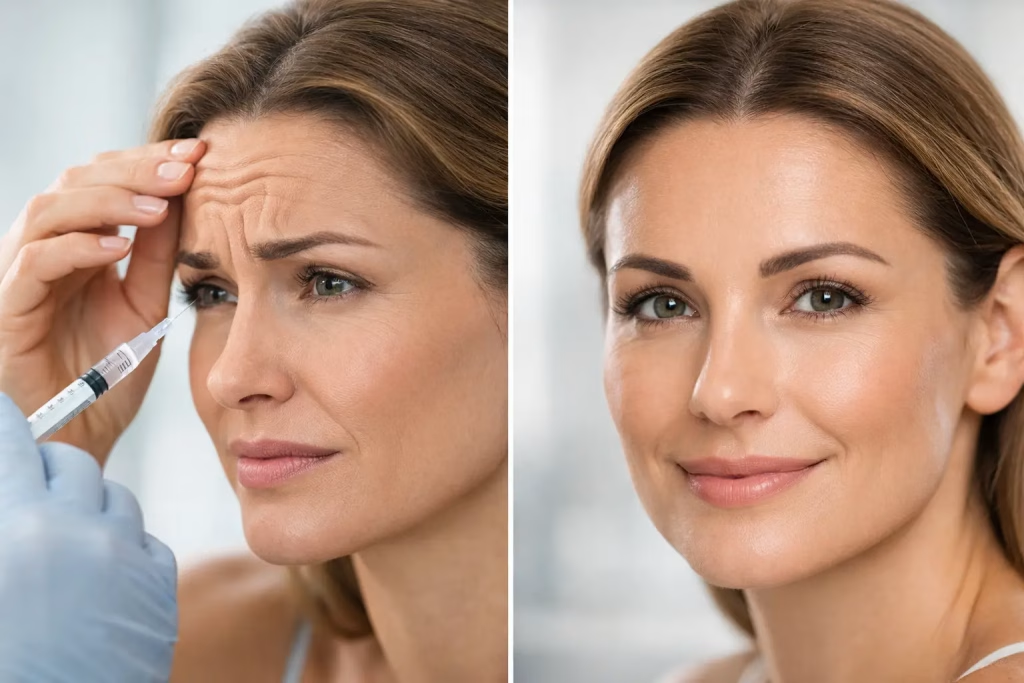
Forehead lines often appear long before the rest of the face feels noticeably aged. You may see them when applying makeup, reviewing photos, or simply catching your reflection after a long day. So, does Botox help forehead lines? For many people, yes. When thoughtfully placed by an experienced medical professional, Botox can soften the repeated muscle movements that etch horizontal lines across the forehead, creating a more rested and polished appearance without changing who you are.
The most refined results are rarely about removing every trace of movement. They are about balancing expression, skin quality, facial anatomy, and your personal preference for a natural finish.
How Botox Helps Forehead Lines
Forehead lines are commonly known as dynamic wrinkles. They form when the frontalis muscle lifts the brows during everyday expressions, such as surprise, concentration, or conversation. Over time, repeated folding of the skin can leave visible lines, including when the face is at rest.
Botox is a purified neuromodulator that temporarily reduces signaling between selected nerves and muscles. When carefully injected into the forehead area, it relaxes targeted portions of the frontalis muscle. The skin is then subjected to less repetitive creasing, allowing expression lines to look softer.
This is why Botox tends to be particularly effective for lines that deepen when you raise your eyebrows. It does not physically fill a crease in the way a dermal filler can. Instead, it addresses one of the reasons that crease is repeatedly formed.
Results are gradual rather than immediate. Most patients begin to notice a change within several days, with the effect developing more fully over approximately two weeks. The forehead may look smoother and calmer, while still retaining movement when the treatment plan is appropriately conservative.
Does Botox Help Forehead Lines at Rest?
It can, but the answer depends on the depth and character of the lines. Fine to moderate forehead lines that are visible at rest often improve after the muscle has had time to relax. However, lines that have become deeply etched into the skin may not disappear completely with Botox alone.
In these cases, a doctor may recommend a more considered approach. Skin-focused treatments can support collagen renewal and improve texture, while hydration-focused procedures may help the skin look fresher and more supple. Depending on the individual, options such as laser treatments, microneedling radiofrequency, skin boosters, or regenerative treatments may complement a neuromodulator treatment plan.
This combination approach matters because forehead aging is not only about muscle movement. Sun exposure, dehydration, genetics, skin thinning, and changes in collagen all influence how lines settle into the skin. Botox can reduce the ongoing folding, but it cannot replace lost collagen or correct every aspect of skin texture on its own.
Dynamic lines versus static lines
A simple way to think about it is to observe your forehead at rest and in motion. Lines that appear mainly when you lift your brows are dynamic and are often highly responsive to Botox. Lines that remain visible even when your forehead is relaxed are static. They may still soften, but they usually benefit from broader skin rejuvenation as well.
A medical consultation is the right setting to distinguish between the two. Rather than treating a photograph or a single wrinkle in isolation, the doctor evaluates how your forehead moves, the quality of your skin, brow position, and the proportions of your upper face.
The Art of Treating the Forehead Naturally
The forehead is one of the most nuanced areas to treat. The same muscle that creates forehead lines is also responsible for lifting the brows. Too much relaxation, or placement that does not respect your anatomy, can leave the forehead feeling heavy or make the brows appear lower.
For this reason, a tailored plan is essential. Some people have naturally strong forehead muscles and need a more strategic dosage. Others rely heavily on their frontalis muscle to keep the brows elevated, particularly if there is existing eyelid heaviness or brow descent. In these cases, a lighter touch may be preferable.
Your desired look matters, too. Some patients want very little movement for a smooth, editorial finish. Others prefer to preserve a degree of animation so their expressions continue to feel familiar. Neither preference is inherently better. The right choice is the one that suits your face, lifestyle, and comfort level.
At Kelly Oriental Aesthetic Clinic, doctor-led consultations are designed around this level of personalization. A considered assessment can help determine whether forehead Botox is suitable, how it should be placed, and whether complementary skin treatments would create a more complete result.
What a Forehead Botox Appointment Typically Involves
An appointment begins with a facial assessment, including how the forehead moves when you raise your eyebrows and how your brows sit at rest. Your medical history, prior aesthetic treatments, concerns, and desired degree of movement should all be discussed before treatment.
The injection process itself is usually brief. A series of small injections is placed at carefully selected points across the forehead, with the exact pattern varying from person to person. Most people describe the sensation as a quick pinch. There may be small bumps, redness, or minor tenderness immediately afterward, but these usually settle quickly.
Your provider will also give aftercare guidance. While recommendations vary, patients are commonly advised to avoid rubbing or massaging the treated area and to follow their clinician’s instructions regarding exercise, skincare treatments, and makeup immediately after the appointment.
A review appointment may be recommended, especially for first-time patients or those seeking a highly precise result. This allows the treatment to be assessed once it has fully settled and supports a measured, rather than excessive, approach to refinements.
How Long Do Results Last?
Forehead Botox results commonly last around three to four months, though this can vary. Metabolism, muscle strength, dosage, treatment history, and lifestyle factors all play a role. With regular maintenance, some people find that they need less frequent treatment over time because they are no longer making the same strong repetitive movements as often.
Consistency can also be helpful for preventing dynamic lines from becoming more deeply established. That said, maintenance should never be automatic. Each appointment is an opportunity to reassess your goals, facial movement, and whether the same treatment plan still suits you.
A subtle approach is often especially appealing for professionals and those who prefer discretion. The goal is not for others to identify what you have had done. It is for them to notice that you look rested, composed, and well cared for.
Safety and When Botox May Not Be Right for You
Botox is widely used in aesthetic medicine, but it remains a medical treatment that should be performed by a qualified and experienced practitioner. Proper assessment, accurate placement, appropriate dosing, and a clear understanding of facial anatomy are central to both safety and elegant results.
Temporary side effects can include redness, swelling, bruising, headache, or tenderness at the injection points. Less common risks include asymmetry, an undesired change in brow position, or eyelid heaviness. These possibilities are why choosing an experienced medical provider matters, particularly in the forehead, where millimeters can influence the final look.
Botox may not be appropriate for everyone. Individuals who are pregnant or breastfeeding, have certain neuromuscular conditions, have an active skin infection near the treatment area, or are taking specific medications should discuss their circumstances with a qualified clinician. A reputable consultation should feel informative and unhurried, with space for candid questions and realistic expectations.
Supporting Smoother Forehead Skin Beyond Botox
Botox can be an excellent foundation for expression lines, but everyday skin care still shapes how the forehead looks over time. Daily broad-spectrum sunscreen is one of the most valuable habits for protecting collagen and reducing the effects of UV exposure. A well-chosen routine that supports hydration, antioxidant protection, and cell turnover can further improve the skin’s overall finish.
For established static lines or a crepey forehead texture, professional treatments may offer additional support. The ideal plan depends on whether your primary concern is movement, pigmentation, dehydration, laxity, or textural change. A bespoke plan often produces a more harmonious result than relying on a single treatment.
Forehead lines do not need to be erased to look beautiful. With thoughtful medical guidance, Botox can soften the expressions that no longer reflect how energized and confident you feel, while preserving the character that makes your face distinctly yours.
