

Uncategorized
How to Restore Thinning Hair With a Personal Plan
Sep
A widening part, more scalp visible beneath overhead lighting, or a ponytail that suddenly feels smaller can make hair thinning difficult to ignore. Learning how to restore thinning hair starts with a more useful question than “What product should I buy?”: Why is your hair density changing in the first place? Hair restoration is rarely one-size-fits-all. The most considered approach identifies the pattern, protects the follicles that remain, and selects treatments that suit your health, timeline, and aesthetic goals.
For many adults, the concern is not complete baldness. It is a gradual loss of fullness that changes how the hair frames the face and how confident one feels in daily life. The encouraging news is that early thinning often responds better than advanced hair loss, particularly when care is personalized and consistent.
Why Hair Becomes Thinner
Hair grows in cycles. Each follicle moves through a growth phase, a transition phase, and a resting phase before the strand sheds and a new cycle begins. Thinning can occur when more follicles enter the resting phase at once, when the growth phase becomes shorter, or when follicles progressively produce finer, shorter hairs.
Genetics are a frequent driver. Pattern hair loss can affect women and men differently: women may notice diffuse thinning through the crown or a broader part, while men may see recession at the temples, a thinning crown, or both. Hormonal shifts around pregnancy, menopause, thyroid changes, or conditions such as polycystic ovary syndrome can also influence density.
Other triggers deserve equal attention. Significant stress, illness, rapid weight changes, restrictive eating, low iron stores, medication changes, scalp inflammation, and frequent chemical or heat damage may all contribute. In some cases, shedding begins two to three months after the triggering event, which can make the connection easy to miss.
That is why a thoughtful assessment matters. Treating every form of thinning as genetic hair loss may delay the right care, while assuming it will resolve on its own can mean missing an opportunity to preserve density.
How to Restore Thinning Hair: Begin With Diagnosis
A doctor-led consultation offers clarity before committing to a treatment program. The discussion should cover when the shedding started, whether it is sudden or gradual, family history, recent health events, diet, medications, menstrual or hormonal changes, and current styling habits. A close scalp examination can help distinguish diffuse shedding from follicle miniaturization, irritation, scarring, or localized patchy loss.
Depending on your presentation, a clinician may recommend medical evaluation or blood work to investigate potential contributors such as iron deficiency, thyroid dysfunction, or nutritional concerns. This step is particularly valuable when hair loss is abrupt, patchy, accompanied by itching or pain, or paired with other changes in energy, skin, or menstrual health.
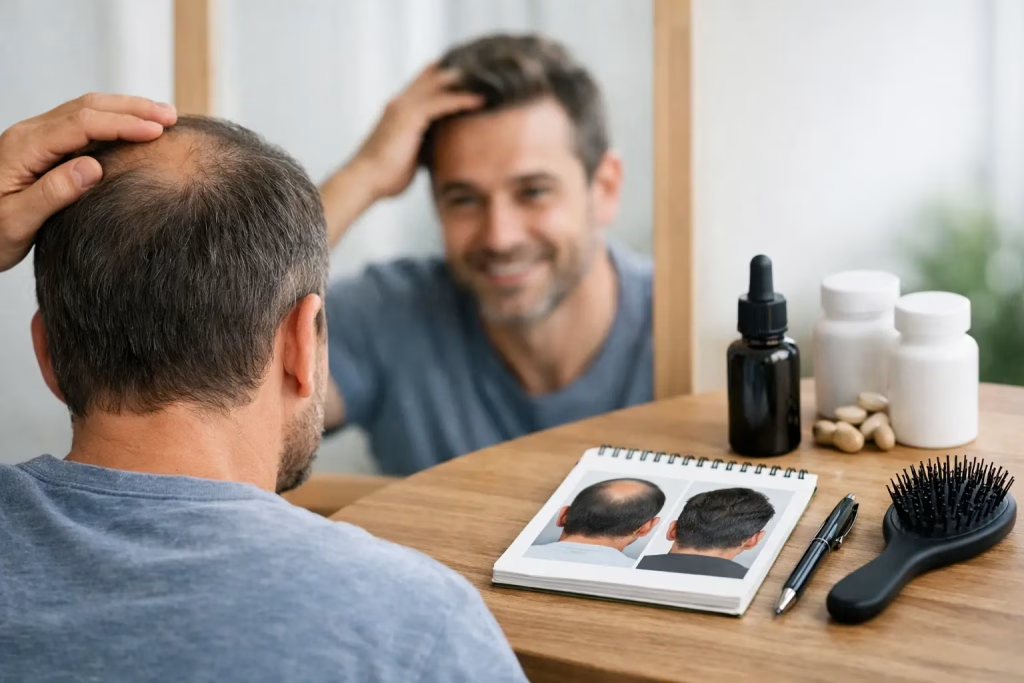
Photography can also be useful. Consistent images of the part line, temples, and crown create a baseline that reveals subtle progress over time. Hair changes slowly, and memory is not always a reliable measure of density.
Protect the Hair You Have While Supporting New Growth
The foundation of any hair restoration plan is follicle preservation. Once a follicle has been inactive for a prolonged period, achieving meaningful regrowth becomes more difficult. Early intervention is not about panic. It is about giving active follicles the best possible environment to continue producing healthy strands.
For genetically driven thinning, a clinician may discuss topical or oral prescription options where appropriate. These treatments can support the growth cycle and help reduce progressive miniaturization, but they require professional guidance. Suitability differs by sex, age, medical history, pregnancy plans, blood pressure, and potential side effects. Results also depend on continued use, so the decision should reflect what feels realistic for your lifestyle.
Nutritional support should be targeted rather than trendy. Supplements are not a shortcut for hereditary thinning, and taking high doses without a proven need can be unhelpful or, in some circumstances, counterproductive. A balanced diet with adequate protein, iron-rich foods, essential fatty acids, and micronutrients supports overall hair health. If a deficiency is identified, correcting it may reduce shedding and improve the quality of new growth.
Your daily routine matters too. Avoid tightly pulled styles that create persistent tension at the hairline, aggressive brushing when hair is wet, frequent high-heat styling, and repeated bleaching if strands are already fragile. These adjustments will not reverse follicle miniaturization on their own, but they can reduce breakage so your hair appears fuller as treatment progresses.
Advanced In-Clinic Options for Hair Density
When home care and medical management need additional support, in-clinic treatments can be incorporated into a bespoke hair restoration plan. The right choice depends on the cause and stage of thinning, scalp condition, and your tolerance for downtime and maintenance.
Scalp-focused regenerative treatments may be used to support a healthier follicular environment and encourage dormant, weakened follicles to remain in a productive growth phase. Microneedling-based approaches create controlled microchannels in the scalp and may enhance the delivery of topical actives while stimulating a natural repair response. Treatment settings, depth, and frequency should be selected carefully for the scalp rather than borrowed from facial protocols.
Growth-factor-based treatments, often performed using a patient’s own blood components, are another option commonly considered for early pattern thinning. The treatment is minimally invasive and can be especially appealing to patients who want a biologically focused addition to their program. It is not an instant-density treatment, however. A series of sessions and periodic maintenance may be recommended, with results varying according to follicle health and the underlying diagnosis.
Low-level light therapy is also used in some treatment plans. It is noninvasive and can be convenient for patients who value a gentle, ongoing approach, although it requires regular use and patience. For many people, the strongest strategy is not choosing one “best” treatment, but combining clinically appropriate options with medical oversight and scalp care.
At Kelly Oriental Aesthetic Clinic, hair restoration planning is designed around this principle: advanced technology should serve the individual, not the other way around. A measured consultation helps ensure treatment choices feel considered, comfortable, and aligned with visible, natural-looking goals.
Set Expectations That Protect Your Confidence
Hair growth follows biology, not a calendar. Reduced shedding may be the first positive change, while visible improvement in fullness often takes three to six months. More meaningful assessment can take six to 12 months because new hairs need time to grow long enough to contribute to coverage.
It is also normal to have periods when progress appears slower. Seasonal shedding, stress, hormonal shifts, and inconsistent treatment use can affect the trajectory. This does not automatically mean a plan has failed. Follow-up appointments allow the clinician to review photographs, scalp health, treatment adherence, and any new factors that may need attention.
Be cautious with promises of dramatic regrowth in days or a permanent cure from a single session. Credible hair restoration focuses on improved density, reduced shedding, better strand caliber, and preservation of existing hair. For advanced loss, surgical hair transplantation may be worth discussing with a qualified specialist, but it should be approached with the same care: donor supply, future hair loss, medical management, and realistic design all matter.
When to Seek Prompt Medical Advice
Do not wait for a cosmetic consultation if you experience sudden patches of hair loss, a painful or burning scalp, marked redness, scaling, scarring, or shedding accompanied by fatigue, unexplained weight changes, or other systemic symptoms. These signs may point to conditions that need medical diagnosis and timely treatment.
For gradual thinning, the most helpful next step is often simpler: arrange a professional assessment before experimenting with multiple products. Bring a clear account of your timeline and any recent changes in health or routine. With an accurate diagnosis and a plan you can sustain, restoring the appearance of fuller hair becomes a process of steady, informed care rather than guesswork.
