
Uncategorized
Does Botox Migrate? What Really Happens
Oct
A beautifully refreshed result should look considered, not conspicuous. Yet one concern comes up often before injectable appointments: does Botox migrate and change areas of the face that were never meant to be treated?
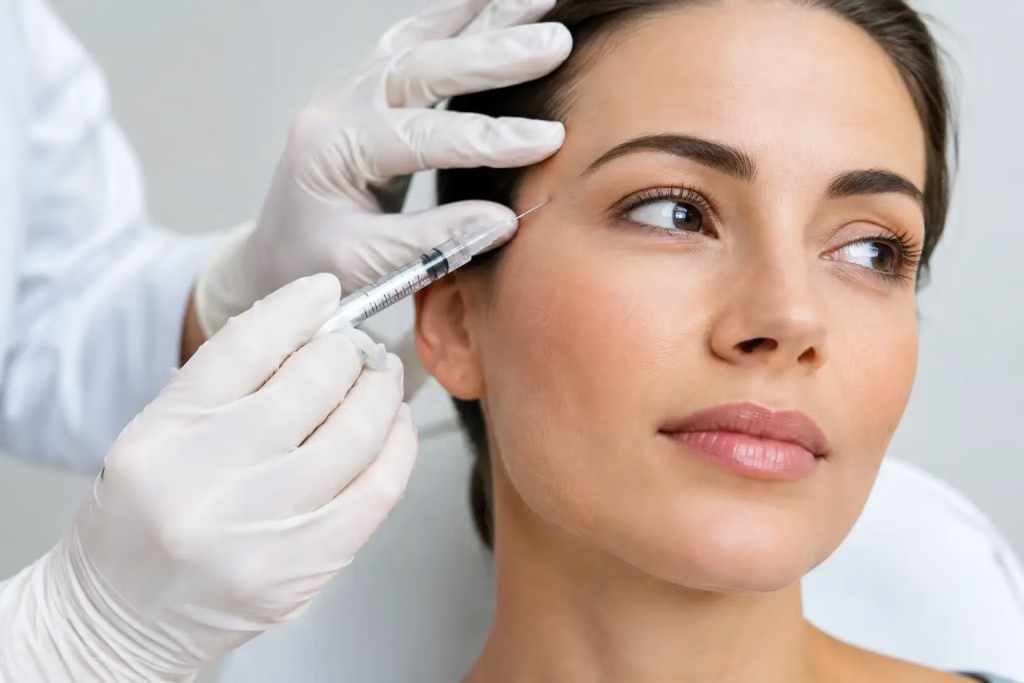
The short answer is that Botox does not typically travel around the face weeks or months after an appointment. However, it can diffuse a short distance from the injection point in the early period after treatment. When it reaches a neighboring muscle, it may create an unintended effect, such as a temporary heavy brow or eyelid droop. This is why precise planning, anatomy knowledge, and injection technique matter as much as the product itself.
Does Botox Migrate or Diffuse?
“Migration” is often used as a catch-all term, but it does not accurately describe most Botox concerns. Botox is a purified neuromodulator that temporarily reduces communication between a nerve and the targeted muscle. It does not behave like dermal filler, which is a gel that can occasionally shift within tissue planes.
What can happen is diffusion. After injection, a small amount of product may spread locally into adjacent tissue. In the right hands, this controlled local spread is accounted for in treatment planning. In an unfavorable situation, diffusion may affect a muscle that was not intended to relax.
For example, treating the lines between the brows requires careful placement because several muscles in this area influence brow position and eyelid opening. If a neighboring muscle receives an unintended dose, a patient may notice asymmetry, a flatter brow shape, or, more rarely, temporary eyelid ptosis. These effects are not evidence that Botox is freely roaming through the face. They are usually related to where and how the treatment was placed, as well as individual anatomy.
Why Unwanted Botox Effects Can Happen
Every face has its own muscular pattern. Some people naturally recruit their forehead muscles to hold their brows in a lifted position, while others have a lower or heavier brow at rest. Relaxing the forehead without considering that pattern can make the brow feel lower, even when the injection was technically placed in the forehead.
Dose also matters, but more units are not automatically better or worse. The ideal dose depends on muscle strength, the movement being treated, facial balance, and the outcome desired. A patient seeking a very smooth forehead may require a different strategy than someone who wants to soften lines while preserving expressive movement.
Several practical factors can influence diffusion or an unexpected result:
- Injection depth and exact placement
- The volume and dilution used for each injection point
- The amount of product placed in a single area
- The patient’s anatomy, muscle activity, and baseline asymmetry
- Post-treatment pressure or manipulation, especially when it conflicts with aftercare guidance
A thoughtful injector does not simply follow a standard map. They assess brow height, eyelid position, facial animation, prior treatment history, and the way one side of the face may compensate for the other. This is particularly relevant for upper-face Botox, where millimeters can make a visible difference.
Areas Where Precision Matters Most
The forehead, glabella, and crow’s feet are among the most requested Botox treatment areas, but they are not interchangeable. The forehead muscle lifts the brows, while the muscles between the brows pull them downward and inward. Treating one area without considering the other can alter expression in ways that do not suit the patient’s features.
The area around the eyes also deserves restraint. Botox can soften crow’s feet and create a rested appearance, but treatment must preserve a natural smile and account for lower eyelid support. In the lower face, injections for jaw slimming, chin dimpling, lip lines, or neck bands require equally individualized planning. A dose that works beautifully for one person may be excessive or insufficient for another.
At Kelly Oriental Aesthetic Clinic, a doctor-led consultation is designed to place these decisions in context. Rather than treating lines in isolation, the goal is to understand how the face moves as a whole and create a refined result that still feels like you.
Can Botox Move Days or Months Later?
Botox does not continue migrating long after treatment. Its effect develops gradually as the targeted muscle relaxes, commonly becoming more apparent over several days and settling over approximately two weeks. That timeline can make it seem as though the product is moving, when the more likely explanation is that different muscles are relaxing at different rates.
A brow can also look different once forehead movement decreases. If the forehead had been compensating for naturally low brows, removing that lift can reveal the patient’s baseline brow position. This is not delayed migration. It is a change in muscle balance.
Similarly, unevenness at the two-week mark may reflect pre-existing asymmetry, unequal muscle strength, or a slightly different response on each side. Facial asymmetry is extremely common, even in people who have never had an injectable treatment. A qualified practitioner can review the result once it has settled and determine whether a small adjustment is appropriate.
How to Reduce the Risk of Botox Diffusion
The most meaningful safeguard begins before the injection. Choose a properly qualified medical professional who takes time to assess your face at rest and in motion, asks about previous treatments, and discusses what a natural outcome means to you. A rushed appointment or a one-size-fits-all unit count leaves less room for the judgment that upper-face treatment requires.
Be candid during consultation. Mention prior eyelid drooping, brow heaviness, eye surgery, neuromuscular conditions, medications, and any history of asymmetry after injectables. These details can influence whether Botox is appropriate, which areas should be treated, and how conservatively the plan should begin.
After treatment, follow the clinic’s specific aftercare instructions. Patients are often advised to avoid rubbing or massaging the treated areas for a period of time and to postpone strenuous exercise, heat exposure, or facials immediately after treatment when instructed. Recommendations vary by practitioner and treatment area, so personalized guidance should take priority over social media advice.
It is also wise to give the treatment adequate time. Booking a review at the recommended interval, rather than seeking an immediate top-up after a few days, allows the result to declare itself. Patience supports better decisions and helps avoid overcorrection.
What to Do If You Think Botox Has Migrated
If you notice an unexpected change, contact your treating provider rather than trying to massage, exercise, or self-correct the area. Take clear photographs at rest and with expression if requested, and explain when you first noticed the concern. An in-person assessment can distinguish between normal onset, asymmetry, brow heaviness, and a true unwanted effect.
Most Botox-related concerns are temporary because the treatment itself is temporary. Depending on the issue, your provider may recommend observation, a minor balancing adjustment, or a supportive approach while the effect wears off. For eyelid drooping, medical evaluation is appropriate, as prescription eye drops may sometimes be considered by a physician.
Seek urgent medical attention for difficulty breathing, swallowing, speaking, severe weakness, or signs of an allergic reaction. These reactions are uncommon, but they should never be ignored.
The Value of a Tailored Botox Plan
Botox is often described as a quick treatment, but a polished result comes from a measured process. The best plan considers not only where wrinkles appear, but why they appear, which muscles are creating them, and how those muscles support your natural expression.
A conservative first treatment can be especially valuable if you are new to injectables or concerned about looking overdone. There is room to refine a result after it settles; there is far less room to reverse an overly strong effect immediately. With thoughtful assessment and precise technique, Botox can soften the signs of stress and time while allowing your features, expressions, and confidence to remain distinctly your own.
