
Uncategorized
How to Reduce Facial Puffiness and Look Refreshed
A puffy face can make even a well-rested, polished look feel less like you. It often appears most noticeably in the morning, before an important meeting, after a late dinner, or following a long flight. Learning how to reduce facial puffiness starts with one useful distinction: temporary fluid retention is common, but persistent swelling deserves a closer look.
The goal is not to chase an unnaturally hollow face. A fresher, more defined appearance comes from supporting healthy circulation, protecting the skin barrier, managing lifestyle triggers, and seeking professional guidance when puffiness does not settle as expected.
Why your face looks puffy
Facial puffiness is usually caused by fluid collecting in the soft tissues around the cheeks, jawline, and under-eye area. Overnight, lying flat can slow drainage and make fluid more visible by morning. A salty meal, alcohol, poor sleep, seasonal allergies, hormonal shifts, dehydration, and heat can all make the effect more pronounced.
The under-eye area is especially prone to swelling because its skin is thin and the tissues beneath it are delicate. Genetics can also play a role. Some people naturally have more prominent under-eye fat pads or a facial structure that appears fuller when even a small amount of fluid is retained.
There is also a difference between puffiness and changes in facial contour. A soft-looking lower face may be related to skin laxity, a double chin, facial fat distribution, or enlarged masseter muscles from clenching. Each concern calls for a different approach. Treating all fullness as “puffiness” can lead to disappointing results and unnecessary treatments.
How to reduce facial puffiness at home
For occasional morning puffiness, consistent, gentle habits tend to work better than dramatic fixes. Give yourself a little extra time before makeup or a major event, rather than relying on an aggressive massage or a restrictive cleanse.
Start with hydration, not deprivation
It may sound counterintuitive, but not drinking enough water can encourage the body to hold onto fluid. Begin the day with water and maintain regular hydration rather than trying to compensate with a large amount all at once. If you have been traveling, spending time in air conditioning, or drinking alcohol, hydration becomes even more relevant.
Avoid extreme “detox” drinks and diuretic teas. They can leave you dehydrated, disrupt your routine, and do little to address the reason you are retaining fluid in the first place.
Adjust the evening habits that show up in the morning
Sodium does not need to be eliminated, but a restaurant meal, processed snacks, instant noodles, cured meats, or a late-night takeaway can all contribute to next-day water retention. If you know you have an event the following morning, choose a lighter dinner, eat earlier where possible, and limit alcohol.
Sleep quality matters as much as sleep duration. A short night can heighten inflammation and make the eyes look more swollen. Sleeping with your head slightly elevated may help reduce overnight fluid pooling, particularly if you regularly wake with under-eye puffiness. For some people, this small adjustment is more effective than adding another skin care product.
Use cool, gentle techniques
A cool compress can temporarily constrict blood vessels and make the face look more awake. Use a clean, cool washcloth for a few minutes, especially around the eyes. Avoid placing ice directly on the skin, which can cause irritation and is not necessary for a visible effect.
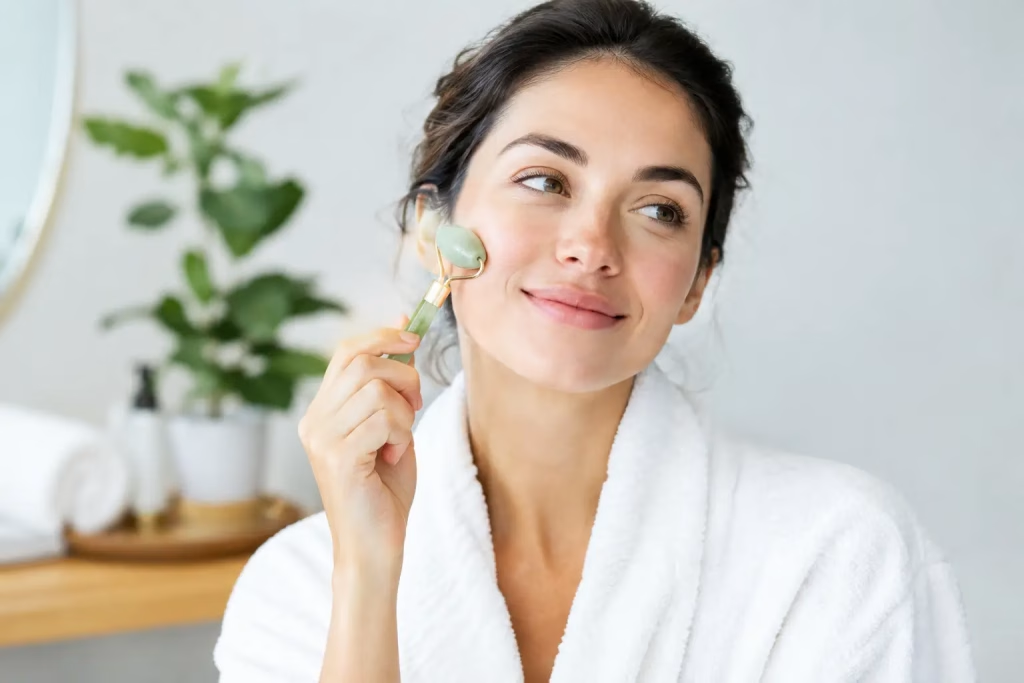
A light facial massage may also support the movement of retained fluid. Apply a hydrating serum or moisturizer first, then use very light pressure to sweep from the center of the face outward toward the ears and down the sides of the neck. The technique should feel soothing, never painful. Overworking the skin, pressing hard under the eyes, or using a tool on irritated skin can cause more redness and sensitivity.
Support your skin barrier
A compromised skin barrier can leave the face looking reactive, inflamed, and swollen. Keep your routine measured: a gentle cleanser, a suitable moisturizer, daily sunscreen, and carefully introduced active ingredients are often enough. If a new retinoid, exfoliating acid, or cosmetic product causes stinging, flaky patches, or swelling, pause it and seek advice before continuing.
For allergy-prone skin, consider whether a new fragrance, hair product, laundry product, or eye makeup could be contributing. Puffy eyelids accompanied by itching or redness may be a sign of irritation or allergies rather than simple fluid retention.
When lifestyle changes are not enough
If facial puffiness is frequent, localized, or increasingly noticeable, it is worth looking beyond daily habits. The right next step depends on what is actually creating the appearance of fullness.
For example, recurrent morning puffiness may improve with better sleep, allergy management, and a carefully performed lymphatic-style massage. Yet pronounced under-eye bags can be structural, not fluid-based. Likewise, a less defined jawline may reflect skin laxity or submental fullness rather than swelling. In these cases, cold tools and hydration can refresh the surface, but they will not create lasting contour changes.
A doctor-led aesthetic consultation can help distinguish temporary fluid retention from concerns such as under-eye bags, facial volume distribution, muscle bulk, skin laxity, or a double chin. This matters because treatments should be selected for the anatomy, not simply for the trend.
Depending on the assessment, a tailored plan may include skin-rejuvenating treatments that support hydration and skin quality, energy-based procedures for selected laxity concerns, or contouring options designed for the lower face and chin. These are not substitutes for medical evaluation of true swelling, and results vary with the treatment, your skin condition, and your underlying facial structure.
Be cautious with any treatment promising to “drain” or permanently eliminate puffiness in one session. A refined result is usually built through accurate diagnosis, realistic expectations, and an approach that respects the natural balance of the face.
When facial swelling needs medical attention
Not every swollen face is an aesthetic concern. Sudden swelling, swelling on one side of the face, pain, fever, dental discomfort, hives, trouble breathing, or swelling of the lips and tongue needs prompt medical attention. These symptoms can be associated with infection, an allergic reaction, or another medical condition.
You should also speak with a medical professional if puffiness persists for weeks, appears alongside swelling in other areas of the body, or begins after a new medication. Avoid trying to massage through painful swelling or concealing it with skin care products. A careful medical assessment should always come first.
A more considered approach to looking rested
The most effective way to reduce facial puffiness is rarely a single product or viral technique. It is a thoughtful combination of hydration, sleep, sodium awareness, gentle cooling, and skin care that keeps irritation at bay. When the issue is persistent, a professional assessment can replace guesswork with a plan that reflects your actual facial anatomy and goals.
At Kelly Oriental Aesthetic Clinic, that philosophy begins with listening closely and recommending only what suits your concerns, lifestyle, and desired level of refinement. A rested, naturally sculpted appearance should still look unmistakably like you.
