
Uncategorized
Acne Scar Laser Treatment: What to Expect
Acne scars rarely feel like a small concern when they catch the light a certain way. Many people are less bothered by a breakout itself than by the texture it leaves behind months or even years later. That is why acne scar laser treatment remains one of the most requested options for patients who want smoother skin, more even texture, and a treatment plan grounded in visible change rather than guesswork.
What makes this category of treatment so appealing is also what makes it misunderstood. “Laser” sounds like a single solution, but acne scars are not all the same, and neither are laser platforms. A thoughtful plan looks at scar type, skin tone, sensitivity, recovery tolerance, and the pace at which you want to see improvement.
Why acne scars need a tailored approach
Acne scarring is a structural issue, not simply a surface blemish. When inflammation disrupts collagen during the healing process, the skin can repair unevenly. That leaves depressions, roughness, or in some cases raised scars. Lasers are used because they can remodel skin at different depths, stimulate collagen, and improve texture in a more targeted way than topical products alone.
Still, not every scar responds equally. Ice pick scars are narrow and deep, boxcar scars have more defined edges, and rolling scars create wider undulations under the skin. Some patients also have lingering redness or post-inflammatory discoloration mixed in with true textural scarring. Each of these concerns may call for a different device or a combination approach.
This is where a doctor-led assessment matters. A treatment plan should not start with the machine. It should start with your skin.
How acne scar laser treatment works
At its core, acne scar laser treatment creates controlled injury in the skin to encourage renewal. That may sound intense, but in experienced hands it is a precise process. The goal is to trigger the body’s wound-healing response so new collagen forms and uneven texture gradually softens.
There are two broad categories patients hear about most often: ablative and non-ablative lasers. Ablative lasers remove columns of skin tissue and tend to be more aggressive, often with more downtime and stronger resurfacing effects. Non-ablative lasers work beneath the surface while leaving more of the outer layer intact, which usually means a gentler recovery but often a series of sessions.
Fractional technology is especially common for scars because it treats only a fraction of the skin at a time. This can support healing while still delivering meaningful remodeling. For some patients, especially those seeking a balance between visible results and manageable downtime, fractional treatments offer a practical middle ground.
The right choice depends on your starting point. Deep, sharply defined scars may need more intensive intervention. Mild to moderate textural irregularities may respond beautifully to less aggressive collagen-stimulating options over time.
Which scars respond best to laser treatment?
The best results are usually seen in atrophic acne scars, meaning scars that sit below the skin’s surface. Rolling scars and shallow boxcar scars often respond well because laser energy can help remodel the uneven collagen that creates those depressions. Broader textural roughness can also improve significantly.
Ice pick scars are more complicated. Because they are deep and narrow, laser treatment alone may not always be enough. Some patients benefit more from combining laser sessions with techniques such as TCA CROSS, subcision, microneedling radiofrequency, or other scar-focused procedures. Raised scars are another category that may require a different plan altogether.
That “it depends” answer is not evasive. It is simply honest medicine. The most elegant results usually come from matching the treatment to the scar pattern rather than expecting one device to solve every concern.
Skin tone, safety, and realistic planning
One of the most important parts of laser planning is skin tone. Patients with more melanin-rich skin can absolutely be candidates for laser treatments, but settings, device selection, and pre- and post-care need to be considered carefully. The risk is not the treatment itself so much as using the wrong treatment too aggressively.
In medium to deeper skin tones, the provider must be especially attentive to post-inflammatory hyperpigmentation. A conservative and strategic approach often delivers better outcomes than chasing dramatic intensity in a single session. This is one reason experienced aesthetic clinics often combine technology with pacing, skin conditioning, and close follow-up.
Acne also needs to be reasonably controlled before scar work begins. Treating active breakouts while ignoring the inflammation that causes future scars can be frustrating and expensive. For many patients, the best journey starts by stabilizing acne first, then moving into scar revision in phases.
What to expect before, during, and after treatment
A proper consultation should cover more than pricing and package options. You should expect an assessment of scar type, skin health, medical history, current skincare, any history of pigmentation issues, and your tolerance for downtime. Photos are often useful because scar improvement can be gradual, and progress is easier to appreciate when documented clearly.
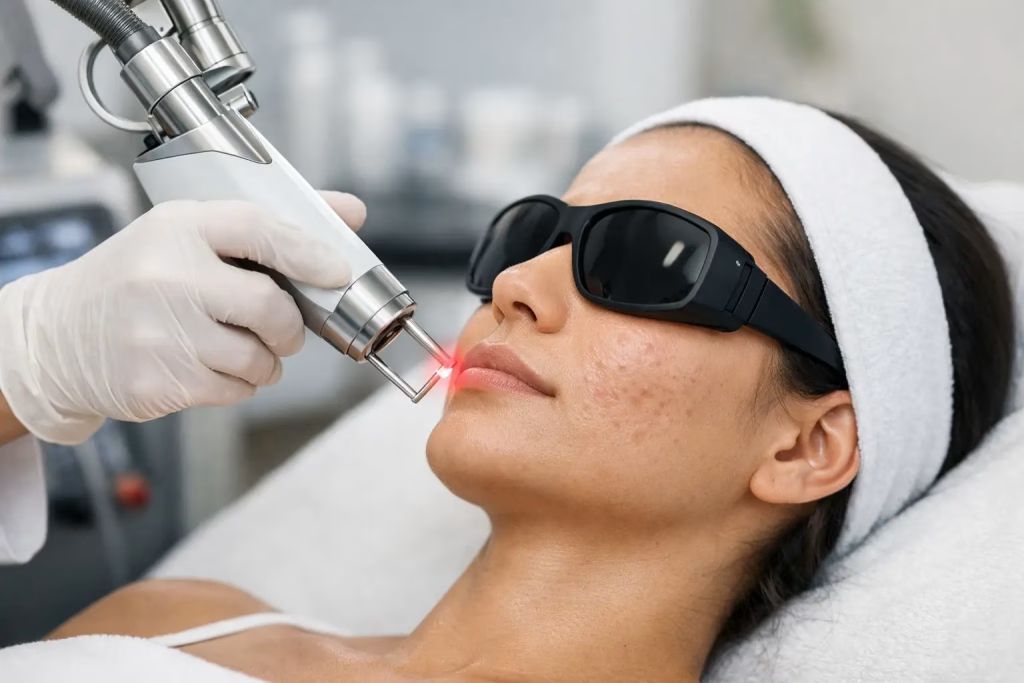
On treatment day, the skin is usually cleansed thoroughly and numbing cream may be applied depending on the device. Most patients describe laser treatment as uncomfortable rather than unbearable, with sensations ranging from heat and prickling to a snapping feeling. Session length varies by area and treatment intensity.
Afterward, the skin may appear red, warm, or slightly swollen. More intensive resurfacing can lead to bronzing, flaking, or a sandpaper-like texture for several days. Milder treatments may involve only temporary redness. Recovery can range from minimal social downtime to a week or more, depending on the technology used.
This is where expectations matter. Improvement is rarely instant once the redness fades. Collagen remodeling takes time. Many patients start to notice smoother texture after several weeks, with continued changes over the following months. The skin is rebuilding, not performing on command.
How many sessions will you need?
This is one of the most common questions, and the truthful answer is that one session is seldom the full story. Acne scars are layered and often longstanding. Mild scarring may improve with a shorter series, while moderate to severe textural scars generally require multiple sessions spaced over time.
The intensity of each treatment influences the timeline. A stronger session may deliver more noticeable change per visit but come with more downtime. A gentler series may suit patients who want to maintain a professional schedule with less visible recovery. Neither route is universally better. The best option is the one you can complete consistently and comfortably.
For many patients, combination treatment is what elevates results. Laser can be excellent for resurfacing and collagen stimulation, while other procedures may release tethering, target deeper pits, or improve residual redness and discoloration.
The trade-offs patients should know
Laser treatment can be transformative, but it is not magic, and it is not always the only answer. Deeper scars may soften substantially without disappearing completely. Some patients want perfection when what is realistically achievable is meaningful refinement. That distinction matters because satisfaction often comes from clarity as much as outcome.
There is also the question of downtime versus ambition. If you want the strongest resurfacing effect, you may need to accept a more visible healing period. If you need a discreet approach, you may trade speed for convenience. Premium care is not about pushing the most aggressive protocol. It is about choosing the one that suits your skin and your life.
Choosing the right clinic for acne scar laser treatment
When considering acne scar laser treatment, look beyond the device list. Technology matters, but judgment matters more. You want a clinic that evaluates your scars carefully, explains why a certain plan is being recommended, discusses risks openly, and sets expectations with confidence rather than exaggeration.
A refined treatment experience should feel both medical and personal. That means doctor oversight, attentive aftercare, and a plan that accounts for your skin behavior over time. In a premium setting such as Kelly Oriental Aesthetic Clinic, that tailored approach is part of the value. The goal is not simply to perform a procedure, but to curate a treatment journey that respects safety, comfort, and visible progress.
Good scar treatment is rarely about doing more. It is about doing the right things in the right order, with patience. If your skin has carried the memory of acne for years, it deserves a plan with that same level of care.
