
Uncategorized
Dermal Fillers Versus Threads for Facial Aging
A face can begin to look tired long before it feels that way. A softer jawline, a flatter midface, or subtle skin laxity around the cheeks may change how light falls across the face, even when fine lines are not yet the main concern. When considering dermal fillers versus threads, the more useful question is rarely which treatment is “better.” It is which approach addresses the structural change you are seeing, in a way that looks refined, balanced, and true to you.
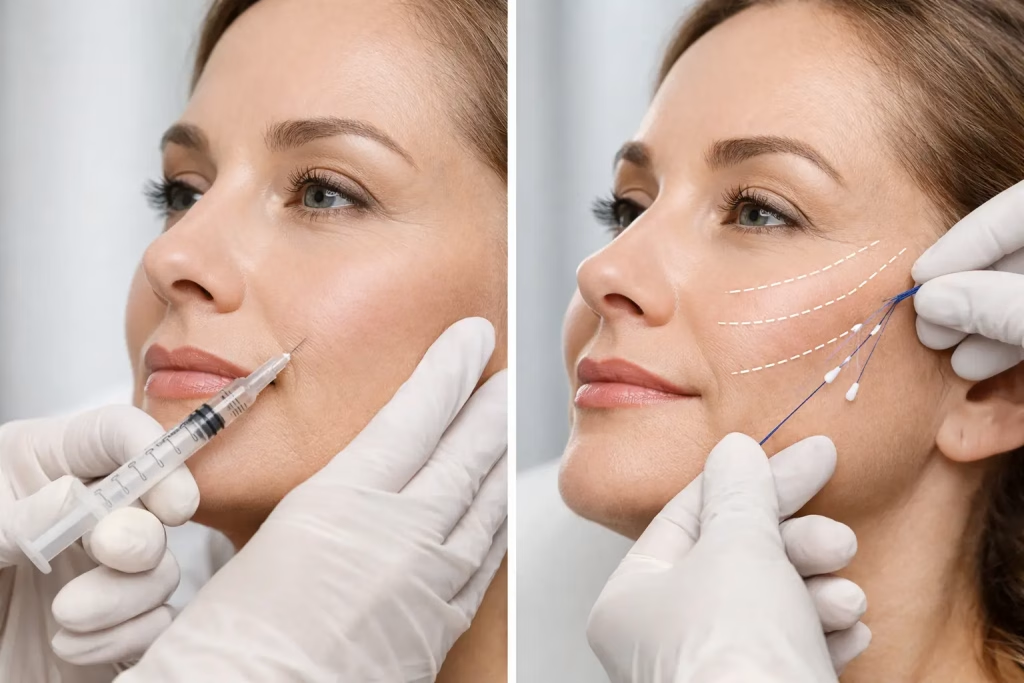
Both treatments can be part of a sophisticated non-surgical rejuvenation plan. Yet they work in distinctly different ways. Fillers are designed to restore or refine volume and contour. Threads are primarily used to reposition selected areas of tissue and create a subtle lifting effect. The right choice depends on your facial anatomy, degree of laxity, volume loss, skin quality, and desired downtime.
Dermal Fillers Versus Threads: The Fundamental Difference
Dermal fillers are injectable gels, most commonly formulated with hyaluronic acid, a substance naturally found in the skin. In experienced hands, they can replace volume that has diminished over time or enhance areas that benefit from more definition. Common treatment areas include the cheeks, temples, chin, jawline, lips, and folds around the lower face.
Rather than simply “filling wrinkles,” a considered filler treatment often focuses on facial proportions. Restoring support in the midface, for example, may soften the appearance of nasolabial folds without placing product directly into every line. A carefully shaped chin or jawline can bring greater harmony to the profile. The goal is not an overfilled appearance, but a rested, quietly refreshed result.
Thread lifts use fine, absorbable sutures placed beneath the skin to lift and support targeted tissue. Depending on the thread type and treatment area, they may be used to improve the appearance of mild to moderate laxity along the cheeks, jawline, or brows. The threads gradually dissolve, while the body’s natural healing response may support collagen production over time.
In simple terms, fillers help where the face needs volume, projection, or contour. Threads help where tissue has begun to descend and needs gentle repositioning. Many faces show both changes at once, which is why a combined plan can sometimes be more appropriate than choosing one treatment in isolation.
When Dermal Fillers May Be the Better Choice
Fillers are often well suited to faces that appear hollow, flattened, or less defined rather than significantly sagging. Age-related volume loss can occur in the temples, cheeks, and areas around the mouth, creating shadows that make the face look less vibrant. Strategic restoration of volume can improve these transitions while preserving natural movement and expression.
They can also be an effective option for patients seeking precise refinement. A nonsurgical nose enhancement, chin projection, lip balancing, or jawline contouring requires control over shape and placement that threads do not provide. For this reason, fillers are often favored when the primary goal is sculpting rather than lifting.
Results are visible immediately, although minor swelling or bruising can temporarily affect the final appearance. Hyaluronic acid fillers typically last from several months to more than a year, depending on the product used, the area treated, metabolism, and lifestyle factors. Maintenance is usually needed to preserve the result.
Filler treatment requires thoughtful restraint. Adding volume to a face that is already heavy in the lower third, or using filler to compensate for advanced skin laxity, may not create the elegant outcome a patient wants. An experienced medical practitioner should assess whether volume restoration will truly support the face or whether lifting, energy-based treatments, or another approach would be more suitable.
When Threads May Be the Better Choice
Threads may suit patients whose concern is early to moderate tissue descent, particularly around the midface and jawline. Someone who notices mild jowling, softened cheek position, or a less defined facial outline may benefit from the subtle support threads can provide. The effect is generally more natural and understated than surgical lifting, making it appealing for those who want improvement without a dramatic change.
A thread lift does not replace lost facial volume in the same way filler does. If the cheeks are hollow or the temples are depleted, lifting the skin alone may not address the underlying cause of a tired appearance. Similarly, threads have limits when laxity is pronounced. In these cases, a surgical consultation or a broader non-surgical plan may be more realistic than expecting threads to create a facelift-level result.
Following treatment, temporary tenderness, swelling, bruising, and a sensation of tightness can occur. Patients are often advised to avoid strenuous exercise, wide facial movements, facial massage, and certain dental procedures for a short recovery period. Results can be seen after treatment, with further changes developing as the skin settles. Longevity varies by thread type, anatomy, and the degree of laxity, but results are generally temporary and should be viewed as a maintenance-based treatment.
The Role of Skin Quality in Your Result
Neither fillers nor threads should be considered separate from skin health. Fine crepiness, dehydration, enlarged pores, pigmentation, and textural changes can make laxity more noticeable, even when facial contour is well supported. In many cases, skin-focused treatments provide the finishing layer that allows injectable results to look more luminous and polished.
Collagen-stimulating technologies, such as radiofrequency microneedling, ultrasound lifting, or radiofrequency skin tightening, may be recommended when skin quality and mild laxity are central concerns. Skin boosters can improve hydration and radiance, while tailored laser treatments may address uneven tone or photoaging. These treatments do not replace fillers or threads, but they can complement them by improving the quality of the skin over the structure beneath it.
This is where a bespoke approach matters. A patient with volume loss, early jowling, and dehydrated skin may benefit from conservative cheek support, targeted thread placement, and skin-rejuvenation treatments staged over time. Another patient may only need a subtle chin enhancement and collagen stimulation. The most beautiful results often come from doing less, with greater precision.
Safety, Planning, and the Value of Medical Assessment
Injectable aesthetic treatments should never be selected from a menu alone. The face contains complex blood vessels, muscles, ligaments, and fat compartments, and each has a role in how the face ages. Proper assessment considers facial balance from the front and profile, skin thickness, existing asymmetry, prior procedures, medical history, and the changes most likely to achieve your goal.
With fillers, potential risks include bruising, swelling, asymmetry, lumps, infection, and, rarely, vascular complications. With threads, risks may include bruising, swelling, tenderness, temporary dimpling, asymmetry, infection, or thread visibility or migration. These concerns reinforce the importance of treatment by a qualified, experienced medical professional who uses appropriate techniques and provides clear aftercare.
A responsible consultation should also include discussion of what not to treat. If you have active skin infection, certain autoimmune concerns, are pregnant or breastfeeding, or have particular medical conditions or medications, treatment may need to be postponed or adjusted. Transparency is part of premium care, not a barrier to it.
Can Fillers and Threads Be Combined?
Yes, but timing and sequencing matter. A combination plan may use fillers to restore structural support in areas such as the cheeks or chin, then use threads to improve mild tissue descent along the lower face. In other cases, threads may be placed first and filler introduced later once the tissues have settled.
The decision should be individualized. Too much volume combined with lifting can look unnatural, while treating laxity without addressing meaningful volume loss can leave the face looking incomplete. A measured plan prioritizes proportion, tissue quality, and long-term facial harmony over treating every concern in a single appointment.
At Kelly Oriental Aesthetic Clinic, this philosophy centers on doctor-led assessment and treatment plans designed around your features, not a one-size-fits-all trend. Whether your priority is restored contour, a more defined jawline, or a subtle lift, the intention should remain the same: to help you look well, rested, and naturally like yourself.
The most rewarding aesthetic decisions are often the ones made with patience. Give your face the benefit of a careful consultation, a realistic discussion of trade-offs, and a treatment plan that respects both the changes you see now and the way you want to age over time.
