

Uncategorized
How Injectables Soften Expression Lines Naturally
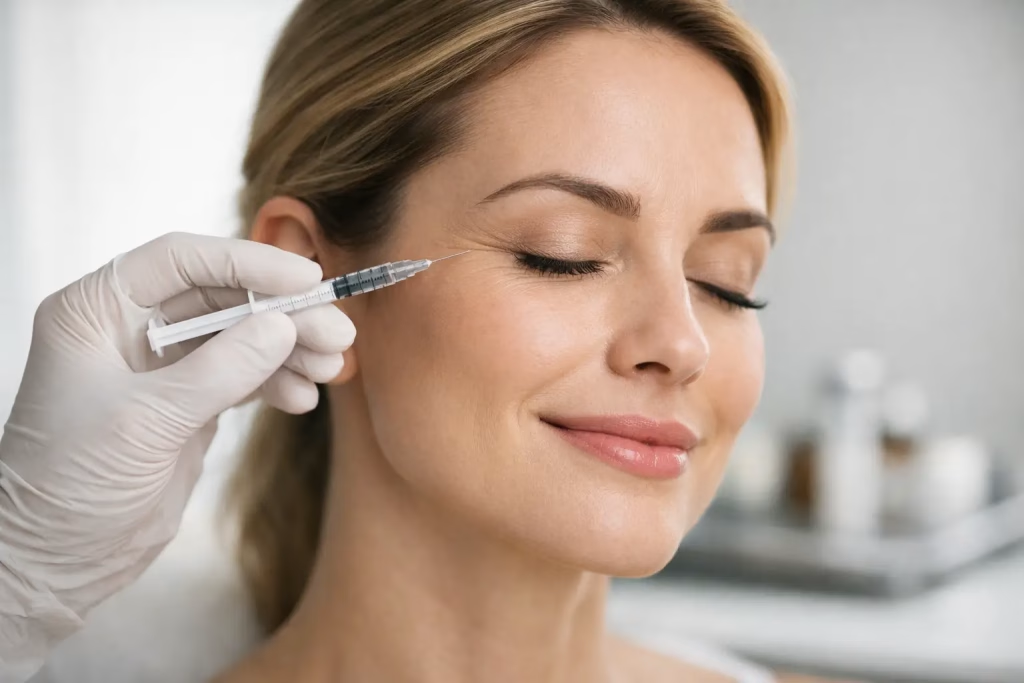
Expression lines often tell a story before you intend them to. A furrow between the brows can read as tension during a calm conversation, while crow’s feet or forehead lines may make a well-rested face appear tired. Understanding how injectables soften expression lines begins with a more refined goal than simply erasing every crease: reducing the pull that creates persistent lines while preserving the character, movement, and balance that make your face distinctly yours.
For many patients, the most elegant result is not a dramatically different appearance. It is looking refreshed, composed, and well, even on a demanding week. This is where a personalized, doctor-led injectable plan becomes essential.
How Injectables Soften Expression Lines
Expression lines form through repeated facial movement. Smiling, squinting, concentrating, and raising the brows all activate small facial muscles beneath the skin. In younger skin, collagen, elastin, and hydration allow the surface to rebound after each movement. Over time, however, repeated folding can leave lines visible even when the face is at rest.
Neuromodulator injectables work by temporarily reducing communication between selected nerves and muscles. When a carefully chosen muscle contracts less strongly, the skin above it is no longer repeatedly compressed with the same force. Existing dynamic lines can look softer, and the skin is given an opportunity to rest from habitual creasing.
This is why neuromodulators are commonly considered for horizontal forehead lines, frown lines between the eyebrows, and lines at the outer corners of the eyes. They may also be used in other areas when clinically appropriate, such as a chin that dimples with movement, a nose that wrinkles when smiling, or jaw muscles that contribute to a square lower-face appearance.
The treatment is not designed to fill a wrinkle in the way a cream might promise to do. It addresses one of the underlying causes: the muscle movement that repeatedly creates the fold. Results develop gradually, usually becoming noticeable over several days and settling over the following one to two weeks. The effect is temporary, which allows treatment to be reassessed and refined as your face, preferences, and lifestyle evolve.
Movement, not stillness, is the modern objective
A common concern is looking frozen or losing the ability to show emotion. This outcome is not an inevitable feature of injectables. It is more often related to treatment planning, dose selection, injection placement, and the individual anatomy of the patient.
Facial muscles do not work in isolation. Relaxing one area too aggressively can alter how neighboring muscles behave. For example, the forehead is closely connected to brow position. A patient who naturally relies on forehead movement to keep the brows elevated needs a different approach from someone whose brows are already high and highly animated.
An experienced medical practitioner evaluates these details before recommending treatment. Your resting expression, facial symmetry, muscle strength, brow shape, eyelid position, skin quality, and desired degree of movement all inform the plan. Some patients prefer a very soft reduction in movement. Others want stronger smoothing in a particular area. Neither preference is inherently right or wrong, but both require a thoughtful assessment.
Neuromodulators and Fillers Serve Different Roles
Injectables are often spoken about as one category, yet different products are designed to address different concerns. Knowing the distinction helps set realistic expectations.
Neuromodulators are generally used for lines caused primarily by muscle activity. They are most effective when the line deepens as you animate your face. If you raise your brows and the forehead creases prominently, or if you frown and the glabellar lines appear, muscle-relaxing treatment may be a suitable option.
Dermal fillers, commonly made with hyaluronic acid, work differently. They can restore structure or volume where age-related changes, weight fluctuations, or natural facial anatomy have created hollows, folds, or reduced support. In selected cases, a small amount of filler may complement neuromodulator treatment when a line remains visible at rest after muscle activity has been addressed.
That does not mean every expression line needs filler. In fact, placing filler into areas with strong movement without addressing the muscle pattern can be an unsatisfactory strategy. It may add unnecessary volume while leaving the cause of the crease unchanged. Conversely, treating a deeply etched resting line with a neuromodulator alone may soften it but not remove it completely, particularly when there has been longstanding collagen loss.
A tailored plan may also include skin-focused treatments. Skin boosters can support hydration and luminosity, while regenerative or energy-based treatments may be considered to improve texture, fine lines, and collagen quality over time. The right combination depends on whether the concern is movement, volume, skin quality, or a blend of all three.
What a Thoughtful Consultation Should Cover
The first consultation should feel measured, not rushed. Your practitioner should ask what you see in the mirror, what you hope to change, and what you do not want to lose. It is equally useful to discuss prior injectable treatments, medications, allergies, medical history, and any upcoming events.
Facial assessment usually includes observing the face at rest and in motion. Photographs may be used for planning and to compare results at review appointments. The practitioner should explain which areas may respond well, what degree of softening is realistic, and where caution is needed.
At Kelly Oriental Aesthetic Clinic, this approach is designed around bespoke aesthetics rather than a standardized dose or a one-size-fits-all package. A conservative first treatment can be particularly valuable for patients new to injectables, because it allows the plan to be adjusted after seeing how their individual facial muscles respond.
The appointment itself is typically brief. Small injections are placed with a fine needle into targeted muscles. Most patients describe the sensation as quick pinches. Mild redness, pinpoint marks, tenderness, or small bumps at the injection sites can occur immediately afterward and usually settle promptly. Bruising is possible with any injection, so it is wise to plan with social events and professional commitments in mind.
Timing, Results, and Maintenance
Neuromodulator results are temporary, and the duration varies from person to person. Metabolism, muscle strength, dose, treatment area, and frequency of prior treatments can all influence how long the effect lasts. Many patients choose periodic maintenance when movement gradually returns, but a fixed schedule should never replace an individual review.
The goal is not to chase perfection at every appointment. Over-treatment can make the face appear less expressive or create an aesthetic result that does not feel like you. Under-treatment may be ideal for someone who values generous movement and simply wants a softer resting expression. The best plan is calibrated to your features and comfort level, not someone else’s before-and-after photo.
It is also helpful to plan around milestones. If you are considering treatment before a wedding, presentation, reunion, or holiday, allow enough time for the result to settle and for a follow-up assessment if appropriate. First-time patients should avoid leaving treatment until the final few days before an important occasion.
Safety Is Part of the Aesthetic Result
Injectables are medical treatments, even when the procedure appears simple. Product selection, dose, facial anatomy, sterile technique, and the ability to recognize and manage complications all matter. Choose a qualified medical provider who conducts a proper consultation and is willing to advise against treatment when it is not suitable.
Not everyone is an ideal candidate at every moment. Pregnancy and breastfeeding, certain neurological conditions, active skin infections at the treatment site, particular medications, or a history of reactions may require postponement or a different approach. Be transparent about your health history and follow the aftercare instructions provided by your clinic.
Results also depend on caring for the skin itself. Daily broad-spectrum sunscreen, a considered home routine, adequate hydration, and treatments that support collagen can help maintain a polished overall appearance. Injectables can soften the movement-related component of aging, but they are not a substitute for skin health or a complete facial assessment.
The most beautiful injectable results are often the ones no one can identify. Your colleagues may notice that you look rested. Friends may ask whether you changed your skincare routine. When treatment respects your natural expression rather than competing with it, refinement can feel quiet, confident, and entirely your own.
