
Uncategorized
Why a Personalized Aesthetic Treatment Plan Matters
A good mirror tells the truth. A good treatment plan tells you what to do about it.
That is why a personalized aesthetic treatment plan matters more than any single device, injectable, or trending procedure. Most aesthetic concerns do not appear in isolation. Pigmentation may sit alongside dehydration. Fine lines may be made worse by laxity. Acne scars may look more visible when pores are enlarged and skin texture is uneven. Treating one issue without understanding the full picture can lead to underwhelming results, unnecessary spending, or a look that feels overdone rather than refreshed.
For patients who value visible improvement and a refined experience, personalization is not a luxury extra. It is the foundation of intelligent aesthetic care.
What a personalized aesthetic treatment plan really means
A personalized aesthetic treatment plan is a medically guided strategy built around your face, skin, body, lifestyle, timeline, and comfort level. It goes beyond recommending a treatment because it is popular or widely advertised. Instead, it asks better questions.
What is bothering you most right now? What has changed over the last two years? Are you trying to improve texture, tighten laxity, soften lines, restore hydration, lift contours, or maintain what already looks good? Do you need quick downtime-friendly treatments because of work and social commitments, or can you commit to a more intensive corrective series?
The answers shape everything. Two people may both ask for brighter skin, but one may need pigment management with laser-based care while the other may benefit more from exfoliation, hydration support, and barrier repair. A plan should respect those differences rather than flatten them.
Why one-size-fits-all aesthetics often falls short
Aesthetic medicine offers more options than ever, which is a benefit only when treatment selection is precise. Without a tailored plan, patients often end up chasing symptoms instead of addressing causes.
Take facial aging as an example. A patient may focus on nasolabial folds, assuming filler is the answer. But if the deeper issue is mid-face volume loss combined with skin laxity, treating the fold alone may add heaviness instead of elegance. In another case, someone concerned about dullness may repeatedly book facials when the more meaningful improvement would come from addressing sun damage, vascular redness, or collagen decline.
This is where doctor-led assessment matters. Good planning does not simply ask what treatment you want. It evaluates what your skin and facial structure actually need, what can wait, and what will create the most natural progression of results.
The anatomy of an effective personalized aesthetic treatment plan
The strongest plans are layered, not rushed. They usually begin with a consultation that looks at more than the obvious complaint. Skin quality, elasticity, facial proportions, hydration levels, pigment patterns, redness, scarring, hair concerns, and even the way you heal can all influence treatment choices.
An effective plan should also account for your age, but not be ruled by it. Chronological age is only one part of the equation. A younger patient with acne scars and post-inflammatory pigmentation may need a very different sequence than an older patient focused on lifting, tightening, and wrinkle softening. Even among patients of the same age, skin behavior can differ dramatically based on genetics, sun exposure, stress, hormones, and skincare habits.
Then there is timing. If you have an upcoming wedding, work event, or travel schedule, your treatment plan should reflect that reality. Some treatments deliver gradual improvement. Others require social downtime. Some pair well together, while others should be spaced apart. A thoughtful plan maps these decisions in advance so the journey feels calm and intentional.
Budget matters too, and it should be addressed with clarity rather than discomfort. Personalization is not about recommending everything. It is about prioritizing what will move the needle most effectively within your parameters.
How combination treatments create better results
One of the clearest advantages of a personalized approach is the ability to combine treatments in a way that makes clinical sense. Skin and facial concerns are often multi-layered, so treatment often works best when different technologies or techniques are used for different purposes.
For example, a patient with enlarged pores, post-acne marks, and mild textural scarring may benefit from a staged plan that includes energy-based resurfacing, regenerative support, and medical-grade hydration. Someone concerned about sagging along the jawline and a heavier lower face may need a combination of skin tightening, contour refinement, and collagen-stimulating care rather than a single isolated treatment.
This is also where restraint becomes a sign of expertise. Not every concern should be treated at once. In some cases, skin must first be calmed before more intensive procedures are introduced. In others, restoring skin health improves the result of device-based treatments later. The best outcomes often come from sequencing, not stacking.
Personalized planning should protect natural-looking results
For discerning patients, the goal is rarely to look treated. The goal is to look fresher, more rested, more refined, and still unmistakably like yourself.
A personalized aesthetic treatment plan helps protect that outcome because it considers proportion, pacing, and cumulative effect. If every concern is treated aggressively and at the same time, the result can feel artificial. If a plan is too conservative when correction is needed, patients may spend months with very little visible change. The right balance depends on anatomy, expectations, and the skill of the practitioner guiding the process.
Natural-looking aesthetics require discipline. That may mean choosing skin quality treatments before adding volume. It may mean lifting and tightening before contouring. It may also mean saying no to a requested treatment if it does not suit the patient. This kind of honesty is part of premium care.
What to expect during a doctor-led consultation
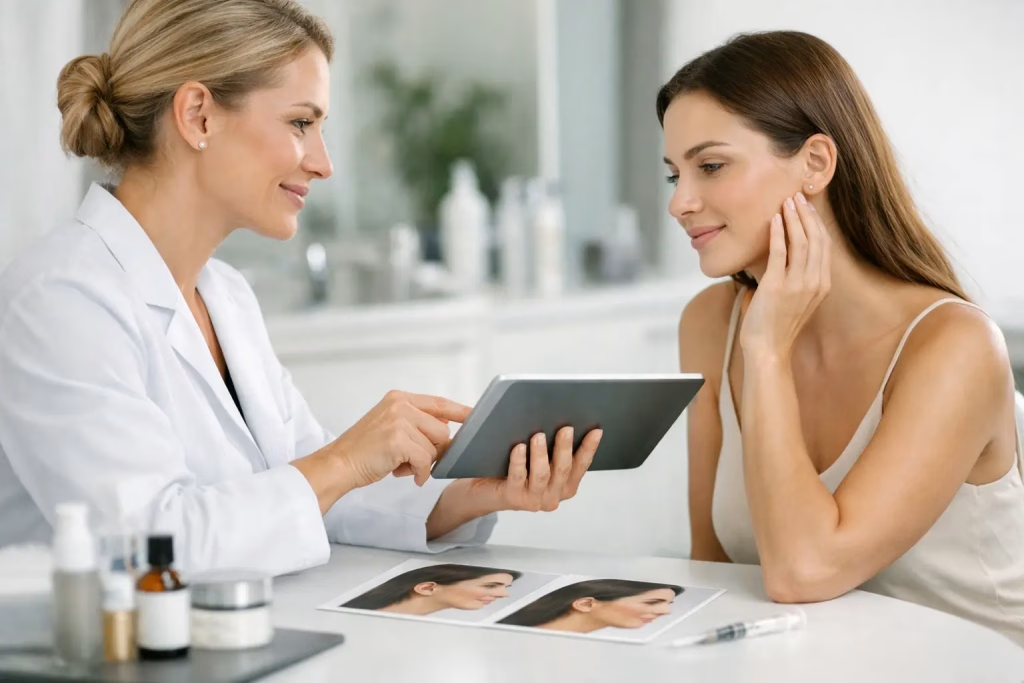
A proper consultation should feel detailed, unrushed, and specific. You should leave with a clear understanding of what your concerns are, which treatments are suitable, how many sessions may be needed, what the downtime looks like, and when results typically appear.
You should also understand the trade-offs. Some treatments offer subtle improvement with little downtime. Others provide more dramatic correction but require patience or recovery. There is rarely a perfect option without compromise, and a trustworthy clinic will explain that openly.
At a clinic such as Kelly Oriental Aesthetic Clinic, where advanced technologies and a high-touch environment meet, this consultation process is especially valuable. The setting may feel luxurious, but the decision-making should remain clinical, measured, and centered on your long-term result.
When your treatment plan should change
A personalized aesthetic treatment plan is not static. Skin changes with seasons, stress, age, travel, hormones, and life events. What served you well last year may not be the best next step now.
That is why reassessment matters. A patient who initially comes in for acne management may later shift toward pore refinement and maintenance. Someone who starts with hydration facials may eventually benefit from collagen-focused treatments as early laxity develops. Men and women experiencing hair thinning may need a plan that changes based on shedding patterns, scalp response, and treatment consistency.
The point is not to keep adding treatments. It is to keep the plan relevant.
Choosing a clinic that understands personalization
Not every clinic approaches customization with the same depth. If personalization is central to your result, look beyond a long treatment menu. Ask how consultations are conducted, who designs the plan, how treatment progress is reviewed, and whether recommendations are based on your goals rather than a fixed package.
A sophisticated clinic experience should make you feel cared for, but also properly guided. There should be room for nuance. Sometimes the best next step is a laser. Sometimes it is injectable refinement. Sometimes it is a skin-conditioning phase before anything more advanced. And sometimes the most valuable recommendation is to wait.
That level of discernment is what turns aesthetic treatment from a transaction into a curated journey.
The most elegant results rarely come from doing more. They come from doing the right things, in the right order, for the right reasons. A personalized aesthetic treatment plan gives you that clarity, and with it, the confidence to invest in treatments that truly belong to you.
