
Uncategorized
How to Reduce Enlarged Pores Effectively
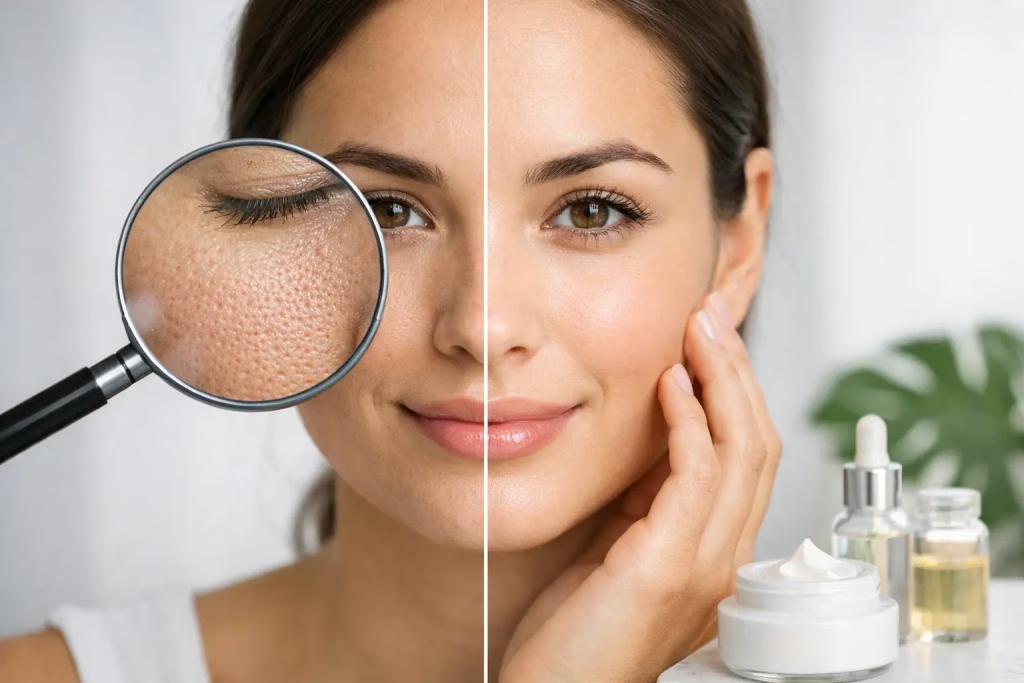
If your makeup settles unevenly by midday or your skin looks textured no matter how much you cleanse, pores are often the reason. When people ask how to reduce enlarged pores, what they usually want is smoother-looking skin, better light reflection, and a fresher, more refined complexion – not the unrealistic promise of poreless skin.
That distinction matters. Pores are a normal part of healthy skin. They release oil and sweat, help protect the skin barrier, and cannot be erased. What can change is how visible they appear. With the right combination of home care, sun protection, and well-chosen aesthetic treatments, pores can look noticeably tighter and skin can appear more polished.
What makes pores look enlarged?
Pore size is influenced by both genetics and skin behavior. If you naturally produce more oil, your pores may be more visible, especially across the nose, cheeks, and forehead. As oil mixes with dead skin and daily buildup, pores can stretch and appear darker or more obvious.
Age also plays a role. When collagen and elastin begin to decline, the skin loses some of its firmness and support. That means pores may look looser and more elongated over time. Sun exposure can speed up this process, which is one reason enlarged pores often become more noticeable with age, even in people who did not struggle much with them earlier.
Past acne can add another layer. Recurrent congestion and inflammation can leave skin texture uneven, and pores may remain visibly stretched long after breakouts calm down. In these cases, the issue is not only oil control. It is also about improving skin renewal and rebuilding structural support.
How to reduce enlarged pores at home
The most effective home routine is usually consistent rather than complicated. A gentle cleanser morning and night helps remove excess oil, sunscreen, and daily debris without stripping the skin. Over-cleansing can backfire, especially if the skin responds by producing even more oil.
Salicylic acid is often one of the most useful ingredients for visible pores because it is oil-soluble and can work inside the pore lining. Used regularly, it helps loosen buildup and reduce congestion. For those with sensitive skin, the better approach may be a lower strength used a few times a week rather than aggressive daily exfoliation.
Retinoids are another cornerstone. They support cell turnover, help reduce clogging, and over time can improve the appearance of skin texture. Prescription-strength formulas may deliver faster results, but they are not right for everyone. Some people do best starting with a gentler retinol and building gradually to avoid irritation.
Niacinamide is worth considering as well. It can help balance oil, support the skin barrier, and soften the look of enlarged pores without the sting that stronger acids sometimes cause. For many adults, especially those juggling long workdays, air-conditioning, and urban humidity, that balance between performance and tolerance is what keeps a routine sustainable.
Hydration is often overlooked. Dehydrated skin can look rougher and less refined, making pores appear more pronounced. A lightweight, non-comedogenic moisturizer helps maintain barrier function so active ingredients can work without tipping skin into irritation.
And then there is sunscreen. Daily UV exposure gradually weakens collagen and contributes to textural changes. If you are serious about reducing the visible size of pores, broad-spectrum sunscreen is not optional. It is part of the treatment plan.
What usually makes pores look worse
People often try to scrub pores away. That rarely ends well. Harsh scrubs, cleansing brushes used too often, and drying toners can inflame the skin and make texture more noticeable. The skin may feel temporarily clean, but irritation tends to create a shinier, rougher surface.
Heavy, occlusive products can also be an issue for some skin types, particularly in warm climates. Not every rich cream causes congestion, but if pores are already a concern, texture and formulation matter. Makeup removal matters too. Even high-quality complexion products can settle into pores if they are not thoroughly removed at the end of the day.
There is also a difference between true enlarged pores and temporary congestion. Blackheads, sebaceous filaments, and surface buildup can all make pores look larger than they are. This is why a proper assessment can change the treatment path. Sometimes the fix is better exfoliation. Sometimes it is collagen remodeling. Often it is both.
Professional treatments for enlarged pores
When home care reaches its limit, in-clinic treatment can make a meaningful difference. The best option depends on why the pores look enlarged in the first place.
For oily, congested skin
If excess oil and debris are the main drivers, medical-grade facials and deep cleansing treatments can help clear compacted buildup while keeping the skin balanced. Hydrafacial-style treatments are especially popular because they combine exfoliation, extraction, and hydration in a way that leaves skin cleaner but not stripped. They are useful for maintenance and can complement a longer-term treatment plan.
Chemical peels may also help, particularly for patients dealing with recurrent congestion, post-acne texture, or a dull surface layer. The strength and blend matter. A peel should be selected with your skin sensitivity, pigmentation risk, and goals in mind rather than chosen as a one-size-fits-all fix.
For pores linked to acne scars or uneven texture
If enlarged pores are tied to old acne damage, devices that improve skin resurfacing and renewal are often more impactful. Laser-based treatments and radiofrequency microneedling can help refine texture by encouraging collagen production and remodeling the skin beneath the surface.
Sylfirm X, for example, is often considered when texture concerns sit alongside redness, post-inflammatory changes, or early signs of aging. It can be a thoughtful option for patients who want more than superficial polishing. In the right hands, this category of treatment is less about chasing a trend and more about selecting the modality that matches the skin condition.
For age-related pore visibility
When pores appear larger because skin has become less firm, tightening treatments may be relevant. Technologies such as Thermage and Ultherapy are more commonly associated with lifting and contour support, but skin firmness and pore appearance are often connected. If the surrounding skin becomes smoother and more structurally supported, pores can look less obvious.
That said, these are not direct pore treatments in the same way exfoliating or resurfacing procedures are. They are best suited to patients whose concerns include laxity, crepey texture, or early aging, not just oiliness alone.
Why customization matters
Two people can have visible pores for completely different reasons. One may have resilient, oily skin in need of better exfoliation and regular deep cleansing. Another may have thinner, more mature skin that needs collagen support and a gentler protocol. Treating both the same way often leads to disappointment.
This is where doctor-led planning makes a difference. A tailored assessment can identify whether the priority is decongestion, resurfacing, tightening, oil regulation, or a combination approach over time. At a clinic such as Kelly Oriental Aesthetic Clinic, that personalized pathway is often what separates temporary improvement from elegant, lasting refinement.
How long does it take to see improvement?
Visible pores do not change overnight. With a disciplined home routine, many people notice smoother texture within four to eight weeks, especially if congestion is a major factor. Collagen-focused treatments take longer. Results may continue to improve over several months as the skin rebuilds itself.
Maintenance is part of the reality. Oil production, sun exposure, hormones, and aging do not stop, so pore care is rarely a one-time project. The good news is that once the right rhythm is established, keeping skin refined usually becomes much easier.
A realistic approach gets the best results
If you are researching how to reduce enlarged pores, the most useful mindset is to aim for refinement, not perfection. Pores are part of living skin. The goal is to make them less noticeable by clearing buildup, calming oil activity, protecting collagen, and choosing treatments that match your skin rather than overpower it.
The most beautiful results tend to look subtle. Skin appears smoother, cleaner, and more confident in natural light. And for most people, that is exactly the kind of improvement worth investing in.
