
Uncategorized
Skin Booster for Hydration: Is It Worth It?
That tight, papery feeling that shows up by midafternoon is not always a skincare problem. For many people, it is a skin quality issue – one that serums and moisturizers can soften, but not fully correct. When the skin looks dull, makeup sits unevenly, and fine lines seem more visible despite a thoughtful routine, a skin booster for hydration often enters the conversation for good reason.
Unlike treatments that focus mainly on lifting, freezing, or resurfacing, skin boosters are designed to improve how the skin holds water from within. The goal is not to change your features. It is to restore a fresher, smoother, more refined look that reads as well-rested skin.
What a skin booster for hydration actually does
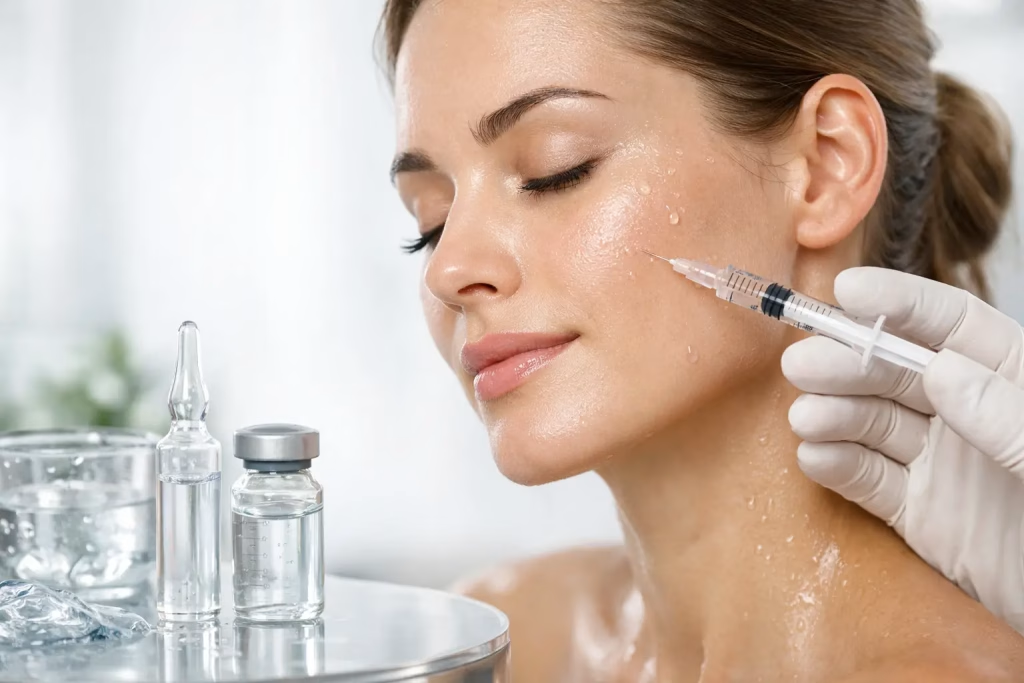
A skin booster is an injectable treatment placed superficially into the skin to improve hydration, texture, and overall skin quality. Most formulas are built around hyaluronic acid, a substance naturally found in the body that attracts and retains water. Instead of adding volume the way a traditional filler would, the product is distributed in a way that supports diffuse hydration across the treated area.
This distinction matters. If your concern is hollow cheeks or a more defined jawline, a skin booster may not be the right primary treatment. If your concern is crepey texture, dehydration lines, tired-looking skin, or a lack of glow, it can be a much more elegant fit.
Patients often describe the result as skin that looks healthier rather than obviously treated. That subtlety is part of the appeal, especially for those who want visible improvement without a dramatic change in facial shape.
Why hydration loss shows up even with good skincare
Dehydrated skin is not always the same as dry skin. Dry skin refers to a skin type with lower oil production. Dehydration is a condition in which the skin lacks water. You can have oily skin and still be dehydrated, particularly if you live in air conditioning, travel often, work long hours, or use active ingredients that compromise the skin barrier.
Age also changes the picture. Over time, the skin produces less collagen, elastin, and natural moisturizing factors. The barrier becomes less resilient, and water is lost more easily. That is when the complexion can start to look thinner, rougher, and less luminous, even if you are diligent with facials and home care.
A skin booster addresses this at a deeper level than topical products can. It does not replace skincare, but it can enhance the skin’s ability to look more supple and balanced from the inside out.
Who tends to benefit most
The best candidates are usually people who feel their skin looks fatigued, dehydrated, or less refined than it used to. Fine lines around the cheeks, under-eye area, mouth, or neck may appear more noticeable when the skin lacks moisture. Enlarged pores and uneven texture can also become more obvious when the skin is not well hydrated.
This treatment tends to suit patients who prefer a polished, natural result. It is especially popular among professionals and social clients who want skin that looks quietly refreshed rather than noticeably altered.
That said, not every concern should be treated with a skin booster first. If active acne, significant laxity, deeper pigmentation, or pronounced scarring is the main issue, a doctor may recommend another treatment or a combination plan instead. Sometimes the most effective approach is layered: hydration support with a skin booster, collagen remodeling with energy-based devices, and maintenance through facials or medical-grade skincare.
What treatment areas are commonly chosen
The face is the most requested area, but it is not the only one. Skin boosters are also commonly used on the neck, décolletage, and hands – areas that often reveal dehydration and early aging quickly.
The under-eye area can be considered in selected cases, though this requires careful assessment. Not every formula suits every zone, and the injector’s technique matters greatly. In a doctor-led setting, the choice of product, depth, and treatment spacing is tailored to the skin’s condition rather than applied as a one-size-fits-all protocol.
What the treatment experience is usually like
A consultation comes first, and it should be more than a quick chat. The skin’s hydration level, texture, sensitivity, and structural changes all influence whether this is the right treatment and how it should be performed. A thoughtful plan also accounts for timing. If you have a wedding, business event, or holiday coming up, it is better to discuss that early.
On treatment day, the skin is cleansed and numbed. The product is then delivered through a series of tiny injections across the chosen area. Some techniques create small raised bumps immediately after treatment, which usually settle over the next day or two. Mild redness, tenderness, or bruising can happen, so it is sensible to allow a little social downtime.
Most patients need a course rather than a single appointment. The exact number depends on the formula used, the baseline condition of the skin, and the result you are hoping to achieve. Maintenance sessions are usually recommended because hydration support is not permanent.
When you can expect to see results
One of the more common misconceptions is that you walk out glowing instantly. While some people notice an early improvement, the more meaningful result tends to develop gradually over the following weeks as the skin becomes better hydrated and looks smoother.
The effect is often cumulative. After a series, the skin may appear more luminous, makeup can sit better, and fine dehydration lines may soften. Texture can feel more even to the touch. In good candidates, the result looks refined rather than overdone.
Expectations should still be realistic. Skin boosters improve quality, but they do not recreate youthful skin overnight. If your skin is severely sun-damaged or lax, they may be just one part of a larger rejuvenation plan.
How it compares with facials, lasers, and fillers
This is where nuance matters. A Hydrafacial or similar treatment can leave the skin looking cleaner, brighter, and temporarily more hydrated, but the result is generally shorter-lived and more surface-level. A skin booster works deeper and tends to deliver a longer-lasting improvement in skin quality.
Lasers and devices can target different concerns, such as pigmentation, redness, scars, or collagen stimulation. In some cases, they pair beautifully with hydration-focused injectables. If your main complaint is dullness with dehydration, a skin booster may be the better first step. If your issue is melasma or acne scarring, another treatment may deserve priority.
Fillers are often confused with skin boosters because both can involve hyaluronic acid. The difference is function. Fillers are typically placed to create structure or restore volume. Skin boosters are used to improve hydration and texture with a lighter, more diffuse effect.
Is there any downside?
There can be. The treatment requires needles, so there is the possibility of bruising, swelling, and short-term irregularity at the injection points. It also requires patience. If you are looking for dramatic contouring or an immediate lifting effect, this may feel too subtle.
Cost is another consideration. Premium injectable skin treatments are an investment, especially when done properly as a series. For many patients, the value lies in the natural finish and the way the skin behaves day to day, not in a dramatic before-and-after.
The other key variable is provider quality. Technique, product selection, and anatomical understanding affect both safety and outcome. This is not an area where bargain treatment should feel tempting.
How to know if it is worth it for you
A skin booster for hydration is usually worth considering if your skin looks persistently tired, tight, or textured despite consistent skincare, and if you want a result that feels elegant rather than obvious. It tends to reward patients who notice skin quality details – the way light reflects off the cheeks, how foundation wears by evening, or how the skin reads in natural daylight.
At Kelly Oriental Aesthetic Clinic, this kind of treatment is best approached as part of a bespoke plan, not as an isolated trend treatment. The right protocol depends on your skin condition, tolerance for downtime, and whether hydration is your main concern or one part of a broader aging or texture picture.
If you are curious, the best next step is not to chase the most talked-about injectable. It is to have your skin assessed properly and decide whether hydration support is truly what your skin is asking for right now. Sometimes the most beautiful result comes from choosing the treatment that looks almost invisible to everyone else, but unmistakably better to you.
