
Uncategorized
How to Improve Skin Texture That Looks Uneven
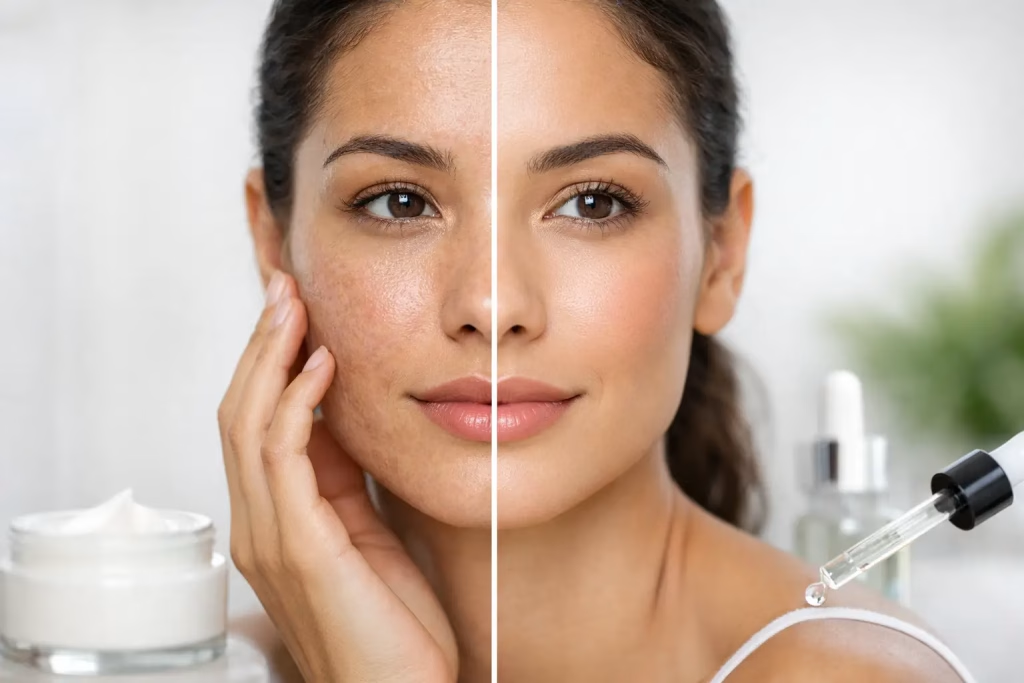
Rough patches that catch on makeup, pores that look more obvious by midday, lingering acne marks that leave skin uneven – texture concerns rarely come down to one issue. In most cases, how to improve skin texture starts with identifying what is making the skin look or feel irregular in the first place. Dryness, congestion, acne scarring, sun damage, inflammation, and natural collagen loss can all create a complexion that appears less refined.
That is why texture should be approached with more precision than trend-driven advice often allows. One person may need better exfoliation and oil control. Another may need barrier repair, hydration, and collagen-stimulating treatments. The right plan is rarely the most aggressive one. It is the one that suits your skin condition, lifestyle, and tolerance.
What skin texture really means
Skin texture refers to how smooth, even, and refined the surface of your skin appears and feels. When texture is healthy, skin tends to reflect light more evenly. It looks clearer, softer, and more polished, even without heavy coverage.
Uneven texture can show up in several ways. Enlarged pores can make the skin look coarse. Dead skin buildup can create roughness and dullness. Acne and congestion can leave bumps beneath the surface. Past breakouts may leave shallow or deeper scars. With time, reduced collagen can also make the skin feel thinner, less firm, and less even.
The key difference is this – not all texture concerns are surface-level. Some respond well to home care, while others sit deeper in the skin and improve more effectively with professional treatment.
How to improve skin texture at home
If your skin feels rough, dull, or mildly congested, a thoughtful at-home routine can make a visible difference. The goal is to support cell turnover without stripping the skin.
Start with cleansing. A gentle cleanser helps remove sunscreen, oil, and debris without disrupting the skin barrier. If the skin feels tight after washing, the formula may be too harsh. When the barrier is compromised, texture often looks worse, not better.
Exfoliation is where many people either see improvement or create setbacks. Chemical exfoliants such as AHAs and BHAs can help dissolve dead skin buildup and keep pores clearer. AHAs are often useful for dullness and dry, rough skin, while BHAs are better suited to oilier or acne-prone skin because they can work inside the pore. Used correctly, they can help refine the surface and improve radiance. Used too often, they can trigger irritation, sensitivity, and rebound inflammation.
Retinoids remain one of the most effective ingredients for uneven texture. They support cell turnover, help regulate congestion, and over time can soften the look of fine lines and post-acne irregularity. Results take patience. It is common to start slowly, especially if your skin is sensitive.
Hydration is equally important. Dehydrated skin can look crepey, rough, and tired even when it is not technically dry. A well-formulated moisturizer with humectants and barrier-supporting ingredients can help skin appear smoother and more supple. This is especially relevant in air-conditioned environments, frequent travel, or when active ingredients are already part of your routine.
And then there is sunscreen, which is non-negotiable. UV exposure slows progress by worsening pigmentation, weakening collagen, and prolonging post-acne marks. If you are serious about texture, daily broad-spectrum protection is part of the treatment plan, not an optional extra.
Why some texture issues do not respond to skincare alone
There is a limit to what topical products can do. If texture is caused by acne scarring, enlarged pores linked to collagen loss, or long-standing sun damage, skincare can support the skin but may not fully remodel it.
This is where many people feel frustrated. They may be consistent, use well-known ingredients, and still feel that the skin never looks truly smooth. That does not mean the routine has failed. It often means the concern sits deeper than the epidermis.
Professional treatments are designed to address those deeper layers with more precision. The best approach depends on whether the texture is caused by active acne, post-inflammatory changes, scarring, laxity, or compromised hydration.
In-clinic options for how to improve skin texture
For skin that is dull, congested, or dehydrated, medical-grade facials can be an excellent starting point. Treatments such as Hydrafacial help clear debris, infuse hydration, and refresh the skin without significant downtime. This can be especially appealing for busy professionals who want a more refined look with minimal interruption to their schedule.
If enlarged pores, mild acne scarring, and uneven texture are the main concerns, energy-based treatments may offer more meaningful improvement. Pico Laser is often selected when texture concerns overlap with pigmentation, as it can help address discoloration while supporting skin renewal. Radiofrequency microneedling platforms such as Sylfirm X can be particularly useful when texture is linked to acne scars, pores, redness, or early skin aging. These treatments work below the surface, where collagen remodeling can create a smoother and firmer finish over time.
For patients with sensitive or inflamed skin, treatment selection requires care. More is not always better. In some cases, calming and barrier-supportive treatments such as LDM may be introduced first to reduce inflammation and improve skin resilience before moving into more intensive resurfacing options.
Skin boosters can also play a role, especially when texture is worsened by dehydration and early crepiness rather than scarring alone. By improving skin quality and water balance, they can help the skin look fresher, finer, and more luminous.
The most elegant outcomes usually come from combination planning. A patient with pores, acne scarring, and dehydration may benefit from a staged approach rather than a single hero treatment. That is where doctor-led assessment becomes valuable. It allows the treatment journey to be calibrated to the skin rather than built around trends.
Common mistakes that make texture worse
The first is over-exfoliation. Scrubs, acids, retinoids, and harsh cleansing brushes used together can leave the skin irritated and reactive. Texture may temporarily feel smoother, but over time the barrier becomes compromised and the skin looks more inflamed.
The second is treating every bump as acne. Some roughness comes from dehydration, sensitivity, or poor product matching. Loading the skin with drying ingredients can make it look rougher and less balanced.
The third is expecting instant change. Surface roughness may improve within weeks, but pore refinement, acne scar softening, and collagen renewal take longer. Professional treatment plans often work best when spaced properly and supported with consistent home care.
Another common issue is inconsistency. Switching products too often makes it difficult to tell what is helping and what is irritating the skin. Texture responds better to a steady, tailored routine than to constant experimentation.
How to know which approach is right for you
If your skin texture is mild and mainly related to dullness, dryness, or occasional congestion, a disciplined home routine may be enough to create visible improvement. If you are dealing with acne scars, persistent roughness, enlarged pores, or textural changes that have not shifted despite good skincare, it may be time to consider a more clinical plan.
The most effective route is not always the most intensive treatment on the menu. It depends on your skin tone, sensitivity, downtime tolerance, and goals. Someone preparing for an event may prioritize glow and polish. Someone focused on long-term correction may choose collagen-stimulating treatments with gradual but more structural improvement.
At a clinic such as Kelly Oriental Aesthetic Clinic, this distinction matters. Texture is rarely treated as a standalone concern. It is assessed in the context of hydration, pore size, inflammation, scarring, and overall skin quality so the plan feels bespoke rather than generic.
A smoother complexion is usually built, not rushed
When people ask how to improve skin texture, what they often want is skin that looks clearer, more even, and quietly refined in natural light. That kind of result usually comes from measured decisions – protecting the skin barrier, choosing active ingredients carefully, and using in-clinic treatments when the concern goes deeper than skincare can reach.
The good news is that texture can improve at almost every age. The better approach is to stop chasing quick fixes and start treating the skin with the same level of care you would expect from any meaningful investment. When the plan is tailored well, smoother skin tends to look less like a temporary improvement and more like your skin at its best.
