

Uncategorized
Thermage Skin Tightening Treatment Explained
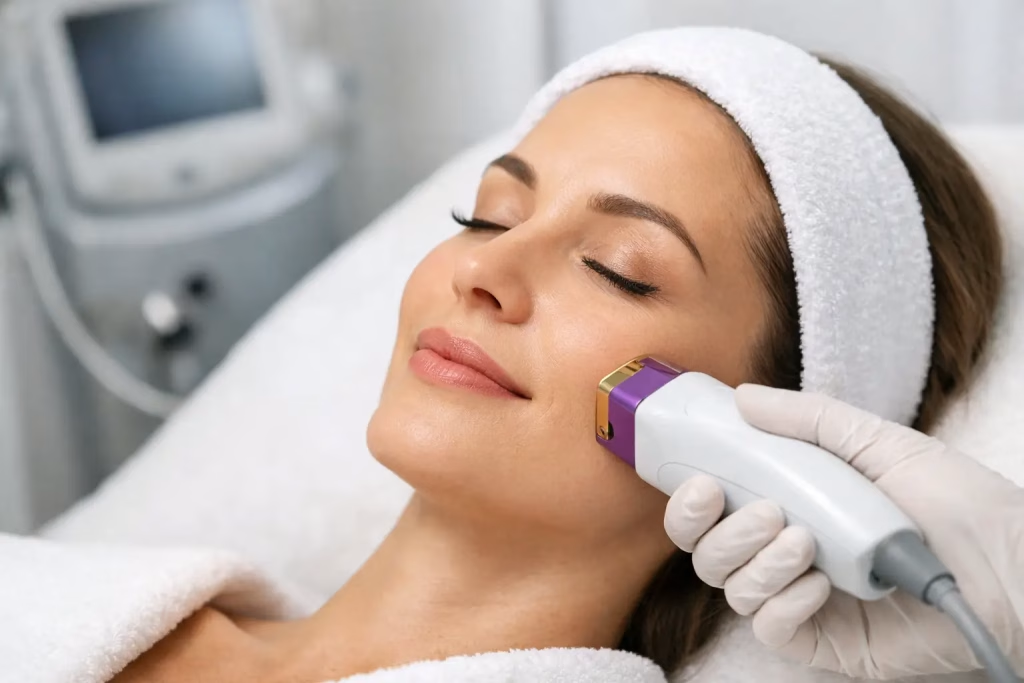
Skin can look subtly different before it looks dramatically older. A softer jawline, fine creasing around the eyes, a little looseness along the cheeks – these are often the first signs people notice. Thermage skin tightening treatment is designed for exactly this stage: when you want firmer, smoother-looking skin and a more defined contour, but you are not looking for surgery or an overdone result.
For many patients, the appeal is not just that Thermage is non-surgical. It is that the treatment fits into a modern schedule while supporting a refined, natural-looking refresh. When performed thoughtfully and recommended for the right person, it can be an excellent option for face and body skin laxity, especially where the goal is gradual improvement rather than immediate dramatic change.
What is thermage skin tightening treatment?
Thermage is a radiofrequency-based treatment that delivers controlled heat into the deeper layers of the skin while protecting the surface. The purpose is to stimulate collagen remodeling and support new collagen production over time. In practical terms, that means the skin may appear firmer, tighter, and smoother in the months after treatment.
Unlike treatments that focus mostly on texture or pigmentation, Thermage is chosen for laxity. It is often used on the face, jawline, lower cheeks, around the eyes, neck, and selected body areas. The treatment does not freeze muscles or add volume. Instead, it works by encouraging the skin’s structural support to rebuild itself.
That distinction matters. If your main concern is deep volume loss, hollowing, or heavy jowling, Thermage alone may not be the complete answer. In those cases, the best results often come from a more tailored plan that may combine lifting, contouring, collagen stimulation, or injectables depending on your anatomy and goals.
How Thermage works beneath the skin
The energy used in Thermage heats collagen-rich tissue in a precise and measured way. This creates two effects. First, there can be some immediate collagen contraction, which may give a modest early tightening effect. Second, and more importantly, the heat signals the skin to begin a longer remodeling process.
That remodeling takes time. Collagen renewal is gradual, so results tend to appear progressively over two to six months. This timeline suits patients who prefer subtle refinement – the kind of change people notice as looking rested or more polished, rather than obviously treated.
The treatment also includes integrated cooling to help protect the outer skin during delivery. That balance of heat and surface protection is part of why Thermage has remained a well-known option for non-invasive tightening.
What concerns can thermage skin tightening treatment improve?
Thermage is best suited to mild to moderate skin laxity. On the face, this often means early sagging along the jawline, softening around the lower face, crepey texture around the eyes, or skin that no longer feels as firm as it once did. On the body, patients may consider it for areas such as the abdomen, arms, or thighs where the skin looks a little loose.
The strongest candidates are usually those who still have good skin quality overall but are starting to see a loss of firmness. If the skin is significantly loose, or if there is a large amount of excess tissue, a non-surgical treatment may offer improvement but not a surgical-level lift.
This is where honest assessment matters. A polished aesthetic result depends as much on choosing the right treatment as it does on performing it well. Patients tend to be happiest when expectations are aligned from the start.
Who is a good candidate?
A good candidate for Thermage is typically someone who wants visible improvement without incisions, extensive downtime, or dramatic facial change. Many are professionals who want to maintain a fresh, defined look while keeping their treatment discreet.
It can suit both women and men, particularly those beginning to notice looser skin around the face or neck. It may also appeal to patients who are not ready for more invasive procedures or who prefer collagen-stimulating treatments over options that add volume.
That said, not every concern is a Thermage concern. If you are dealing mainly with pigmentation, acne scars, broken capillaries, deep folds caused by volume loss, or muscle-related wrinkles, other treatments may be more appropriate. A doctor-led consultation helps separate what can be improved with tightening from what needs a different approach.
What happens during treatment?
Before treatment, the skin is assessed and the target areas are mapped carefully. During the procedure, the handpiece delivers radiofrequency energy in a series of pulses across the treatment area. Patients often describe the sensation as a brief deep heat followed by cooling.
Comfort levels vary. Some people tolerate the treatment easily, while others find certain areas more intense, especially along bony contours or thinner skin. A well-managed session includes clear communication, thoughtful energy settings, and attention to patient comfort throughout.
Treatment time depends on the area being addressed. The eye area is faster, while a full face or face and neck session naturally takes longer. Because there is no surgery and no significant wound recovery, most patients return to their usual routine quite quickly.
Downtime, recovery, and aftercare
One reason Thermage remains popular is the minimal downtime. Many patients experience temporary redness, mild swelling, or a sensation of warmth shortly after the session, but these effects usually settle relatively quickly. Makeup and normal activities can often be resumed soon after, depending on individual sensitivity and post-treatment advice.
Aftercare is generally straightforward. Gentle skincare, hydration, and diligent sun protection are usually recommended. Since collagen remodeling is gradual, the focus after treatment is less about recovery and more about supporting skin health over the coming months.
It is also helpful to understand what Thermage does not usually involve. You should not expect peeling, crusting, or a prolonged social downtime typical of some resurfacing treatments. For patients with demanding schedules, that is a meaningful advantage.
When will you see results, and how long do they last?
Some patients notice an early improvement in skin feel or mild firmness soon after treatment, but the more meaningful changes tend to develop over time. Most visible results emerge gradually within two to six months as collagen remodeling continues.
How long results last depends on age, skin quality, lifestyle, and the degree of laxity being treated. Many patients enjoy results for around a year or longer, though natural aging continues. Maintenance timing is personal. Some prefer periodic upkeep before laxity becomes more noticeable, while others wait until they feel the skin needs another boost.
This gradual pattern is one of Thermage’s strengths, but it can also be a limitation for patients seeking immediate or dramatic lifting. The right choice depends on whether you value subtle progression or want a more transformative intervention.
Thermage vs other tightening treatments
Patients often compare Thermage with other non-surgical lifting technologies, especially ultrasound-based treatments. Both aim to improve laxity, but they work differently and are often selected based on anatomy, treatment area, skin thickness, and treatment goals.
Radiofrequency treatments like Thermage are frequently appreciated for improving firmness and texture in a broad, collagen-focused way. Ultrasound-based options may be preferred in certain cases when deeper structural targeting is needed. Neither is universally better. The better treatment is the one that matches your skin and your priorities.
Combination planning can also matter. A patient with mild laxity, textural change, and volume loss may need more than one strategy to look truly refreshed. In a premium clinical setting, the conversation should not be about selling a device. It should be about building a bespoke plan around the face or body in front of you.
Are there risks or limitations?
Thermage is generally well tolerated when performed appropriately, but no aesthetic treatment is completely free of risk. Temporary redness, swelling, tenderness, or sensitivity can occur. Rarely, irregular response or prolonged discomfort may happen.
More commonly, the issue is not safety but suitability. The treatment can disappoint when it is chosen for the wrong indication. If skin laxity is advanced, if the patient expects a surgical result, or if the main issue is not actually laxity, the outcome may feel underwhelming.
That is why treatment quality starts before the device touches the skin. Good candidacy assessment, realistic goal-setting, and precise treatment planning are what make non-surgical aesthetics feel elegant rather than generic.
Why consultation quality matters
The best Thermage outcomes rarely come from a one-size-fits-all appointment. They come from careful evaluation of skin thickness, degree of laxity, facial balance, and the patient’s comfort with downtime, maintenance, and cost. In a doctor-led aesthetic practice such as Kelly Oriental Aesthetic Clinic, that level of personalization is part of the treatment itself.
Luxury in aesthetics is not only about the setting. It is about being guided well, treated conservatively when needed, and offered solutions that make sense for your features and your lifestyle. For patients who want a credible, refined approach to aging well, that standard matters.
If your skin feels a little less firm than it used to, Thermage may be the kind of quiet, collagen-focused reset that helps you look more defined without looking different. The most useful next step is not guessing – it is having your skin assessed properly so your treatment plan reflects what will truly serve you.
