
Uncategorized
Benefits of Ultherapy for Firmer Skin
May
Loose jawlines rarely appear overnight. For many people, the change begins subtly – softer definition under the chin, a little heaviness around the cheeks, or brows that no longer sit quite where they used to. The Benefits of Ultherapy appeal to those who want visible lifting and tightening without surgery, extended downtime, or results that look overdone. It is a treatment designed for patients who want refinement, not dramatic interruption.
Ultherapy has earned its place in modern aesthetics because it works with the skin’s own regenerative ability. Rather than adding volume or freezing movement, it uses focused ultrasound energy to stimulate collagen deep below the skin’s surface. That difference matters. It means the treatment is not simply masking laxity. It is supporting the structural framework that helps skin appear firmer, smoother, and more defined over time.
What makes Ultherapy different
One of the most compelling reasons patients choose Ultherapy is that it treats deeper foundational layers that are typically addressed in surgical lifting procedures, but without incisions or injections. The technology delivers microfocused ultrasound energy at precise depths, creating controlled thermal points beneath the skin while leaving the surface largely undisturbed.
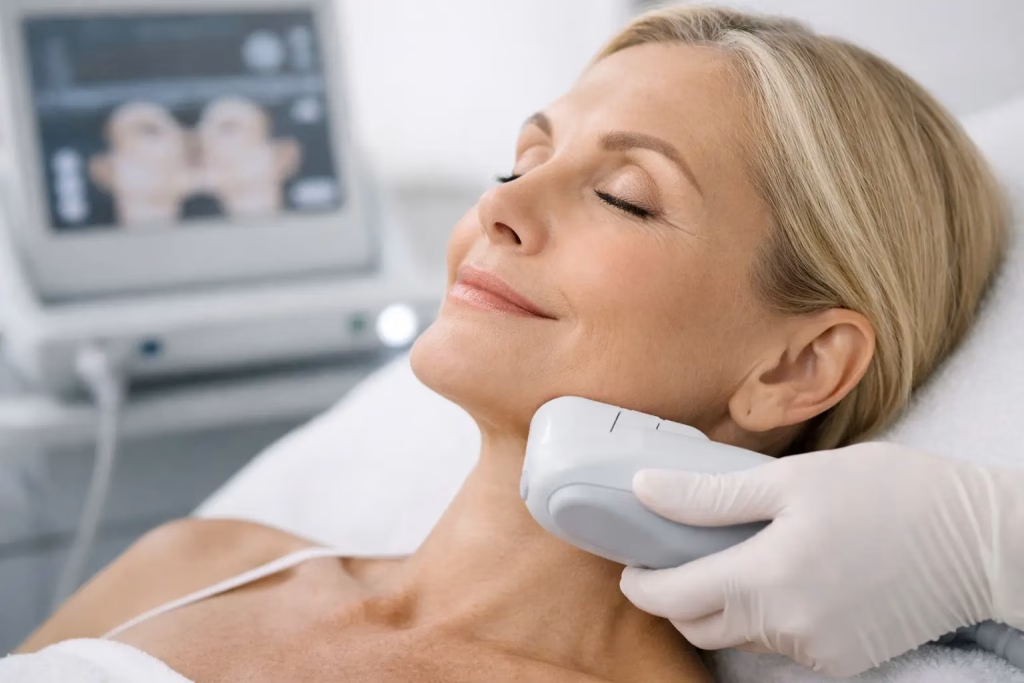
Ultherapy is also distinct because it uses real-time ultrasound imaging. This allows the practitioner to visualize the tissue before delivering energy, which supports a more precise and customized treatment plan. In a premium clinical setting, that level of precision is especially important. It helps ensure the treatment is tailored to the patient’s facial anatomy, degree of skin laxity, and aesthetic goals.
For patients who want doctor-led care and a measured, clinically grounded approach, this precision is often part of the value. The treatment is not one-size-fits-all, and the best outcomes depend on careful assessment rather than aggressive treatment alone.
The core Benefits of Ultherapy
The most recognized benefit is firmer, lifted-looking skin. Patients commonly seek Ultherapy for the brow, lower face, jawline, chin, and neck because these are areas where collagen loss and tissue descent can create a tired or less defined appearance. After treatment, the skin gradually becomes tighter and more supported as collagen remodeling develops over the following weeks and months.
Another key benefit is that results tend to look natural. Ultherapy does not create the sudden change sometimes associated with more invasive procedures. Instead, it encourages a gradual improvement that often reads as fresher, more rested, and more sculpted. For professionals and socially active individuals, this subtlety is often exactly the point. You still look like yourself, just more lifted and refined.
There is also the benefit of minimal downtime. Most patients return to normal activities soon after treatment. Mild redness, tenderness, swelling, or sensitivity can occur, but these effects are generally temporary. For busy adults balancing work, family, and social commitments, that practicality is a major advantage.
Ultherapy can also complement a long-term skin maintenance plan. It is not only about treating visible laxity once it becomes advanced. In the right patient, it can be used proactively to support collagen before sagging becomes more pronounced. This makes it appealing to patients who prefer prevention and ongoing maintenance over more dramatic correction later.
Why collagen stimulation matters
Collagen is often described casually in aesthetic conversations, but its role is fundamental. It gives skin strength, structure, and resilience. As collagen production declines with age, the skin becomes less able to resist gravity and less capable of maintaining crisp contours. That is why features such as the jawline and neck can begin to soften even if skin quality on the surface still seems relatively good.
Ultherapy addresses this by stimulating neocollagenesis, or new collagen formation, deep within the treated tissue. This process does not happen instantly. The body needs time to rebuild. That is why patients may notice some early tightening, but more meaningful improvement typically appears progressively over two to three months, with continued refinement beyond that.
This slower timeline can actually be an advantage. Because the change unfolds naturally, the result is often elegant rather than obvious. In a market where many patients want enhancement without looking visibly treated, that pacing aligns well with modern aesthetic preferences.
Areas that respond well to Ultherapy
Ultherapy is especially well suited to areas where mild to moderate skin laxity is the main concern. The brow is a popular treatment zone because a subtle lift here can make the eyes look more open and refreshed. Around the lower face, treatment can help improve the appearance of jowling and restore cleaner definition along the jawline.
The area under the chin is another common focus, particularly for patients who feel their profile has become softer. In the neck, Ultherapy can help improve the look of looseness and crepey texture, although results depend on the severity of laxity and the patient’s baseline skin quality.
It is worth noting that Ultherapy is not the best answer for every concern. If volume loss is the dominant issue, fillers or biostimulators may be more relevant. If the skin has significant sun damage, pigmentation, or textural irregularities, energy-based devices, injectables, or skin-focused treatments may be needed alongside it. The most thoughtful treatment plans consider the face as a whole rather than relying on a single device to do everything.
Who tends to benefit most
Ultherapy tends to work best for patients with mild to moderate laxity who want visible improvement but are not ready for surgery. This often includes adults noticing early sagging around the brows, cheeks, jawline, or neck, as well as those who want to maintain firmness as part of a well-managed aesthetic routine.
It can also appeal to men and women who want discreet rejuvenation. Because the results are gradual and there is little interruption to daily life, the treatment suits patients who prefer privacy and subtle enhancement. In a sophisticated urban setting, that discretion is often highly valued.
That said, expectations matter. Patients with very heavy tissue, advanced laxity, or significant excess skin may find that surgical lifting provides a more dramatic result. Ultherapy can still offer improvement, but the degree of lifting may be more modest. A credible consultation should address this clearly rather than overselling what the device can achieve.
Benefits of Ultherapy compared with other options
Compared with injectables, Ultherapy is less about volume and more about lift and tissue support. Fillers can restore contour where volume has been lost, and they remain valuable in the right patient, but they do not replace skin tightening. Overfilling a face in an attempt to compensate for laxity can create a less natural result. Ultherapy offers a different strategy by targeting the underlying support structure.
Compared with radiofrequency tightening treatments, Ultherapy reaches precise depths using ultrasound and includes imaging guidance, which can be an important differentiator. That does not make it universally better. Different technologies have different strengths. Some patients benefit more from radiofrequency, some from ultrasound, and some from a combination approach.
Compared with surgery, the trade-off is straightforward. Ultherapy offers less downtime, fewer barriers to treatment, and a more gradual, natural-looking improvement. Surgery delivers more dramatic lifting for patients who need a larger correction. The right choice depends on anatomy, goals, budget, and appetite for recovery.
What treatment feels like and what to expect after
During treatment, patients usually feel brief moments of heat and tingling as the ultrasound energy is delivered. Comfort levels vary depending on the area treated, energy settings, and individual sensitivity. A well-managed clinical experience includes careful preparation, clear communication, and supportive pain management strategies where appropriate.
Afterward, some patients experience tenderness, mild swelling, or a temporary sensation of tightness. These effects are usually short-lived. Because the skin surface remains intact, there is generally no need for extended recovery, which makes the treatment easier to fit into a demanding schedule.
Results are not immediate in the way they might be after volumizing treatments. Patience is part of the process. The benefit is that the improvement comes from your own collagen response, which contributes to a result that tends to look more organic and integrated with your facial features.
Why provider expertise matters
Ultherapy is only as good as the treatment plan behind it. The device itself is sophisticated, but meaningful outcomes depend on patient selection, energy placement, treatment depth, and a realistic understanding of what can be achieved. This is where clinical judgment becomes essential.
In a doctor-led aesthetic environment, the consultation should go beyond a quick recommendation. It should assess facial structure, skin quality, laxity patterns, and whether Ultherapy is best used alone or as part of a broader rejuvenation strategy. For some patients, the most elegant result comes from combining lifting, collagen support, and surface rejuvenation in a carefully sequenced plan.
At a clinic such as Kelly Oriental Aesthetic Clinic, that bespoke approach is central to the experience. Premium aesthetics is not simply about having advanced technology available. It is about using it with restraint, precision, and a clear understanding of what will serve the patient best.
The real appeal of Ultherapy lies in its balance. It offers lifting without surgery, collagen renewal without obvious alteration, and visible improvement without asking patients to step away from their lives. For those seeking a refined approach to aging well, that balance is often the most valuable benefit of all.
