
Uncategorized
At What Age Is It Appropriate to Visit an Aesthetic Clinic?
Age is often the first question people ask, but it is rarely the most useful one. At what age is it appropriate to visit an aesthetic clinic? In practice, the better question is whether your skin, face, body, or hair concerns are suitable for professional treatment, and whether those concerns can be addressed safely, responsibly, and with a plan tailored to your stage of life.
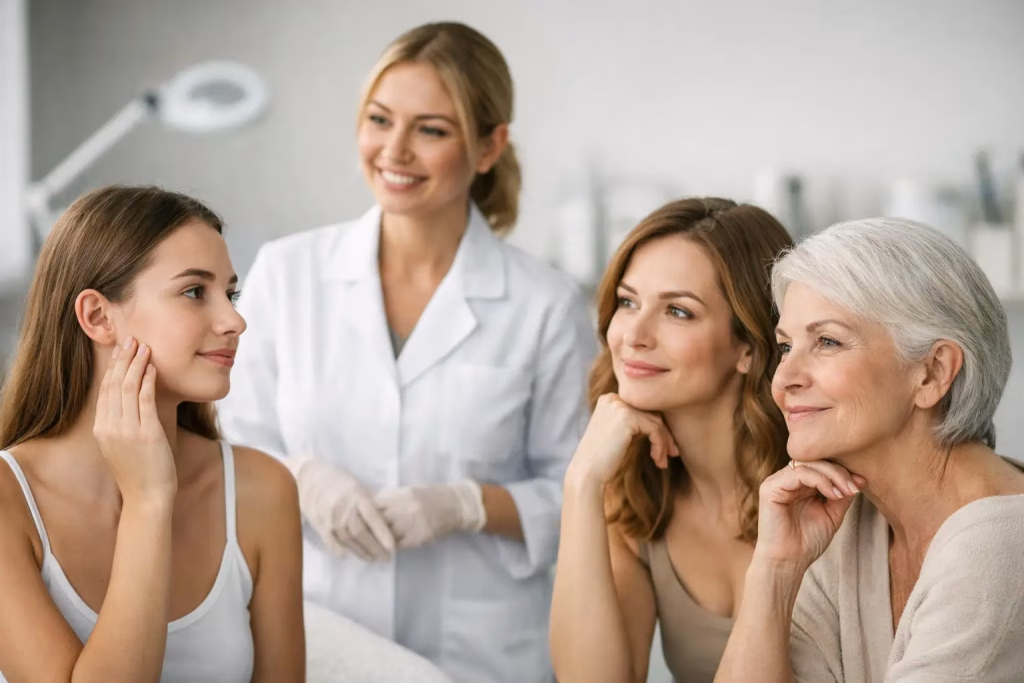
Aesthetic care is not reserved for one age group. Teenagers may struggle with acne and acne scarring. Adults in their 20s and 30s often focus on prevention, skin clarity, hydration, and facial balance. Patients in their 40s and beyond may be more concerned with collagen loss, sagging, pigmentation, fine lines, and overall skin quality. The right timing depends less on a birthday and more on clinical need, treatment suitability, and emotional maturity.
At what age is it appropriate to visit an aesthetic clinic?
There is no single universal age. For many patients, an aesthetic clinic becomes appropriate when a concern starts affecting confidence, comfort, or quality of life, and when that concern would benefit from expert assessment rather than guesswork.
For younger patients, that may mean persistent acne, post-acne marks, enlarged pores, or early scarring that does not respond well to over-the-counter skincare. For adults, it may mean pigmentation after sun exposure, dehydration, dullness, facial volume changes, laxity, or early signs of aging. For some men and women, it may be hair thinning, a double chin, or a skin condition like rosacea that needs a more targeted approach.
What matters is that treatment is medically appropriate and chosen for the right reason. A well-run clinic will not treat age as a marketing category. It will evaluate skin condition, treatment goals, risk profile, and whether the expected result is realistic.
The teenage years – when care should be conservative
It is not unusual for teenagers to visit an aesthetic clinic, but treatment at this age should be selective and clinically justified. The most common reasons include inflammatory acne, acne scars, oil imbalance, congestion, and sometimes early pigmentation caused by acne or sun exposure.
This is also the age group that requires the greatest caution. Younger skin is still developing, and many cosmetic concerns are temporary or best handled with gentle medical-grade skincare, supervised facials, or doctor-led acne management rather than aggressive procedures. Treatments that support skin health and reduce the risk of long-term scarring can be helpful. Treatments that chase trends or dramatically alter features are generally not the right place to start.
Parental involvement is often appropriate for minors, and consultation should include a thoughtful discussion about expectations. The goal is not to create insecurity. It is to treat a real concern early enough to protect skin quality and confidence without overmedicalizing normal adolescence.
Your 20s – prevention, refinement, and skin maintenance
For many adults, the 20s are the first decade when aesthetic clinic visits feel relevant. This is often less about correction and more about maintenance. Skin may still be relatively firm and resilient, but concerns such as acne marks, uneven tone, dehydration, enlarged pores, early pigmentation, and dullness become more noticeable, especially in a fast-paced urban environment where stress, UV exposure, and lack of sleep are constant factors.
This is usually an excellent time for guided, non-surgical treatments with a preventive focus. Professional facials, laser-based skin refinement, collagen-supportive procedures, and skin boosters may be considered depending on individual skin needs. The value of visiting a clinic in your 20s is not that you need dramatic intervention. It is that expert advice can help you avoid years of trial and error and create a more strategic skincare plan.
There is also a growing interest in subtle aesthetic enhancement during this decade. When approached conservatively, this can be appropriate. The key is restraint. Good treatment in your 20s should preserve freshness, not replace it.
Your 30s – when early changes become more visible
By the 30s, many patients begin to notice changes that skincare alone may not fully address. Collagen production slows. Pigmentation can become more persistent. Fine lines may linger after expression fades. Facial contours may soften slightly, and under-eye tiredness can become harder to hide.
This is often the decade when aesthetic care becomes more personalized and strategic. Patients are no longer simply maintaining clear skin. They are managing a combination of early aging, environmental damage, and lifestyle-related stress on the skin. Treatments like Pico Laser for pigmentation, Hydrafacial for skin clarity, skin boosters for hydration, and collagen-stimulating technologies may all play a role, depending on what the face actually needs.
This stage also tends to benefit from doctor-led planning. Small concerns can often be treated more elegantly when addressed early, before they become deeper or more diffuse. The objective is not to look different. It is to look rested, polished, and well cared for.
Your 40s and beyond – restoration without surgery
For patients in their 40s, 50s, and beyond, the question is usually not whether an aesthetic clinic is appropriate, but which treatments offer the most meaningful benefit without unnecessary downtime or an overdone result.
At this stage, skin laxity, volume loss, deeper wrinkles, enlarged pores, uneven texture, pigmentation, and lower-face heaviness may become more pronounced. This is where a clinic with a broad treatment portfolio becomes especially valuable, because successful outcomes often depend on combination planning rather than a single procedure.
Energy-based lifting treatments, injectables, skin rejuvenation, resurfacing, and collagen-stimulating technologies can all be appropriate, but only when selected with nuance. Not every patient needs lifting first. Not every line needs filler. Not every pigmentation issue should be treated with the same laser setting. Mature patients often get the best results from bespoke plans that improve skin quality, structure, and contour gradually.
Why skin condition matters more than age
Two people can be 32 and have completely different treatment needs. One may have acne scars and post-inflammatory pigmentation. The other may have sensitive, rosacea-prone skin with early laxity. Age gives context, but it does not give a prescription.
That is why a credible aesthetic clinic starts with assessment, not assumptions. Skin thickness, sensitivity, pigmentation tendency, sun damage, facial anatomy, lifestyle, previous treatments, and recovery tolerance all shape the right plan. This is especially relevant in Asian skin, where pigmentation risk, healing response, and treatment intensity require a careful clinical approach.
For patients in Singapore, climate and daily UV exposure also change the equation. Pigmentation, congestion, dehydration, and inflammation can present earlier or more persistently than expected. A thoughtful treatment plan takes those realities into account.
Signs you may be ready to visit an aesthetic clinic
Readiness is not about chasing perfection. It usually becomes clear when a concern is persistent, visible, and resistant to home care. If your acne keeps returning, your pigmentation lingers despite consistent skincare, your pores and texture seem unchanged no matter what you use, or your skin is beginning to look tired in a way that affects confidence, a consultation can be worthwhile.
The same applies if you are starting to notice facial sagging, fine lines, volume changes, hair thinning, or body concerns that do not improve with lifestyle efforts alone. Visiting a clinic does not commit you to treatment. In many cases, the most valuable outcome is simply understanding what is normal, what is treatable, and what can wait.
When it may be too early
There are times when visiting an aesthetic clinic is technically possible but not yet appropriate for treatment. This includes patients who are motivated mainly by social media trends, pressure from peers, or unrealistic expectations about instant transformation. It also includes very young patients seeking procedures for features that are normal, healthy, and still changing.
A responsible clinic knows when to slow things down. Sometimes the right recommendation is skincare, monitoring, or doing nothing at all for now. That level of restraint is a mark of credibility, not limitation.
Choosing the right clinic at any age
The younger the patient, the more important clinical ethics become. The more advanced the concern, the more important treatment depth and customization become. At every age, the best clinic experience should feel measured, reassuring, and specific to you.
Look for doctor consultation, clear explanations, and a treatment philosophy that values natural results. A premium aesthetic setting should never feel rushed or transactional. It should combine medical precision with a calm, personalized journey that respects both appearance and wellbeing. This is where clinics such as Kelly Oriental Aesthetic Clinic stand apart, offering advanced technologies within a refined care experience designed around long-term results rather than one-off procedures.
So, at what age is it appropriate to visit an aesthetic clinic? The most honest answer is this: when you have a genuine concern, the emotional maturity to approach treatment sensibly, and access to expert guidance that puts your skin and safety first. The right time is not defined by age alone. It is defined by readiness, relevance, and the quality of care you choose.
