
Uncategorized
How Is Hydrafacial Different From Other Aesthetic Treatments?
May
A great facial can leave skin glowing for a day. A well-chosen medical aesthetic treatment can improve texture, tone, and skin health over time. Hydrafacial sits in an interesting space between the two, which is exactly why so many patients ask, How is Hydrafacial different from other aesthetic treatments?
The short answer is that Hydrafacial is not trying to do the same job as lasers, injectables, radiofrequency, or traditional spa facials. It is a device-based skin treatment designed to cleanse, exfoliate, extract, and infuse the skin in one session, with minimal discomfort and essentially no downtime. For many people, that makes it a reliable part of skin maintenance. For others, it works best as one step within a more tailored aesthetic plan.
What makes Hydrafacial different from other aesthetic treatments?
Most aesthetic treatments are built around a primary mechanism. Lasers target pigment, redness, acne scars, or collagen remodeling through energy. Injectables relax muscles or restore volume. Ultrasound and radiofrequency treatments focus on lifting or tightening. Chemical peels use acids to resurface the skin. Traditional facials often emphasize cleansing, massage, and relaxation.
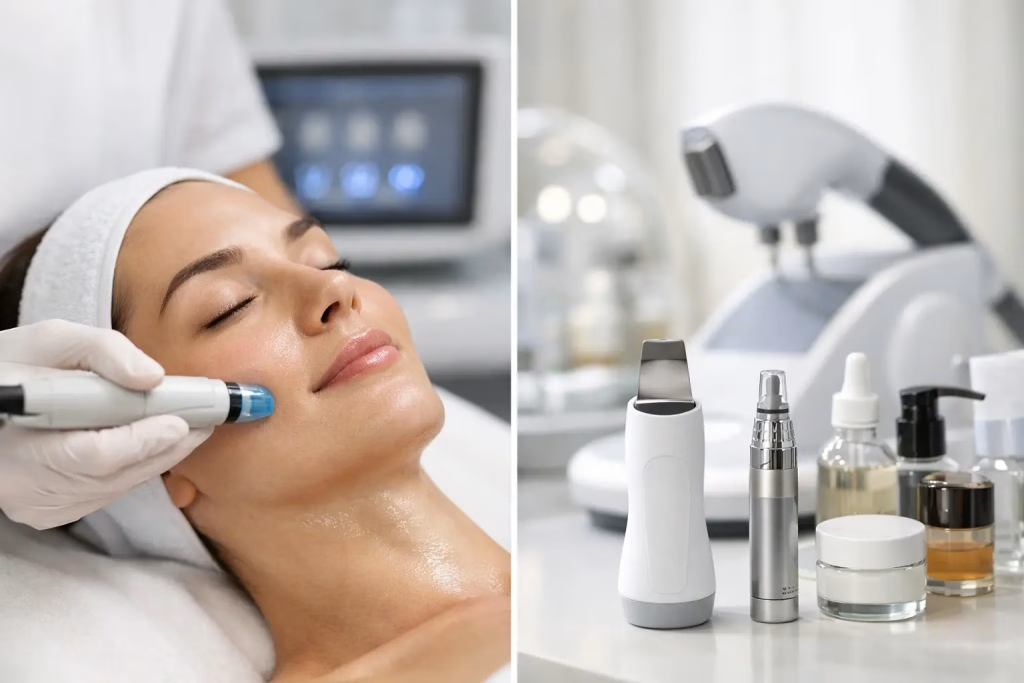
Hydrafacial is different because it combines several skin-supporting actions into a single, structured treatment. Using a vortex-style handpiece, it removes surface debris and dead skin cells, loosens congestion from pores, and delivers targeted serums into freshly exfoliated skin. That means the treatment is not only about removing buildup. It also focuses on replenishing the skin immediately afterward.
This combination is what gives Hydrafacial its reputation for instant freshness. Skin often looks cleaner, smoother, and more radiant right after treatment, but without the peeling, heat, or recovery commonly associated with more intensive procedures.
Hydrafacial vs traditional facials
This is where confusion often starts. Many people assume Hydrafacial is simply a more expensive facial. In reality, the difference is in consistency, precision, and clinical intent.
A traditional facial can be highly enjoyable and beneficial, especially for relaxation and basic skincare maintenance. However, results often depend heavily on the therapist’s technique, the products used, and the condition of the skin on that day. Manual extraction can also be uncomfortable, and some facials are not ideal for sensitive or reactive skin.
Hydrafacial is more standardized and technology-driven. The exfoliation and extraction steps are controlled by the device, which allows the treatment to be more even and often gentler than manual squeezing or abrasive scrubs. For patients dealing with congestion, dullness, dehydration, or enlarged pores, that can make a visible difference without leaving the skin feeling overly irritated.
Another important distinction is serum delivery. In a regular facial, products are applied topically and absorption can vary. In Hydrafacial, the skin is exfoliated first, then infused with solutions selected for hydration, clarity, or rejuvenation. That sequence is one reason patients often notice both immediate glow and a cleaner skin feel in the days that follow.
How Hydrafacial compares with chemical peels
Chemical peels and Hydrafacial can both improve dullness, uneven texture, and mild congestion, but they do so in very different ways.
A peel works by applying acids that loosen the bonds between dead skin cells, encouraging controlled shedding. Depending on the peel strength, this can range from a light refresh to visible peeling and downtime. Peels can be very effective, especially for pigmentation, acne, and textural concerns, but they are not always the first choice for patients who need to look polished immediately after treatment.
Hydrafacial offers a milder, non-peeling form of exfoliation. It gives skin a cleaner and more luminous appearance without the typical recovery period of a peel. That makes it appealing before events, during busy work weeks, or for those who prefer a gentler approach.
The trade-off is straightforward. If the goal is more significant resurfacing or targeted correction of stubborn pigmentation and acne, a peel may deliver stronger change over time. If the goal is refreshed, hydrated, clearer-looking skin with little interruption to daily life, Hydrafacial is often the more convenient choice.
Hydrafacial vs lasers and energy-based treatments
Lasers, radiofrequency microneedling, ultrasound lifting, and other device-based treatments are usually designed to create change deeper in the skin. They target concerns such as pigmentation, acne scars, sagging, broken capillaries, fine lines, and collagen loss by triggering a biological response below the surface.
Hydrafacial does not replace those treatments. It is more superficial, which is not a weakness. It is simply a different category of care.
If someone has melasma, established acne scars, moderate skin laxity, or pronounced rosacea, Hydrafacial alone is unlikely to be the complete answer. Treatments such as Pico Laser, Sylfirm X, Thermage, or Ultherapy are built for more specific structural or pigment-related concerns. Hydrafacial, by contrast, supports skin quality at the surface level by improving cleanliness, hydration, and overall radiance.
That said, the surface matters. Better-hydrated, less congested skin often responds more gracefully to an overall treatment journey. In many clinics, Hydrafacial is used strategically between more advanced procedures or as part of an ongoing maintenance plan once corrective treatment has begun.
The comfort factor and why it matters
One of Hydrafacial’s biggest advantages is comfort. Many aesthetic treatments ask patients to accept a degree of heat, stinging, redness, swelling, or social downtime in exchange for stronger correction. There is absolutely a place for that, especially when treating deeper concerns. But not every patient wants every appointment to feel intense.
Hydrafacial is generally described as comfortable, cooling, and refreshing. For busy professionals and socially active patients, this matters. A treatment that can fit into a lunch break or a weekday schedule without obvious recovery is often easier to repeat consistently. And consistency is what supports long-term skin maintenance.
This ease also makes Hydrafacial approachable for first-time aesthetic patients. Someone who feels hesitant about needles, lasers, or stronger resurfacing often finds Hydrafacial a reassuring starting point. It introduces them to clinical-grade skin treatment without a dramatic recovery experience.
Who tends to benefit most from Hydrafacial?
Hydrafacial is especially well suited to people dealing with dehydration, dullness, clogged pores, blackheads, mild acne congestion, uneven texture, or skin that simply looks tired despite a good home routine. It is also a strong option for patients preparing for an event because it can create a polished, rested appearance without visible peeling.
It can work well across many skin types, including skin that may not tolerate aggressive exfoliation. Still, suitability is never one-size-fits-all. If the skin barrier is compromised, if active inflammation is severe, or if the patient has a more complex pigment condition, treatment selection should be more deliberate.
This is where a doctor-led or professionally guided approach makes a difference. The best results come from understanding whether Hydrafacial is the main treatment, a supporting treatment, or simply not the priority compared with something more targeted.
How is Hydrafacial different from other aesthetic treatments in terms of results?
Hydrafacial is unusual because it can deliver both immediate cosmetic improvement and ongoing maintenance value. Right after treatment, many patients notice smoother texture, cleaner pores, and a hydrated glow. That instant payoff is one reason it remains popular.
But realistic expectations matter. The results are usually not as transformative as injectables for volume loss, not as lifting-focused as ultrasound or radiofrequency, and not as corrective for deep pigmentation or scars as lasers and advanced resurfacing. Hydrafacial improves skin quality in a visible but refined way.
Think of it less as a dramatic intervention and more as polished, repeatable upkeep with clinical benefits. For the right patient, that can be exactly what is needed. Beautiful skin is not always built through aggressive treatment alone. Often, it comes from choosing the right intensity at the right time.
Why Hydrafacial often works best as part of a tailored plan
The most effective aesthetic care is rarely about chasing a single hero treatment. Skin concerns usually overlap. A patient may have dehydration, enlarged pores, early laxity, and pigmentation all at once. No one procedure addresses every layer equally well.
Hydrafacial stands out because it fits elegantly into a broader plan. It can maintain clarity between laser sessions, prep the skin before important occasions, support patients who want regular non-invasive treatment, and complement more corrective procedures without competing with them. In a premium clinic setting, that flexibility is valuable because treatment can be tailored to goals, schedule, tolerance, and lifestyle.
At Kelly Oriental Aesthetic Clinic, this kind of personalization is part of what elevates results. Rather than treating Hydrafacial as a trend treatment, it is more useful to see it for what it is: a refined, technology-led option for skin health, radiance, and maintenance.
If you have been wondering whether Hydrafacial is worth it, the better question may be what you want your treatment to do. If you want cleaner, brighter, more hydrated skin with comfort and minimal downtime, Hydrafacial has a distinct place. If your concerns run deeper, it may be the beginning of the conversation rather than the entire answer.
