

Uncategorized
Hair Restoration for Women: What Works
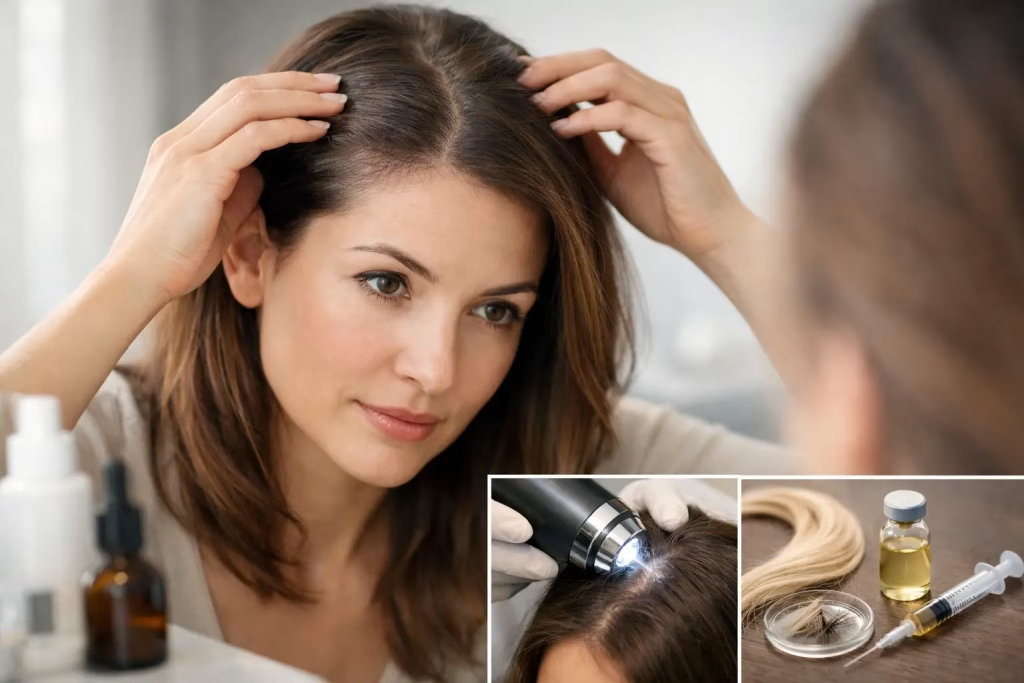
A widening part rarely happens all at once. More often, it shows up in photos, under bright bathroom lighting, or during a rushed morning when your ponytail feels thinner than it used to. Hair restoration for women is not simply about regrowing strands. It begins with understanding why density changed in the first place, and choosing a treatment plan that respects both the biology of the scalp and the emotional weight of hair loss.
For many women, the frustration is not just the shedding itself. It is the uncertainty. Is this temporary stress-related loss, hormonal thinning, postpartum shedding, nutritional deficiency, or a more established pattern of miniaturization? The answer matters, because the most effective treatment is rarely a one-size-fits-all solution.
Why hair loss in women needs a different approach
Female hair loss does not always follow the familiar pattern seen in men. Instead of a receding hairline, many women notice overall thinning through the crown, reduced volume at the part line, increased shedding during washing, or a loss of fullness around the temples. Some still have plenty of hair, but the quality and density have changed enough to affect styling and confidence.
That difference is exactly why a personalized plan matters. Hair growth is influenced by hormones, age, genetics, inflammation, stress, nutrition, scalp health, and even how long a follicle stays in its growth phase. In practice, that means two women with similar-looking thinning can need very different treatment plans.
There is also the timing issue. Some forms of shedding improve once the trigger settles. Others become more difficult to reverse if treatment is delayed for too long. Early intervention often gives you more options and a better chance of preserving existing follicles before thinning becomes more advanced.
What causes thinning before hair restoration for women begins
The best outcomes usually start with a careful diagnosis, not the treatment itself. A scalp and hair assessment should look at the pattern of loss, the duration, any recent life changes, medical history, and whether there are signs of inflammation or scalp imbalance.
Hormonal shifts are a common factor. Pregnancy, postpartum recovery, perimenopause, menopause, thyroid changes, and conditions such as polycystic ovary syndrome can all affect the hair cycle. Stress can push more follicles into a shedding phase, which often becomes visible a few months after the trigger. Nutritional issues, especially low iron or inadequate protein intake, can also reduce density. In other women, the driving factor is genetic sensitivity, where follicles gradually shrink over time and produce finer, shorter hairs.
This is where expectations need to stay realistic. If a woman is still actively shedding due to an untreated medical or internal cause, scalp-based procedures alone may not be enough. A refined treatment journey often combines medical review, targeted in-clinic care, and home maintenance.
Hair restoration for women: which treatments actually help?
The most appropriate treatment depends on the diagnosis, the severity of thinning, and whether the goal is to reduce shedding, improve scalp health, stimulate dormant follicles, or support thicker growth over time.
One of the most established approaches is growth-factor-based scalp therapy, including PRP-style treatments where concentrated regenerative components are introduced to the scalp to encourage follicle activity. These treatments are often considered when follicles are still alive but underperforming. They are not instant, and they are not ideal for every patient, but in the right candidate they can support stronger, healthier growth.
Energy-based scalp treatments are also gaining interest, especially when the goal is to improve circulation, create a healthier scalp environment, and stimulate the follicle in a controlled way. Some clinics combine this with microneedling-based techniques to enhance scalp renewal and support better treatment delivery. For women with early to moderate thinning, this can be a useful part of a broader strategy.
Topical and oral medical therapies may also be recommended, depending on suitability. These options can help prolong the growth phase or reduce progressive miniaturization. However, they are not interchangeable and they do come with considerations. Some are not appropriate during pregnancy or while trying to conceive. Others require long-term consistency to maintain results. This is where professional guidance becomes especially valuable.
Scalp health should not be overlooked. A congested, inflamed, or imbalanced scalp does not create ideal conditions for healthy growth. Women who deal with excess oil, product buildup, sensitivity, or dandruff-like flaking may benefit from scalp-focused treatments that restore a cleaner, calmer foundation before more advanced restoration begins.
What a good treatment plan usually looks like
The most sophisticated plans are layered. Rather than relying on one intervention, they address the problem from several angles: slowing excessive shedding, stimulating existing follicles, improving scalp quality, and maintaining progress over time.
In the early stages, treatment may be closer together to build momentum. After that, maintenance sessions are often spaced out based on response. This matters because hair grows slowly. You are not treating skin texture, where change can sometimes be visible within weeks. With hair, meaningful improvement often takes several months, and the most convincing signs may be subtle at first – less shedding, baby hairs around the hairline, improved texture, and better fullness when styling.
That slow timeline can feel frustrating, but it is normal. Promises of dramatic overnight regrowth tend to oversimplify a process that is naturally gradual.
What results are realistic?
A realistic goal is not always a complete return to the density you had at 20. In many cases, the aim is to preserve what you have, improve thickness, support healthier growth cycles, and create visibly fuller coverage. For some women, that means stronger regrowth. For others, success looks like reduced shedding and enough density improvement to feel confident wearing their hair down again.
Response depends on how long the thinning has been present, whether follicles are still viable, the underlying cause, and how consistent the treatment plan is. Younger patients or those who seek help earlier often respond better, but age alone does not determine success. Scalp condition, hormone profile, medical history, and treatment adherence all play a role.
It is also worth saying plainly that severe or longstanding follicle loss may not respond the same way as early thinning. That does not mean treatment has no value. It means the strategy may shift from full reversal to meaningful improvement and ongoing preservation.
When to seek expert care
If shedding has lasted longer than a few months, if your part is clearly widening, if you can see more scalp than before, or if you are noticing sudden patchy loss, it is worth being assessed. The same is true if your hair feels dramatically different after childbirth, a period of illness, major stress, or hormonal change.
A clinical consultation should feel both precise and reassuring. You want a provider who looks beyond the obvious, explains the likely cause clearly, and recommends a plan based on your scalp, your medical profile, and your goals. In a premium setting such as Kelly Oriental Aesthetic Clinic, that means combining medical insight with a treatment journey that feels discreet, personalized, and thoughtfully paced.
Hair loss is personal, but it does not have to be something you simply accept and hide. When the right diagnosis meets the right timing, hair restoration can become less about chasing perfection and more about restoring confidence in a way that feels natural, measured, and genuinely sustainable.
