

Uncategorized
Singapore Pico Laser Aesthetic Treatment Guide
May
Pigmentation that lingers, acne marks that seem permanent, and skin that looks dull despite a careful routine can be frustratingly resistant to creams and facials alone. That is why Singapore Pico Laser Aesthetic Treatment has become a sought-after option for patients who want visible skin refinement with less downtime than many traditional laser approaches.
Pico laser treatment is often associated with brighter skin, clearer tone, and softer textural concerns, but the real value lies in precision. For busy professionals and image-conscious individuals, the appeal is not just what the laser can treat. It is how selectively it can target unwanted pigment and stimulate skin renewal while fitting more comfortably into modern schedules.
What Singapore Pico Laser Aesthetic Treatment is designed to do
A pico laser delivers energy in ultra-short picosecond pulses. That speed matters because it allows the device to break down pigment into much finer particles while also creating a photoacoustic effect in the skin. In practical terms, this means the treatment can address visible discoloration and support collagen remodeling with a gentler thermal profile than older laser technologies.
This makes it a versatile option for concerns that rarely appear in isolation. Many patients are not dealing with just freckles or just acne scars. They may have post-inflammatory pigmentation, uneven tone, enlarged pores, mild textural irregularities, and early signs of aging at the same time. Pico laser platforms are often chosen because they can be tailored to these overlapping concerns rather than treating the skin as a single-issue problem.
In a doctor-led aesthetic setting, the treatment plan should reflect that nuance. The same device may be used very differently for melasma-prone skin than for tattoo removal, acne scarring, or general rejuvenation. Settings, intervals, and expectations all need to be calibrated to the individual rather than applied as a standard protocol.
What concerns pico laser can treat
One of the strongest advantages of pico laser technology is range. It is commonly used for pigmentation concerns such as sun spots, freckles, age spots, and post-acne marks. It may also be recommended for certain tattoo colors, depending on the ink depth and composition.
Beyond pigment, many patients consider pico laser for skin revitalization. This includes dullness, uneven skin tone, enlarged pores, and mild acne scarring. Some treatment modes are designed to create controlled micro-injury within the skin, which encourages natural repair processes and can gradually improve texture over a course of sessions.
That said, not every pigmentation issue should be treated the same way. Melasma is a good example. It can improve with carefully selected laser protocols, but it can also flare if treated too aggressively or without proper maintenance. Patients with sensitive skin, rosacea, or active inflammation may also need a more measured approach. The best outcomes usually come from a broader treatment strategy that includes skincare, sun protection, and realistic spacing between sessions.
Why pico laser appeals to Singapore patients
In Singapore, sun exposure is a daily reality. Even with conscientious sunscreen use, recurring UV exposure can worsen pigmentation and make skin tone harder to maintain. Add humidity, stress, and long work hours, and many patients find that their complexion starts to look less even and more reactive over time.
That is where pico laser has strong local relevance. It suits patients who want treatment that is clinically advanced yet relatively efficient, especially when social and professional calendars leave little room for extended recovery. For many, the attraction is not a dramatic overnight transformation. It is the possibility of cumulative, polished improvement that still looks natural.
This aligns well with a more refined aesthetic mindset. Patients increasingly want skin that appears clearer, fresher, and better supported, not obviously treated. Pico laser can serve that goal when it is integrated into a thoughtful treatment journey rather than used as a quick fix.
What a session typically feels like
A typical consultation begins with an assessment of pigmentation type, skin sensitivity, medical history, and current skincare use. This step matters because medications, recent sun exposure, exfoliants, and even hormonal patterns can influence how the skin responds.
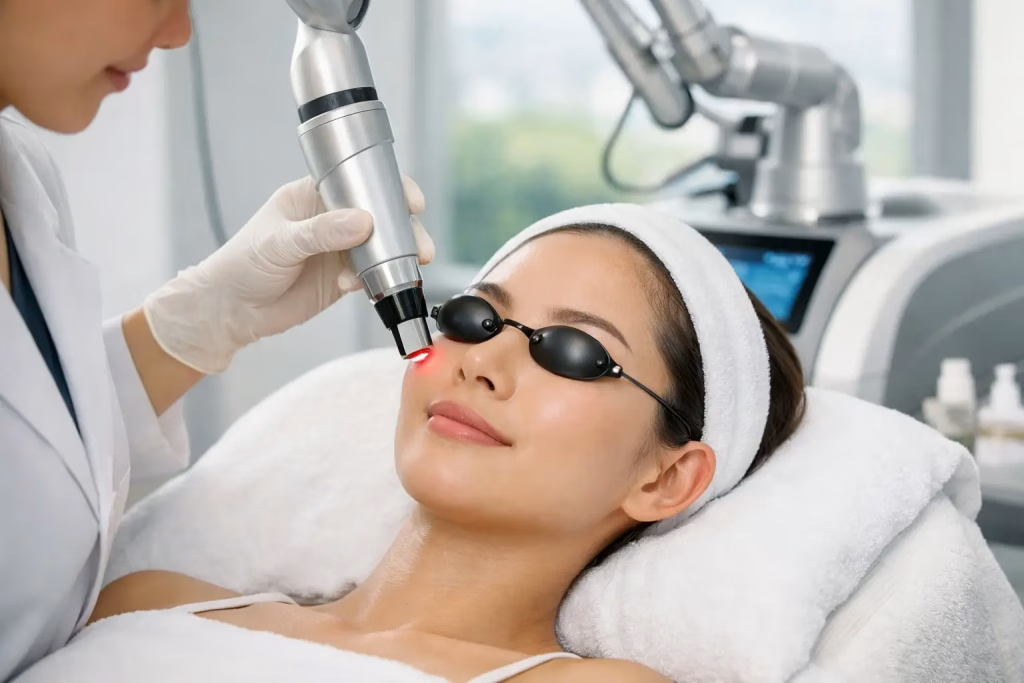
During treatment, patients often describe the sensation as quick snapping or mild prickling. Comfort levels vary depending on the area treated and the intensity required. Some sessions are brief and focused, while others are more comprehensive if multiple concerns are being addressed.
Afterward, the skin may look mildly pink or feel warm for a few hours. In pigment-focused treatments, dark spots can temporarily look darker before they gradually clear. For rejuvenation settings, there may be a sensation of dryness or roughness as the skin renews. Most patients can return to routine activities quite quickly, though proper aftercare remains essential.
Downtime, results, and how many sessions to expect
One reason pico laser is so popular is that downtime is often manageable. Many patients experience only temporary redness or mild sensitivity. Still, low downtime does not mean no aftercare. Skin should be treated gently, protected from heat and direct sun, and supported with appropriate hydration and barrier-friendly products.
Results depend on the concern being treated. Some superficial pigmentation may respond relatively quickly, while acne scars and deeper discoloration usually require a series of sessions. Tattoo removal often takes longer and can be influenced by ink color, age of tattoo, and previous treatments.
For general skin brightening, patients may notice a fresher appearance after a few sessions. For textural concerns, collagen remodeling tends to unfold more gradually. This is where expectations need to be grounded in skin biology. Lasers can stimulate improvement, but they do not replace the time required for the skin to rebuild itself.
A personalized treatment course is usually more effective than chasing aggressive settings in a single visit. In premium aesthetic practice, measured progression is often the smarter path because it prioritizes safety, skin quality, and consistency over short-term intensity.
Who is a good candidate for Singapore Pico Laser Aesthetic Treatment
Good candidates are usually individuals with pigmentation, uneven skin tone, mild acne scars, enlarged pores, or dullness who want a non-surgical treatment with relatively light interruption to daily life. It can suit both women and men, especially those who value discreet rejuvenation rather than obvious intervention.
Suitability, however, depends on more than the concern alone. Skin type, sensitivity, history of melasma, active acne, recent tanning, and underlying medical conditions all matter. Patients using retinoids, exfoliating acids, or prescription acne treatments may need to pause certain products before treatment. Those with very inflamed or compromised skin may benefit from calming and stabilizing the skin first.
This is also why consultation quality matters. A clinically credible provider should assess whether pico laser is the right first treatment, or whether another modality would be more appropriate. Sometimes the best result comes from combining technologies over time rather than relying on a single device.
How pico laser compares with other aesthetic options
Pico laser is not interchangeable with every laser or energy-based treatment. If the main issue is laxity, a lifting-focused treatment such as ultrasound or radiofrequency may be more relevant. If the concern is vascular redness, a vascular laser may be more suitable. If dehydration and surface congestion are dominant, skin-conditioning treatments may be needed alongside or before laser work.
Where pico laser stands out is its ability to address pigment and skin quality together. It occupies a useful middle ground for patients who want more correction than a facial can provide but do not want the recovery associated with more aggressive resurfacing procedures.
There are trade-offs. A gentler profile can mean needing multiple sessions. A treatment that is excellent for pigmentation may not be the best answer for deep scars or significant sagging. The strongest treatment plans respect these distinctions instead of promising that one procedure can solve everything.
Choosing a clinic for pico laser treatment in Singapore
When considering Singapore Pico Laser Aesthetic Treatment, technology is only one part of the decision. The more important question is how that technology is used. A premium experience should combine doctor assessment, careful parameter selection, and clear guidance on maintenance, not just access to a branded machine.
Look for a clinic that treats laser care as personalized medicine rather than a menu item. That means understanding your skin history, tracking progress across sessions, and adjusting the plan as your skin responds. It also means creating an environment where comfort, discretion, and service are taken seriously.
At a refined practice such as Kelly Oriental Aesthetic Clinic, this kind of treatment is best viewed as part of a bespoke skin strategy. The goal is not simply to chase lighter spots or smoother texture in isolation. It is to restore clarity, balance, and confidence in a way that feels polished, measured, and sustainable.
For patients who want brighter, more even-looking skin without stepping away from work or social commitments for long, pico laser remains one of the most elegant modern options. The key is choosing a plan that respects both your skin condition and your lifestyle, because the best aesthetic results are rarely rushed.
