

Uncategorized
Who Should Use Pico Laser?
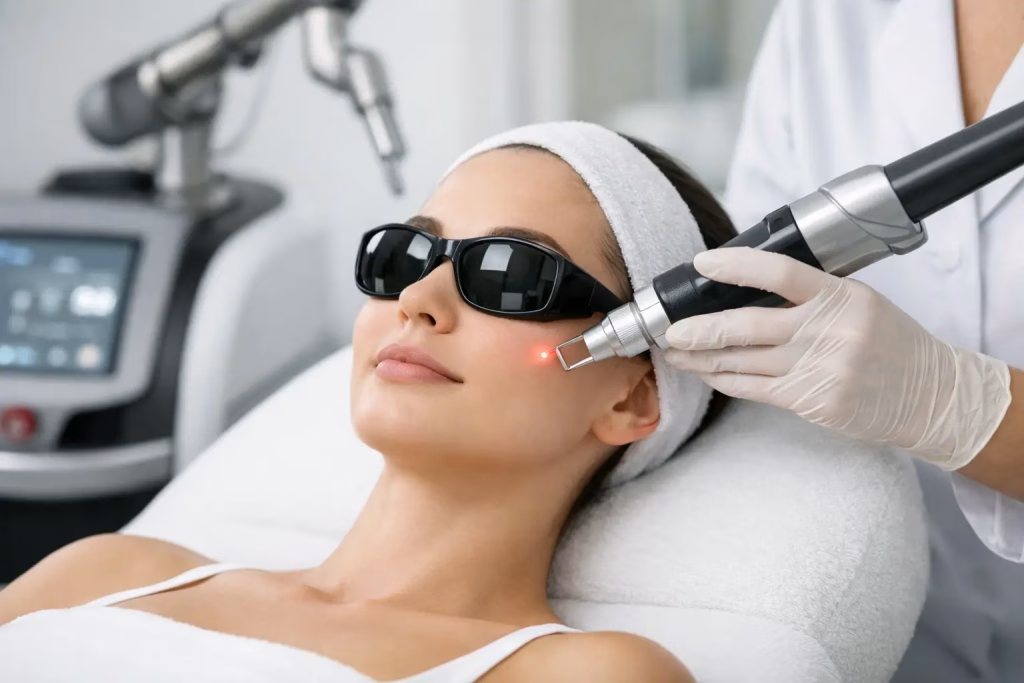
Clearer skin is rarely about chasing trends. It is about choosing a treatment that matches your skin concern, tone, tolerance for downtime, and long-term goals. If you have been wondering Who should use Pico Laser, the answer is more specific than many realize. Pico Laser can be an excellent option for the right candidate, especially when pigmentation, acne scarring, uneven texture, or unwanted tattoos are part of the picture.
What makes Pico Laser so appealing is its precision. Unlike traditional laser approaches that rely more heavily on heat, Pico Laser delivers ultra-short pulses that target pigment and stimulate skin renewal with greater control. For many patients, that translates to visible improvement with less downtime than older technologies. Still, the best results come from proper assessment, not assumptions.
Who should use Pico Laser for skin concerns?
Pico Laser is often best suited to adults who want visible skin improvement without an extended recovery period. Busy professionals, socially active patients, and anyone who prefers a treatment plan that fits around work and daily commitments often find it appealing for this reason alone. Redness and mild sensitivity can happen after treatment, but many people are able to return to normal routines relatively quickly.
The strongest candidates usually have one or more concerns tied to pigmentation or skin quality. This includes sun spots, freckles, post-inflammatory hyperpigmentation, dullness, uneven skin tone, enlarged pores, and certain types of acne scarring. Pico Laser can also be used for tattoo removal, which places it in a different category from many purely rejuvenation-focused devices.
That said, suitability is not just about what bothers you in the mirror. It also depends on whether your skin condition is stable, whether your expectations are realistic, and whether the treatment is being selected as part of a tailored plan rather than a one-size-fits-all fix.
Patients with pigmentation often benefit most
Pigmentation is one of the most common reasons people explore Pico Laser. If your complexion looks uneven due to sun exposure, lingering acne marks, or scattered spots that makeup does not fully cover, Pico Laser may be a strong option. The device is designed to shatter pigment particles into smaller fragments, allowing the body to clear them more efficiently.
This can be particularly appealing for patients who want brighter, cleaner-looking skin without committing to more invasive procedures. In practice, that often includes people with sun-damaged skin, those noticing age-related spots, and individuals whose skin tone appears patchy after inflammation.
There is, however, an important distinction between different kinds of pigmentation. Some concerns respond beautifully. Others, such as melasma, require more caution. Melasma can be triggered or worsened by heat and irritation, so not every pigmentation case should be treated aggressively with laser. A careful medical assessment matters here. The right settings, timing, and combination plan can make a meaningful difference.
Pico Laser for acne scars and enlarged pores
Not all acne scars are the same, and Pico Laser is not the answer to every scar pattern. Still, it can be highly suitable for patients with mild to moderate textural irregularities, post-acne marks, and pores that appear enlarged due to skin damage and collagen loss.
The reason is twofold. First, Pico Laser can help address residual pigmentation left behind by breakouts. Second, certain modes of treatment can stimulate collagen remodeling, which gradually improves skin texture over time. For patients who want a refreshed, smoother complexion without the downtime associated with more aggressive resurfacing, this balance is often attractive.
The nuance is that deeper rolling scars, tethered scars, and more advanced acne scarring may need combination treatment. Subcision, skin boosters, energy-based devices, or other doctor-led interventions may be better suited as part of the overall strategy. In those cases, Pico Laser may still play a valuable role, but it is not always the whole solution.
Who should use Pico Laser for anti-aging?
Patients in the early stages of skin aging are often good candidates. If you are starting to notice a loss of radiance, fine lines, mild texture changes, or a general tiredness in the skin, Pico Laser can support a more refined and luminous appearance. It is especially appealing to those who want prevention and maintenance, not just correction.
This tends to resonate with adults who care about looking polished and well-rested rather than dramatically altered. Pico Laser is not a lifting treatment, so it will not replace options meant for laxity or deeper structural aging. If sagging, jowls, or heavier folds are your main concern, treatments designed for tightening may be more appropriate.
Where Pico Laser shines in an anti-aging context is skin quality. It can contribute to a complexion that looks fresher, more even, and more refined. For many patients, that improvement in overall skin tone and texture creates a noticeable rejuvenation effect, even if the treatment is not directly targeting facial volume or lift.
Is Pico Laser suitable for darker skin tones?
This is one of the most important questions, particularly in a multicultural city where skin tones vary widely. In many cases, Pico Laser can be suitable for darker skin tones when used thoughtfully and under experienced medical guidance. Because it can target pigment with greater precision and less collateral heat than some older laser platforms, it may offer a safer pathway for certain patients who are more prone to post-inflammatory pigmentation.
Even so, darker skin requires careful parameter selection, proper diagnosis, and a conservative treatment plan. A device is only part of the equation. The clinician’s judgment matters just as much. Overly aggressive treatment can create setbacks, especially if the skin is reactive or if the concern has been misidentified.
This is why a premium, doctor-led approach is not just about comfort. It is about protecting outcomes. Skin type, pigment behavior, inflammation history, and lifestyle factors such as sun exposure all influence whether Pico Laser is the right fit and how treatment should be performed.
Tattoo removal candidates
Pico Laser is also well known for tattoo removal. Patients who want to fade or remove unwanted tattoos are often strong candidates, especially if they understand from the outset that removal is a process, not a single-session event. Different ink colors, tattoo depth, skin tone, and tattoo age all affect progress.
Black and darker inks often respond well, while certain bright colors can be more stubborn. Professional tattoos may take longer than amateur ones because the pigment tends to be more densely packed. If a patient is willing to commit to a staged plan and allow adequate time between sessions, Pico Laser can be an effective choice.
The right mindset matters here. Good tattoo removal requires patience, aftercare, and realistic expectations about how complete the clearance may be.
Who may not be the best candidate?
Pico Laser is not ideal for everyone at every moment. If you have active skin infection, open wounds, uncontrolled acne flare-ups, significant irritation, or a recent tan, treatment may need to be postponed. Patients who are pregnant, highly photosensitive, or using medications that affect healing may also require additional caution.
It may also be the wrong first choice if your main concern is severe laxity, deep wrinkles, or volume loss. In those cases, another treatment may be better aligned with your goal. The same applies if you expect dramatic change after one session. Pico Laser often works best as a series, with results building progressively.
A refined consultation should never force a treatment into the wrong role. It should clarify whether Pico Laser is the hero treatment, a supporting treatment, or not the right option at all.
What the best candidates have in common
The patients who tend to do best with Pico Laser share a few qualities. They want improvement that looks natural. They value a treatment plan tailored to their skin rather than a generic package. They understand that elegant results usually come from consistency, not shortcuts.
They also tend to appreciate precision. Pico Laser is well suited to those who want targeted correction for pigmentation, post-acne marks, pores, mild textural concerns, and tattoo removal, while keeping downtime manageable. For many, that makes it an appealing part of modern aesthetic maintenance.
At a clinic such as Kelly Oriental Aesthetic Clinic, this kind of treatment is most meaningful when it sits within a broader view of skin health. Laser can address what is visible, but the finest results often come from pairing technology with thoughtful diagnosis, personalized scheduling, and proper aftercare.
If you are asking whether Pico Laser is for you, the most honest answer is this: it is ideal for patients whose goals, skin condition, and lifestyle align with what the treatment actually does well. That kind of clarity is where beautiful results begin.
