

Uncategorized
Best Ways to Remove Tattoos That Really Work
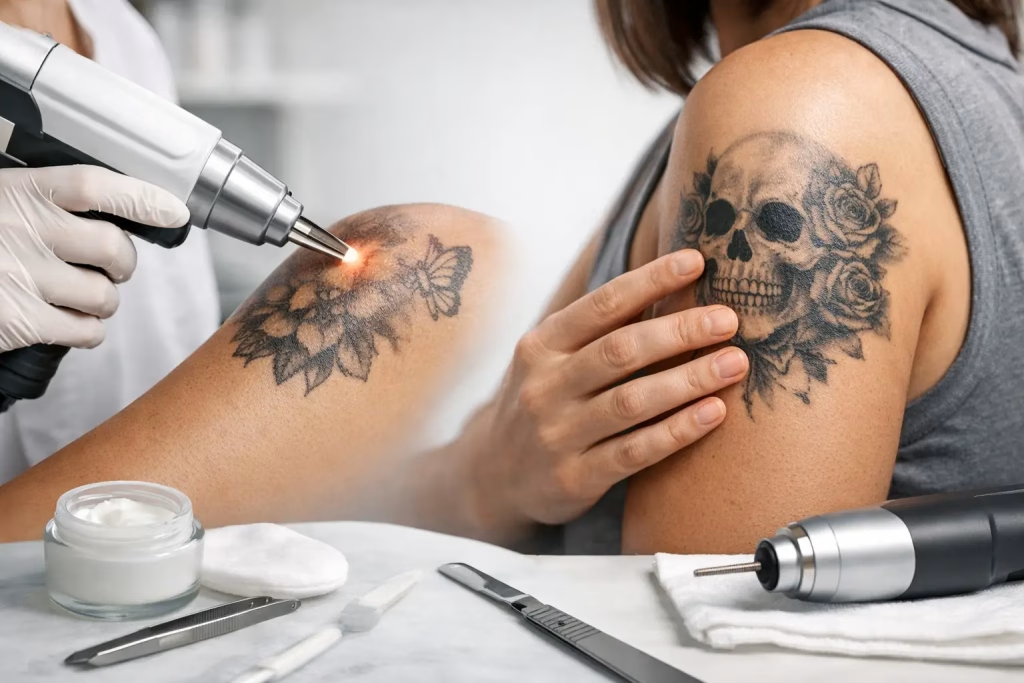
A tattoo can mark a meaningful chapter, but not every chapter needs to stay visible forever. The best ways to remove tattoos are not quick fixes or home remedies. They are medically guided treatments chosen around the tattoo’s ink, depth, location, age, and your skin’s individual response.
For most people, laser tattoo removal offers the most effective balance of visible clearance, skin preservation, and recovery time. Still, it is not a one-size-fits-all process. A thoughtful consultation matters because the right approach can make a meaningful difference to your results and comfort.
The Best Ways to Remove Tattoos Safely
Pico laser tattoo removal
Pico laser technology is widely regarded as the preferred option for many unwanted tattoos. Rather than relying primarily on heat, a Pico laser delivers ultra-short pulses of energy that create a photoacoustic effect. This breaks tattoo pigment into much smaller particles, allowing the body’s immune system to gradually clear them away.
The appeal is precision. Pico laser treatments can target a broad range of ink colors while minimizing unnecessary disruption to surrounding skin. Black and dark blue inks typically respond especially well, while colors such as red, orange, green, and turquoise may require specific laser wavelengths and a more tailored treatment plan.
At a doctor-led clinic, treatment settings should be selected according to your skin tone, tattoo characteristics, and history of pigmentation or scarring. This is particularly important for Asian skin, which can be more prone to post-inflammatory hyperpigmentation when skin is treated too aggressively.
Most tattoos require a series of sessions, usually spaced several weeks apart. The interval is not simply a waiting period. Your body needs time to process fragmented ink particles and for the treated area to recover before the next session. Results tend to develop progressively, not overnight.
Q-switched laser treatment
Q-switched lasers have been used for tattoo removal for many years and remain a proven clinical option. Like Pico lasers, they deliver energy in extremely brief pulses to break down pigment. Depending on the tattoo and available technology, a practitioner may recommend a Q-switched laser, a Pico laser, or a combination approach over the course of treatment.
The best device is not always the newest one. It is the device, wavelength, and treatment setting that are appropriate for your tattoo and skin. A professional assessment should look beyond the tattoo’s color and size to consider whether it was professionally applied, whether it has been treated before, and whether there is existing textural scarring.
Surgical excision for very small tattoos
Surgical excision removes the tattooed skin directly and closes the area with stitches. It can be an effective option for a small tattoo in a location where the resulting linear scar is likely to be discreet. Unlike laser treatment, excision may remove the tattoo in one procedure, but it intentionally replaces it with a scar.
For that reason, excision is generally not suitable for larger designs or tattoos in areas where wound tension may affect healing. It is a medical procedure, not a cosmetic shortcut, and should be discussed carefully with a qualified doctor.
Dermabrasion and chemical methods
Dermabrasion removes layers of skin mechanically, while chemical methods attempt to lift pigment through controlled injury to the skin. These approaches are less commonly favored today because they can involve more discomfort, longer healing, and a higher risk of scarring or uneven pigmentation than modern laser treatment.
They may have a limited place in select clinical circumstances, but they are rarely the first choice when advanced laser technology is available. Tattoo removal should preserve skin quality wherever possible, not simply erase pigment at any cost.
What Does Not Work for Tattoo Removal
Tattoo removal creams, acids, salt scrubs, and at-home abrasion methods are not credible alternatives to professional treatment. Tattoo ink sits beneath the surface of the skin, so a topical cream cannot selectively reach and remove it. What it can do is irritate the skin barrier, cause burns, and create discoloration or scarring that is far more difficult to treat than the tattoo itself.
The same caution applies to DIY methods promoted online. A tattoo may be unwanted, but damaged skin is not a worthwhile trade-off. If a method promises complete removal in days or claims to work without any professional assessment, it deserves skepticism.
What Determines How Many Sessions You Need?
A treatment plan is shaped by far more than the size of the tattoo. Black ink often clears more predictably than lighter shades, while layered cover-up tattoos can take longer because they contain a greater density and variety of pigments. Professional tattoos are often placed deeper and more evenly than amateur tattoos, which can affect the number of sessions required.
Location matters too. Tattoos closer to areas with stronger circulation, such as the upper body, may fade more efficiently than those on the hands, feet, or lower legs. Your immune response, general health, smoking status, and aftercare habits can also influence progress.
A realistic plan may involve several sessions over many months. This is one of the most important expectations to set at the beginning. Treatment can achieve excellent clearance, but complete removal cannot be guaranteed for every tattoo, particularly when certain resistant colors, dense ink, or prior scarring are involved.
Choosing a Clinic for Laser Tattoo Removal
Tattoo removal is a skin procedure, and it should be treated with the same care as any other aesthetic treatment. The quality of the consultation is often a useful indicator of the quality of care to follow. You should expect an assessment of your tattoo, skin tone, medical history, prior reactions to lasers, and goals for removal.
A reputable clinic should also explain potential side effects clearly. Temporary redness, swelling, tenderness, pinpoint bleeding, and blistering can occur after laser treatment. Less common risks include pigment changes, textural changes, and scarring. These risks can be reduced through appropriate settings, careful technique, and disciplined aftercare, but no responsible provider should suggest that treatment is entirely risk-free.
At Kelly Oriental Aesthetic Clinic, tattoo removal is approached as a personalized skin journey rather than a standardized package. A doctor-led evaluation helps determine whether Pico laser treatment is suitable and how to plan sessions with your skin health, comfort, and desired outcome in mind.
How to Prepare for Your Appointment
Arrive with the treatment area clean and free from makeup, fragrance, or active skincare products. Avoid tanning, self-tanner, and prolonged sun exposure before your session, as recently tanned skin may be more vulnerable to unwanted pigment changes. Tell your practitioner about any medications, supplements, skin conditions, history of cold sores, or tendency to form raised scars.
If discomfort is a concern, ask about available comfort measures before treatment. Many clinics use topical numbing cream, cooling systems, or both. The sensation is often described as brief snapping against the skin, but comfort is personal, and a premium treatment experience should account for that.
Aftercare That Protects Your Results
After a laser session, the area may feel warm and look red or slightly swollen. Cool compresses can help, and your practitioner may recommend a soothing ointment or protective dressing. Keep the area clean, avoid picking at crusts or blisters, and protect it from direct sun exposure while it heals.
For the first few days, avoid friction, swimming pools, hot tubs, saunas, and strenuous exercise that may irritate the treated skin. Loose clothing is helpful when the tattoo is on an area that rubs against fabric. If you notice increasing pain, spreading redness, pus, fever, or any sign of infection, contact your treating clinic promptly.
The most refined tattoo removal plans respect both patience and skin integrity. Clearer skin is not achieved by rushing the process, but by giving every treatment session and every stage of healing the attention it deserves.
