

Uncategorized
How to Tighten Sagging Skin Effectively
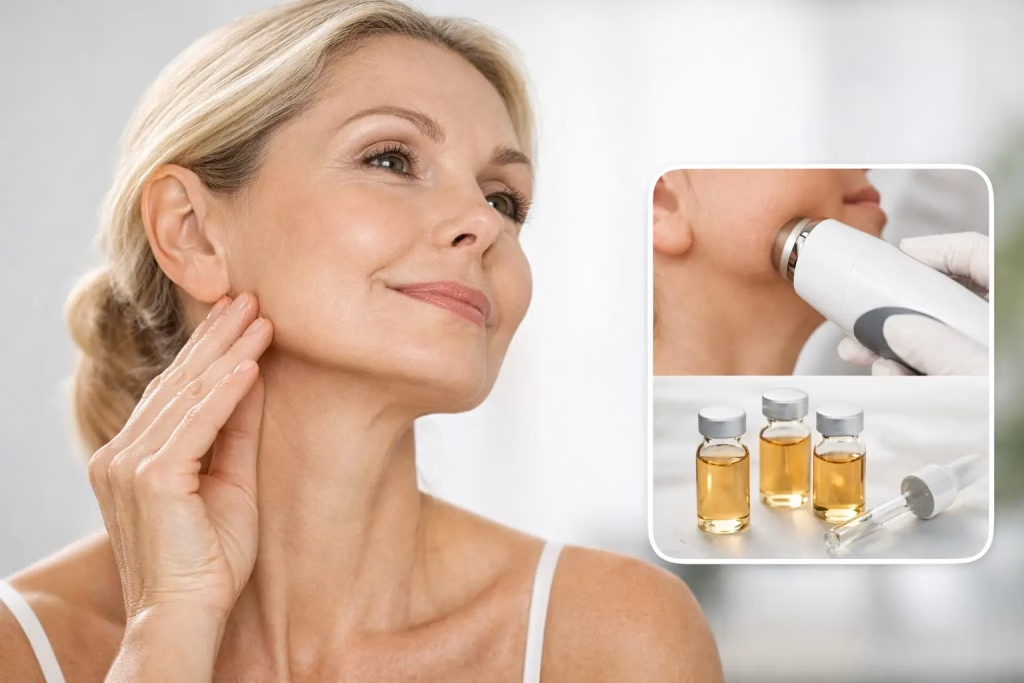
Skin rarely starts to feel looser all at once. More often, it shows up in small ways first – a softer jawline in certain lighting, cheeks that seem less lifted, or skin on the neck that no longer looks as firm as it once did. If you are wondering how to tighten sagging skin, the answer is usually not a single cream, device, or treatment. It is a measured approach based on why the skin is loosening in the first place, how advanced the laxity is, and what level of result you expect.
Sagging skin is not simply about age. Collagen loss, elastin breakdown, sun exposure, weight changes, dehydration, genetics, and even chronic inflammation all play a role. For some, the concern is mild and early, with a slight loss of bounce. For others, there is more visible laxity at the lower face, under the chin, around the eyes, or along the body. The best plan depends on the depth of the issue and the amount of structural support the skin has lost.
How to tighten sagging skin starts with the cause
To tighten skin well, you need to know what is actually changing beneath the surface. Younger skin has strong collagen scaffolding and elastic fibers that help it snap back into place. Over time, that support weakens. The skin becomes thinner, slower to repair, and less resistant to gravity.
Volume loss can make the problem look worse. When fat pads shift and facial contours flatten, the skin may appear heavier even if the surface texture is still relatively smooth. This is why two people with similar age can have very different concerns. One may need collagen stimulation, while another needs lifting, contour support, or a combination of both.
Lifestyle matters too. Frequent sun exposure accelerates collagen breakdown. Smoking, high stress, poor sleep, and a diet low in protein or antioxidants can all affect how resilient the skin appears. If the body is inflamed or depleted, skin quality usually reflects it.
What actually works for mild to moderate skin laxity
There is no shortage of products promising firmer skin, but not every option creates meaningful change. Topical skincare can improve texture and help the skin look healthier, yet visible tightening usually requires stimulation deeper in the tissue.
For early laxity, collagen-supporting skincare is a useful foundation. Retinoids can help improve skin turnover and support collagen production over time. Peptides, antioxidants, and hydrating ingredients can also improve the look of crepey or tired skin. This kind of routine will not replicate the effect of an in-clinic lifting treatment, but it can help maintain results and improve overall skin quality.
Energy-based treatments tend to offer more noticeable improvement because they work below the surface. Radiofrequency and ultrasound-based technologies are often used to heat targeted layers of tissue, encouraging collagen remodeling and gradual tightening. Treatments such as Thermage and Ultherapy are widely chosen for this reason. They are especially relevant for patients who want a non-surgical option with little downtime and a refined, natural-looking result.
The trade-off is patience. These treatments do not usually create an instant surgical lift. Results build over weeks to months as collagen regenerates. For the right patient, that slower progression is part of the appeal – the face looks fresher and firmer without appearing abruptly altered.
How to tighten sagging skin on the face and neck
The face and neck are often the first areas where laxity becomes noticeable, but they do not age in exactly the same way. The lower face may lose definition around the jawline and nasolabial region, while the neck can show horizontal lines, thinning skin, and a softening under the chin.
For the face, treatment selection depends on whether the main concern is skin quality, tissue descent, or contour loss. If the skin feels thinner and less springy, collagen-stimulating treatments may be enough. If the jawline looks blurred or the cheeks appear heavier, a more strategic plan may be needed. That can include lifting technologies, injectables for structural balance, or regenerative treatments that improve texture and firmness together.
For the neck, expectations should be realistic. Neck skin is delicate, and improvement is often gradual rather than dramatic. Radiofrequency, ultrasound, and certain microneedling-based platforms can help, particularly when started before laxity becomes severe. If there is a double chin or localized fullness under the chin, that may also need to be addressed, because excess fullness can make the skin look looser than it actually is.
At a clinic such as Kelly Oriental Aesthetic Clinic, a doctor-led assessment is valuable because sagging is rarely one-dimensional. Skin tightening, contouring, and skin quality often need to be considered together for a polished result.
Body skin is different from facial skin
People often ask how to tighten sagging skin on the stomach, arms, thighs, or above the knees, especially after weight loss or pregnancy. Body skin can respond to non-surgical treatments, but the limits are different. The skin is thicker, the treatment area is larger, and the degree of laxity can be more significant.
For mild to moderate body laxity, radiofrequency-based treatments and collagen-stimulating procedures may help firm the area and improve skin texture. Results are usually best when there is still some natural elasticity present. If the skin has become significantly stretched, non-surgical options may improve the appearance, but they may not fully correct loose folds or excess skin.
This is where honest guidance matters. A refined treatment plan should not overpromise. In some cases, body contouring and skin tightening can be combined to create a smoother silhouette. In others, maintenance-focused improvement is the more realistic goal.
When skincare helps and when it does not
A thoughtful at-home routine is still worth having, especially if you want to support long-term firmness. Daily sunscreen is essential because UV exposure remains one of the biggest drivers of collagen loss. Retinol or prescription retinoids can support smoother texture and help skin behave in a younger way over time. Well-formulated moisturizers improve barrier function, which can make skin look plumper and less creased.
Still, topical products have limits. They mostly work at the surface or upper layers of the skin. If sagging is caused by deeper collagen depletion or tissue descent, creams alone will not create a visible lift. This is often the point where patients feel frustrated – they are using good skincare, but the mirror is still showing softness around the jawline or neck.
That does not mean skincare is failing. It means the concern has moved beyond what skincare can fully address. In those cases, professional treatment becomes the bridge between maintenance and visible correction.
The role of lifestyle in firmer-looking skin
Even the most advanced treatment plan works better when the basics are in place. Skin needs raw materials to rebuild collagen, so adequate protein intake matters. Vitamin C, zinc, and antioxidant-rich foods support repair. Good sleep helps regulate the restorative processes that keep skin resilient.
Stable weight is another overlooked factor. Repeated weight gain and loss can stretch the skin and weaken its ability to rebound. Hydration also influences how skin looks day to day, although it does not directly tighten lax skin. Well-hydrated skin simply appears healthier, smoother, and less fragile.
If you are investing in tightening treatments, sun protection is non-negotiable. Otherwise, you are trying to rebuild collagen while continuing to break it down.
Choosing the right treatment plan
The most effective answer to how to tighten sagging skin is usually personalized, not trendy. A treatment that works beautifully for mild cheek laxity may do very little for post-weight-loss skin on the body. A patient in their thirties with early loosening needs a different plan from someone with more advanced laxity and volume loss.
This is why consultation matters. A good provider looks at skin thickness, facial movement, degree of laxity, underlying fat distribution, and whether your concern is best treated with energy, injectables, regenerative therapy, or a combination. They should also explain the pace of results, likely maintenance, and the difference between improvement and transformation.
Subtle, well-planned tightening tends to age better than aggressive correction. For many patients, the goal is not to look different. It is to look more rested, more defined, and more like themselves again.
If your skin has started to feel less firm, the encouraging part is this: you do not have to wait until the change feels dramatic. Early intervention often gives the most elegant results, especially when your plan is built around your skin rather than someone else’s before-and-after photo.
