
Uncategorized
Botox Versus Dermal Fillers for Facial Aging
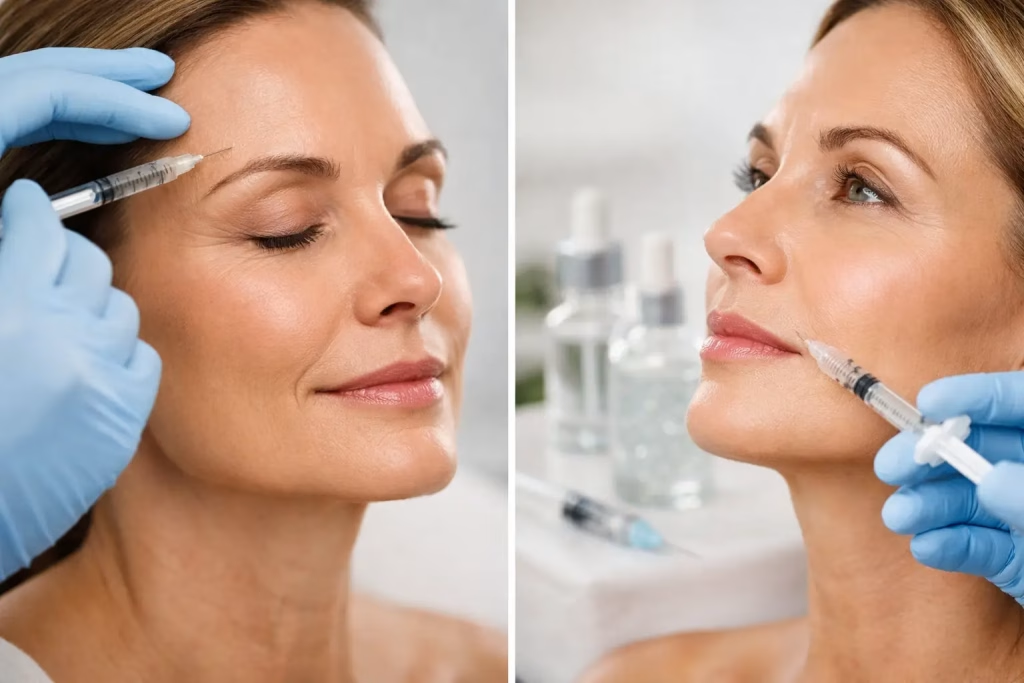
A forehead that folds during an important presentation, a smile that leaves creases behind, or cheeks that no longer reflect the energy you feel can each call for a different approach. Botox versus dermal fillers is not a question of which treatment is universally better. It is about understanding whether your concern is caused by muscle movement, a loss of facial volume, changes in skin quality, or a combination of all three.
When selected thoughtfully, injectable treatments can soften signs of aging while preserving the expressions and character that make your face distinctly yours. The most refined results rarely look “done.” They look rested, balanced, and in harmony with your features.
Botox Versus Dermal Fillers: The Essential Difference
Botox is a brand of botulinum toxin type A, a prescription neuromodulator used to temporarily relax targeted facial muscles. Many lines form because the same muscles contract repeatedly over years: frowning, squinting, raising the brows, or smiling. By reducing the strength of carefully selected muscle movements, Botox can soften existing expression lines and help slow the deepening of dynamic wrinkles.
Dermal fillers work differently. Rather than changing muscle activity, fillers are injectable gels that restore or refine volume beneath the skin. Most modern fillers are made with hyaluronic acid, a substance naturally found in the body that attracts water. Depending on the formulation and placement, filler may enhance cheek structure, restore support around the mouth, define the chin or jawline, or improve hollows under the eyes.
The distinction is simple but meaningful: Botox relaxes movement, while dermal fillers replace or shape volume. A line across the forehead that appears when you raise your eyebrows may respond beautifully to Botox. A fold beside the nose that remains visible even when your face is at rest may be more closely linked to volume loss and facial support, where filler can be considered.
What Each Treatment Can Address
Botox for movement-related lines and facial balancing
Botox is commonly used for horizontal forehead lines, the vertical “11” lines between the brows, and crow’s feet around the eyes. It can also be used in more nuanced ways, such as softening a chin that dimples with movement, reducing a gummy smile, easing jaw clenching, or creating a subtle brow lift when appropriate for the individual’s anatomy.
The goal should not be to remove every movement from the face. An experienced injector considers your brow position, eyelid heaviness, muscle strength, facial symmetry, and the way you naturally communicate. For some people, a lighter dose maintains expressive movement while taking the edge off etched lines. Others may prefer a more polished, smoother finish. Neither approach is inherently right without considering the face in front of you.
Dermal fillers for volume, contour, and proportion
Dermal fillers are often chosen when the face has begun to lose the soft structural support associated with youth. Cheeks may appear flatter, temples more hollow, the jawline less defined, and shadows around the mouth more pronounced. Strategic filler can restore contour, but it should be approached as facial architecture rather than a way to simply fill every crease.
For example, adding support to the midface may soften the appearance of nasolabial folds without placing large amounts of product directly into the folds. Chin filler can improve profile balance and jawline definition. Lip filler can refine shape, hydration, and proportion, though a natural result depends as much on restraint and technique as it does on product selection.
Not every hollow needs filler. Under-eye concerns may stem from pigmentation, skin laxity, prominent fat pads, allergies, or a combination of factors. In such cases, filler may be unsuitable or may not offer the outcome you expect. A careful assessment protects both your appearance and your safety.
Results, Longevity, and Downtime
Botox does not produce its final effect immediately. Initial changes may be visible within a few days, with results typically settling over approximately two weeks. For many people, the effect lasts around three to four months, although metabolism, dosage, treatment area, and muscle activity can influence longevity.
Dermal filler often provides an immediate visible change, though minor swelling can temporarily affect the early appearance. Depending on the filler type, treatment area, and individual metabolism, results may last from about six months to two years or longer. Fillers placed in highly mobile areas, such as the lips, often dissipate sooner than those used for deeper structural support.
Both treatments are commonly associated with minimal downtime. Redness, tenderness, swelling, and bruising can occur, particularly with filler. It is sensible to schedule injectable treatments with some breathing room before a major event, rather than treating the day before a wedding, photo shoot, or important work engagement.
How to Decide Which Treatment Is Right for You
A mirror can reveal a useful clue. Look at the concern both at rest and while making the expression that brings it out. If the line primarily appears with movement, Botox may be the more relevant conversation. If the concern remains when your face is relaxed or is paired with flattening, hollowing, or loss of contour, filler may be worth discussing.
Age alone is not the deciding factor. Someone in their late 20s may benefit from Botox for strong frown lines, while someone in their 40s may have excellent skin quality but want modest cheek or chin refinement. Genetics, lifestyle, sun exposure, weight changes, bone structure, and personal aesthetic preferences all shape the treatment plan.
Many patients benefit from a combination approach. Botox can soften the repetitive muscular pull that creates wrinkles, while filler restores areas that have lost structural support. Skin-focused treatments may also have a role when texture, dehydration, pigmentation, or laxity is the central concern. Injectables can enhance the face, but they do not replace a comprehensive plan for skin health.
Why Technique and Assessment Matter More Than Trend
Botox and dermal fillers are medical treatments, not interchangeable beauty add-ons. The safety and quality of an outcome depend on precise product selection, detailed knowledge of facial anatomy, conservative dosing, and an injector who is willing to say no when a treatment is not appropriate.
Botox can cause temporary asymmetry, eyelid or brow heaviness, or an overly frozen appearance when placed or dosed poorly. Filler carries risks including swelling, bruising, lumps, migration, and, rarely, serious vascular complications. These risks make a qualified medical consultation essential, particularly for areas such as the nose, under-eyes, temples, and lips.
Before treatment, disclose medications, supplements, allergies, prior cosmetic procedures, and any history of facial surgery or medical conditions. Pregnancy and breastfeeding are generally times to postpone elective injectable treatments. A responsible provider should explain realistic outcomes, expected recovery, potential risks, and the reasoning behind every recommendation without pressure to proceed.
A More Refined Way to Approach Injectables
The best injectable plan begins with your priorities, not a predetermined number of syringes or units. You may want to look less tired in meetings, retain a naturally expressive smile, soften a tense jawline, or restore subtle balance after noticing changes in photographs. These are different goals, and they deserve different strategies.
A doctor-led consultation should look beyond a single line or feature. It should consider facial proportions, skin condition, movement patterns, and how treatments may evolve over time. Starting conservatively is often the elegant choice. More can be added if needed; an overfilled or overtreated appearance is far more difficult to reverse aesthetically.
The most valuable result is not one that makes you look like someone else. It is one that lets your features appear rested, composed, and quietly confident. Choose a practitioner who listens closely, treats with precision, and sees your face as a whole rather than a collection of areas to correct.
