
Uncategorized
Male Aesthetic Treatments for Professionals
Sep
The camera is on before the meeting begins. Whether it is a client presentation, a leadership call, or a dinner after work, a tired-looking complexion, persistent acne scarring, or thinning hair can feel more visible than it once did. Male aesthetic treatments for professionals are not about looking altered. They are about appearing as composed, rested, and well-presented as the career you have built.
For many men, the most compelling approach is subtle and strategic: treatments that respect masculine facial structure, fit around demanding schedules, and offer gradual, credible-looking improvement. A thoughtful plan can address the signs of stress, sun exposure, shaving irritation, and time without announcing itself to the room.
Why aesthetic care is becoming part of professional grooming
Professional grooming has moved beyond a good haircut and tailored wardrobe. Healthy-looking skin, a defined jawline, and fuller hair can influence how confidently someone feels when speaking, networking, or being photographed. This is not about chasing a uniform ideal. It is about refining the features that already make you recognizable.
Men also tend to arrive with practical priorities. They may want to soften deep lines without losing expression, improve acne scars without prolonged downtime, or manage pigmentation that makes the skin look uneven on video. Others are seeking support for hair thinning before it becomes more advanced. The best treatment plan starts with those specific concerns rather than a standard menu of procedures.
Discretion matters, too. A clinician should be able to explain what may cause temporary redness, swelling, or peeling, and help schedule treatments around travel, events, and important work commitments. Some results are visible quickly, while others are designed to build over several weeks or months. Both can have a place in a well-considered routine.
Male aesthetic treatments for professionals: what to prioritize
The most effective choices depend on your skin condition, facial anatomy, lifestyle, and tolerance for downtime. A doctor-led consultation is particularly valuable because similar concerns can have very different causes. Under-eye darkness, for example, may be linked to pigmentation, hollowing, visible blood vessels, or lack of sleep. Treating the wrong factor rarely delivers a refined result.
Skin quality that holds up in close conversation
Uneven tone, enlarged pores, dehydration, and early fine lines can make skin appear less rested than it feels. Hydrafacial-style cleansing and hydration treatments can be helpful before an event or as regular maintenance, particularly for congested or dehydrated skin. They offer a polished, fresh finish with minimal interruption to daily life.
For more persistent concerns, laser treatments and energy-based procedures may be considered. Pico Laser can be used in personalized plans for pigmentation, sun spots, and certain textural concerns. Sylfirm X combines microneedling with radiofrequency technology and may be recommended for concerns such as acne scars, enlarged pores, and uneven texture. These treatments often require a series, with improvement developing progressively as the skin remodels.
The trade-off is timing. More corrective procedures can involve temporary redness or dryness, so they are usually better planned ahead of major presentations, weddings, or extended travel. Sun protection and a consistent home-care routine remain essential, especially in sunny climates where pigmentation can recur.
Structure and definition without an overdone look
Aging in male faces is often less about a single wrinkle and more about gradual changes in skin firmness, jawline definition, and volume distribution. The goal should not be to erase every line. A few natural lines can communicate character. What many professionals seek is a face that looks less fatigued and more supported.
Non-surgical skin-tightening treatments such as Thermage and Ultherapy may be appropriate for mild to moderate laxity around the cheeks, lower face, jawline, or neck. They work differently, and suitability depends on tissue quality, degree of sagging, and the outcome you hope to achieve. Results tend to emerge gradually, which suits clients who prefer a discreet evolution rather than an obvious change overnight.
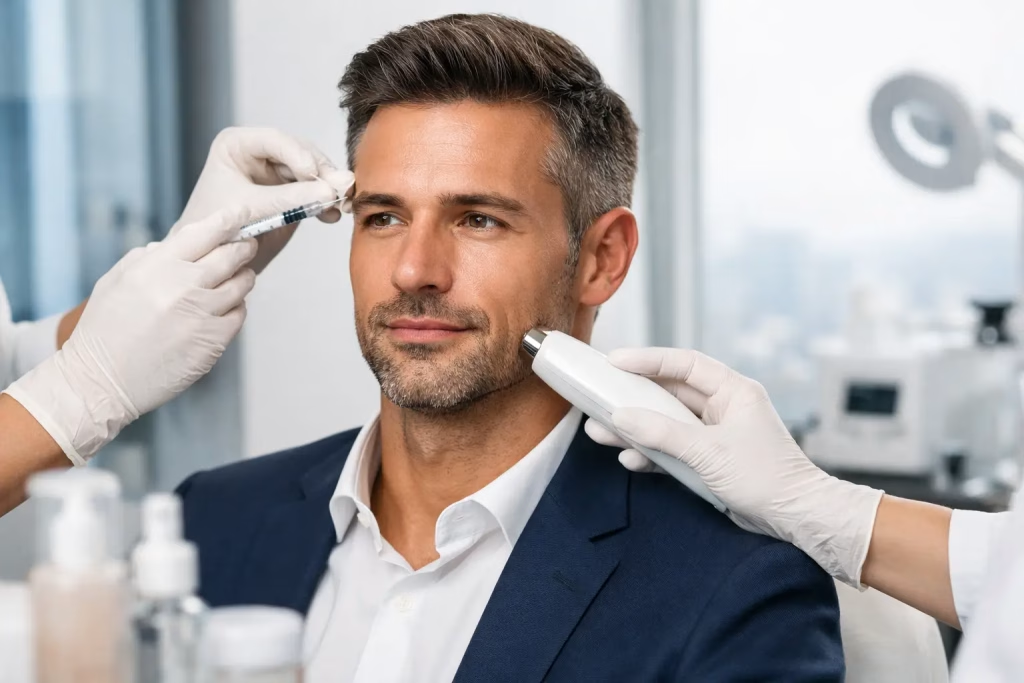
Injectable treatments can also be used with restraint. Neuromodulators may soften lines caused by repeated facial movement, such as frown lines or forehead creases. Dermal fillers or skin boosters may be considered to support selected areas, improve hydration, or restore balance. In male facial aesthetics, technique is everything. Preserving a strong brow, natural proportions, and facial mobility is usually more important than pursuing excessive smoothness or contour.
A clearer profile and a more defined lower face
The jawline and chin often become focal points in professional photographs and video calls. Weight fluctuation, genetics, and aging can contribute to fullness beneath the chin or reduced definition along the lower face. Non-surgical options may include treatments designed to address submental fullness, improve skin quality, or support contour.
A consultation should be candid about what is realistic. If fullness is primarily caused by fat, skin tightening alone may not create a dramatic change. If loose skin is the larger issue, a contouring treatment may need to be paired with a different modality. The right plan is not the one with the most steps. It is the one that addresses the anatomy in front of you.
Hair concerns deserve early attention
Hair thinning can affect confidence long before it becomes apparent to others. Early evaluation is helpful because different forms of hair loss require different approaches. A treatment plan may include scalp-focused therapies, hair restoration options, or a combination of clinical treatment and home care, depending on the pattern and underlying cause.
Realistic expectations are particularly important here. Hair cycles are slow, and meaningful change may take several months. Consistency matters more than a one-time intervention. For professionals who prefer privacy, a gradual program can be an appealing way to support scalp and hair health without a conspicuous transition.
How to fit treatments into a demanding schedule
Aesthetic care should work around your calendar, not compete with it. It is useful to separate treatments into three categories: maintenance procedures with little to no downtime, corrective treatments that need recovery time, and longer-term treatments whose results build gradually.
A hydration-focused facial or light skin treatment may be booked shortly before a social event, depending on your skin’s sensitivity. Procedures involving microneedling, lasers, or injectables should be planned with enough buffer before important appearances. Even when downtime is minimal, every individual responds differently.
For longer-term concerns such as laxity, scars, pigmentation, or thinning hair, start earlier than you think you need to. This allows the clinician to assess response, adjust the plan where necessary, and create results that feel natural rather than rushed. Consistency also makes it easier to maintain improvement with fewer reactive treatments later.
Choosing a clinic with the right level of care
A premium aesthetic experience is not simply about advanced devices or an elegant treatment room. It is about clinical judgment, transparent guidance, and a plan that is tailored rather than pressured. Look for a clinic that takes a complete history, examines your skin and facial structure carefully, explains potential side effects, and is willing to say when a treatment is not appropriate.
At Kelly Oriental Aesthetic Clinic, this personalized approach brings doctor-led assessment together with therapist-supported care in a calm, considered setting. The focus is on treatment journeys that reflect the client’s goals, schedule, and comfort level, whether the concern is skin texture, facial definition, or hair health.
The most successful aesthetic work is often the kind no one can identify. Colleagues may simply notice that you look well, rested, and quietly confident. That is a meaningful result: care that supports how you want to show up, without changing who you are.
