
Uncategorized
Can Treatments Reduce Jowls? Options That Work
Sep
The change can feel surprisingly sudden: your face still looks like your face, yet the once-clean line between chin and neck appears softer, heavier, or less defined in photographs. So, can treatments reduce jowls? In many cases, yes. The right nonsurgical plan can improve lower-face firmness and contour, but the outcome depends on what is creating the jowls in the first place.
Jowls are not simply a skin concern. They may reflect a combination of skin laxity, diminishing collagen, shifting facial fat, loss of cheek support, muscle activity, and changes around the chin and jawline. A polished treatment plan begins by identifying that combination rather than applying the same device or injectable to every face.
Why Jowls Develop Over Time
The jawline is supported by a delicate framework of skin, fat, ligaments, muscle, and bone. With age, collagen and elastin production naturally slow. Skin becomes less able to recoil, while facial fat pads may descend or lose volume. The cheeks can look flatter, and the lower face may appear comparatively heavier.
Genetics, sun exposure, weight fluctuation, and smoking can influence how early these changes become visible. Some people develop early laxity in their 30s, while others retain a defined jawline longer but notice a more marked shift later. Facial anatomy matters as much as age. A smaller chin, a fuller submental area, or naturally heavier lower-face tissue can make jowling more apparent.
This is why an effective approach should not focus only on the fold beside the jaw. Treating the surrounding structure, including the cheeks, chin, neck, and skin quality, often creates a more balanced and refined result.
Can Treatments Reduce Jowls Without Surgery?
Nonsurgical treatments can soften mild to moderate jowls, improve skin quality, and restore a more defined transition from face to neck. They are especially valuable for people who want gradual, natural-looking refinement without surgical downtime.
However, nonsurgical care cannot replicate a surgical facelift when there is substantial loose skin, pronounced tissue descent, or significant neck laxity. A thoughtful consultation should make that distinction clearly. The goal is not to promise a new face, but to select treatments that respect your anatomy and deliver visible improvement within realistic limits.
For many patients, the most elegant results come from combining modalities. One treatment may stimulate collagen deep within the tissue, while another improves superficial skin texture or addresses volume loss that is contributing to a downward pull.
Ultrasound Skin Tightening for Deeper Support
Ultrasound-based lifting treatments, such as Ultherapy, deliver focused energy at specific depths beneath the skin. This encourages the body’s natural collagen-building response in the foundational layers that support the face and neck.
Ultherapy may be suited to patients with early to moderate laxity who want a gradual lift without needles or incisions. Results emerge over time as collagen remodeling develops, typically becoming more noticeable over several months. It can be a particularly considered option when jowls are accompanied by mild skin laxity along the cheeks and upper neck.
The trade-off is patience. Ultrasound treatments do not provide an instant change, and response varies according to baseline laxity, age, and collagen reserves.
Radiofrequency Treatments for Firmness and Texture
Radiofrequency treatments heat targeted layers of skin to encourage collagen renewal and improve tissue firmness. Thermage is often chosen for patients seeking a single-session treatment focused on overall skin tightening, including the lower face and jawline.
Radiofrequency can be helpful when skin feels less taut and fine creasing or textural changes are also present. The effect is typically subtle at first, then gradually more apparent as collagen is remodeled. For patients with mild jowling, this understated progression can be appealing: the face looks rested and more refined rather than obviously treated.
A treatment plan may pair radiofrequency with other modalities when the concern is not solely skin laxity. If volume loss or a double chin is part of the picture, tightening alone may not create the desired contour.
Strategic Injectables for Facial Balance
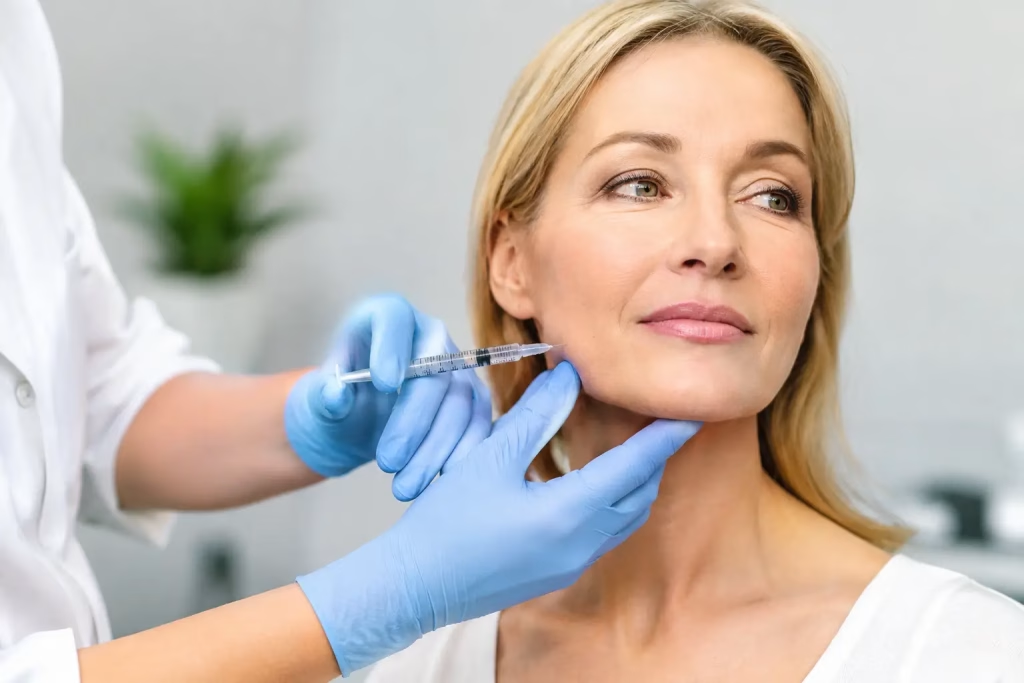
Injectables can play a highly precise role in lower-face rejuvenation, but placement matters. In the right hands, carefully placed dermal filler in the chin, jawline, or midface can improve proportion and support. Restoring subtle cheek structure may reduce the visual emphasis on jowls by lifting the eye upward and rebalancing the face.
Neuromodulators may also be considered for selected patients. Relaxing downward-pulling neck or lower-face muscles can soften tension that contributes to a downturned or heavy appearance. This is an anatomical decision, not a one-size-fits-all solution. Excess product or poor placement can make the lower face look wider or less natural, which is why a doctor-led assessment is essential.
Injectables do not tighten loose skin. Their role is to restore support, create definition, or refine muscular pull where appropriate.
Addressing Fullness Under the Chin
Sometimes what looks like jowling is partly a contour issue beneath the chin. Submental fullness can blur the distinction between the jawline and neck, making even mild skin laxity appear more pronounced.
Depending on the individual, a clinician may recommend fat-reduction treatments, energy-based contouring, or a combination of fat reduction and skin tightening. This approach can enhance the jawline’s profile, but it requires careful selection. Removing fat without considering skin quality may not suit someone with more advanced laxity.
What a Bespoke Jowl Treatment Plan May Include
A premium aesthetic plan should be based on facial assessment rather than a menu of isolated procedures. At Kelly Oriental Aesthetic Clinic, a doctor-led consultation can evaluate skin elasticity, tissue position, facial proportions, chin projection, neck contour, and the degree of volume loss before recommending a pathway.
For example, someone in their late 30s with early jawline softness and good skin quality may benefit most from collagen-stimulating treatment with modest preventive maintenance. A patient in their 40s or 50s with flatter cheeks, a recessed chin, and visible jowls may need a combination of structural injectable support and energy-based tightening. Someone with considerable excess skin may be better served by a surgical consultation, even if they choose nonsurgical treatments for skin quality in the meantime.
The most refined plans avoid overcorrection. A sharply sculpted jawline is not the right aesthetic for every face. The aim is harmony: a clearer contour that still moves naturally and looks appropriate from the front, side, and three-quarter view.
When Will You See Results?
Timelines depend on the treatment selected. Injectable contouring may create an immediate visible change, although swelling can temporarily affect the final appearance. Ultrasound and radiofrequency treatments work more gradually, with collagen remodeling often continuing for two to six months.
Longevity also differs. Some injectable results may last months to more than a year depending on the product and treatment area, while collagen-stimulating treatments may be maintained periodically as aging continues. No treatment permanently stops facial aging. Consistent sun protection, stable weight, thoughtful skincare, and timely maintenance can help preserve your result.
Choosing Treatment With Confidence
A good jowl consultation should feel measured, not pressured. Ask what is causing the lower-face heaviness, what degree of improvement is realistic, how long results are expected to last, and whether the proposed treatment addresses skin, volume, fat, or muscle. These answers reveal whether the plan is tailored or simply trending.
For jowls, subtlety is often the hallmark of excellent work. The most satisfying result is rarely a dramatic overnight transformation. It is the quiet return of a facial contour that lets you feel composed, confident, and recognizably yourself whenever you catch your reflection.
