

Uncategorized
Tattoo Removal Laser Treatment Explained
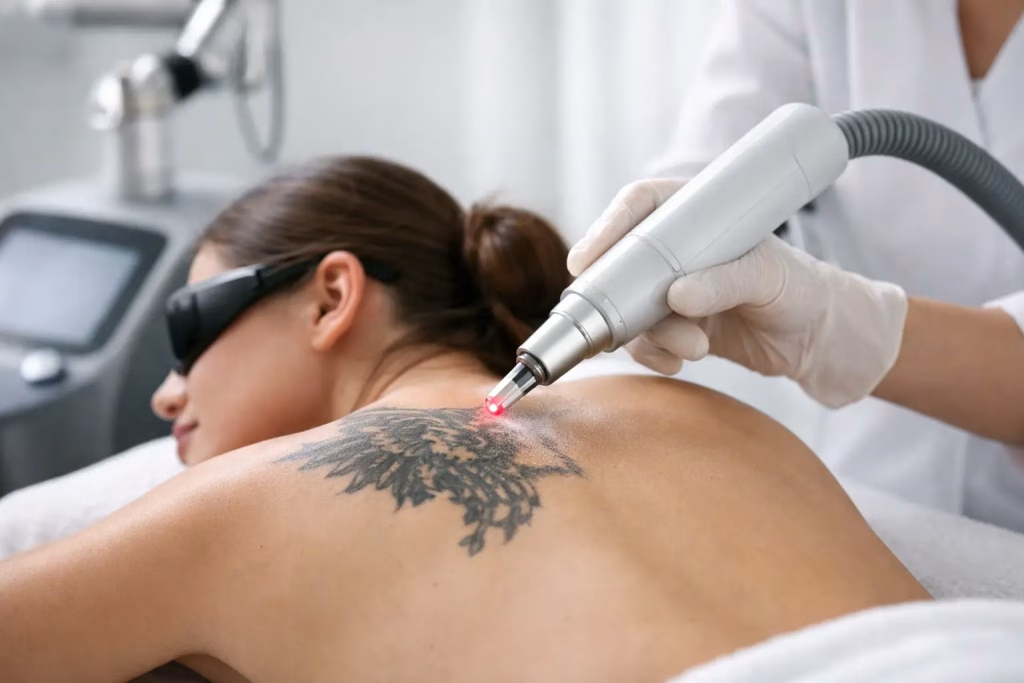
A tattoo that once felt right can start to feel out of step with the life you live now. That is usually where tattoo removal laser treatment enters the conversation – not as a dramatic decision, but as a practical, highly personal one.
For many patients, the goal is not simply to erase ink. It may be to soften a visible tattoo for career reasons, clear space for a refined cover-up, or remove a design that no longer reflects who they are. The right treatment plan should respect that nuance, because tattoo removal is rarely one-size-fits-all.
How tattoo removal laser treatment works
Tattoo ink sits in the skin as dense pigment particles that your body cannot easily clear on its own. Laser treatment works by delivering concentrated pulses of light into the tattoo, targeting the ink without surgically removing the skin itself.
Those pulses break larger ink particles into smaller fragments. Over the weeks that follow, your body gradually clears a portion of those fragments through its natural processes. That is why fading happens progressively, not overnight, and why multiple sessions are typically needed.
Different ink colors absorb different wavelengths of light. Black and dark blue pigments usually respond most readily because they absorb a broad range of laser energy. Lighter shades such as green, turquoise, and certain yellows can be more stubborn. Red may respond well with the right wavelength, while white ink can be unpredictable and may even darken temporarily in some cases.
This is also why device choice and treatment planning matter. A thoughtful approach is less about using the strongest possible setting and more about matching the laser parameters to the tattoo’s color, depth, age, and location.
What affects your results
Two tattoos can look similar at a glance and behave very differently during removal. Professional tattoos often contain more concentrated pigment placed deeper into the skin, which can make them slower to clear than amateur work. Newer tattoos may also take longer than older ones, simply because the ink has not faded at all over time.
Skin tone is another important consideration. A skilled provider needs to protect the surrounding skin while still delivering effective energy to the ink. That balance becomes especially important in medium to deeper skin tones, where overtreatment may raise the risk of post-inflammatory pigmentation changes.
Placement matters more than many people expect. Tattoos closer to the heart and central circulation, such as on the chest or upper arms, may clear more efficiently than tattoos on the hands, ankles, or feet. Your immune response, overall health, and how consistently you follow aftercare also play a role.
Scar tissue can complicate treatment as well. If the tattoo was placed over an older scar, or if previous removal attempts caused textural changes, the skin may respond less predictably. In these cases, realistic planning becomes part of good care.
How many sessions does tattoo removal laser treatment take?
This is usually the first question patients ask, and the honest answer is that it depends. Most tattoos require a series of sessions rather than a quick fix. Some may noticeably fade in a few visits, while others need a longer course to reach a cleaner result.
A provider may estimate session count based on the tattoo’s colors, density, layering, and location, but that estimate is still a range, not a promise. Complete clearance is possible for some tattoos, yet not guaranteed for every patient. Residual shadowing, faint pigment, or slight textural change can remain even after substantial fading.
Spacing sessions properly is part of the process. Treating too frequently does not necessarily improve results and can increase irritation. The skin and immune system need time to respond between appointments, so patience is not just a virtue here – it is clinically useful.
Does it hurt?
Most patients describe tattoo removal laser treatment as uncomfortable rather than intolerable. The sensation is often compared to quick snaps against the skin, with heat layered underneath. Smaller tattoos are usually manageable, while larger or more densely inked areas can feel more intense.
Pain tolerance varies, and so does body location. Areas over bone, such as wrists or ankles, tend to feel sharper than fleshier sites. Clinics may use cooling measures or topical numbing to improve comfort, but it is still wise to expect some degree of sensation during treatment.
The treated skin often feels sunburned afterward for a short period. Redness, swelling, mild frosting, and tenderness are common immediate responses. These usually settle with appropriate care.
Recovery and aftercare
Recovery is typically straightforward, but it should not be treated casually. The skin needs time to calm down and repair itself after each session.
You may notice redness, swelling, pinpoint bleeding, or small blisters in the first few days, depending on the intensity of treatment and your skin’s response. This can look concerning if you are not prepared for it, but it is often part of the normal healing pattern. The key is not to pick, peel, or scratch the area.
Keeping the site clean, protected, and out of excessive sun exposure is essential. Sun exposure can increase the chance of pigmentation changes and interfere with healing. Friction from tight clothing, workouts that cause repeated rubbing, and swimming too soon after treatment may also irritate the area.
Good aftercare supports both comfort and results. Poor aftercare can lead to unnecessary inflammation, delayed healing, or avoidable marks. In a premium clinical setting, this guidance should feel specific and personalized, not generic.
Risks, trade-offs, and realistic expectations
Laser tattoo removal is a well-established treatment, but it is still a medical procedure with trade-offs. The most common concern is not whether the tattoo will fade at all, but how completely and how cleanly it will fade.
Temporary redness and swelling are expected. Blistering and crusting can occur. There is also a risk of hyperpigmentation or hypopigmentation, particularly in darker skin tones or in skin that is exposed to UV light during the treatment course. Rarely, scarring can occur, especially if the area is traumatized during healing or if the treatment is too aggressive.
Another practical trade-off is time. Removal takes commitment. Sessions are spread out, and visible progress can be gradual. For some patients, that timeline is absolutely worthwhile. For others, especially those seeking fast change before an event or deadline, a cover-up may be the more realistic option.
Cost is another factor. Because multiple sessions are common, tattoo removal is usually an investment rather than a single appointment solution. That is why consultation matters. A tailored plan should be clear about likely session ranges, expected fading, and what kind of endpoint is realistic for your specific tattoo.
Who is a good candidate?
The best candidate is not simply someone who wants the tattoo gone. It is someone with healthy expectations, a willingness to complete a series of sessions, and a provider who evaluates the skin carefully before treatment begins.
If you are prone to keloid scarring, have an active skin infection in the area, are pregnant, or are taking medications that make your skin unusually light-sensitive, treatment may need to be postponed or approached with added caution. A proper consultation should review your medical history, skin behavior, and aesthetic goal in detail.
Some patients want full removal. Others want strategic fading for a cleaner rework by a tattoo artist. That distinction matters because it changes how aggressively the tattoo needs to be treated and how success is defined.
At a doctor-led clinic such as Kelly Oriental Aesthetic Clinic, that conversation should feel measured and honest. Elegant care is not about overselling a perfect outcome. It is about aligning advanced technology with your skin, your lifestyle, and the result you actually want.
Choosing where to have tattoo removal laser treatment
This is not a treatment to choose on price alone. The quality of assessment, the experience of the medical team, and the clinic’s ability to adjust treatment based on how your skin responds all influence both safety and outcome.
A strong provider will explain what kind of laser is being used, which colors are likely to respond well, and where uncertainty remains. They should also discuss whether your tattoo appears professionally placed, layered, scarred, or previously treated, because each of those details can change the plan.
The right setting also makes a difference in how the process feels. Tattoo removal is often emotionally loaded. Patients appreciate an environment that is discreet, polished, and attentive, where questions are answered thoughtfully and the treatment journey feels supported from consultation through recovery.
If you are considering tattoo removal laser treatment, the most useful first step is not guessing how many sessions you will need. It is getting a careful assessment of the tattoo you actually have, the skin you actually live in, and the result that would feel right for you now.
