
Uncategorized
Can Fillers Correct Hollow Cheeks? What to Know
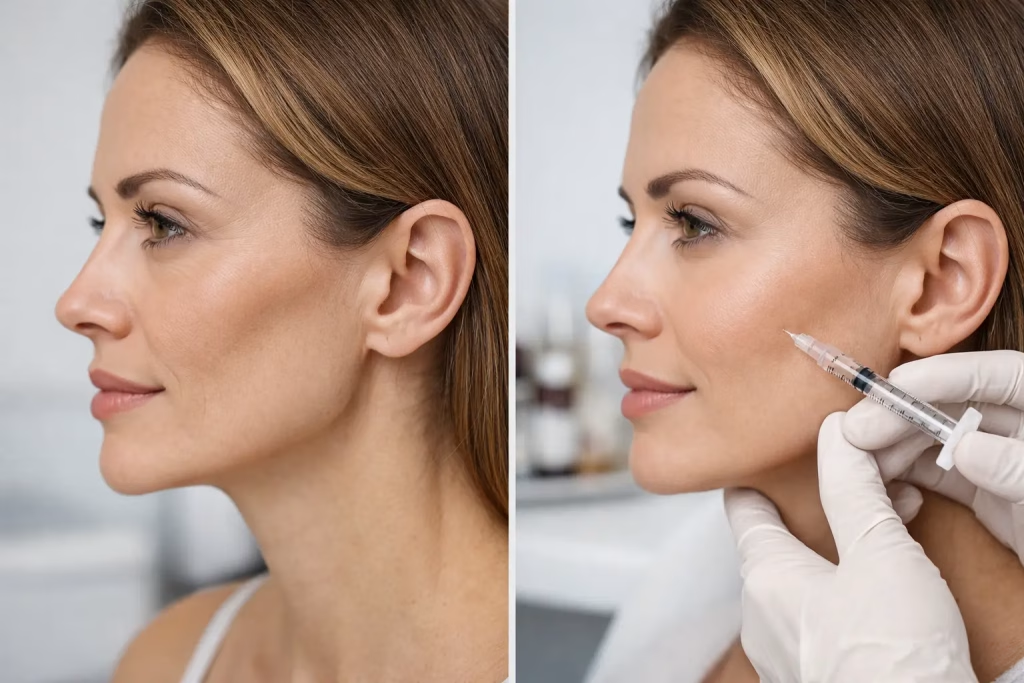
Hollow cheeks can make an otherwise well-rested face appear tired, drawn, or less defined. This change is often subtle at first: makeup settles differently, the under-eye area looks more pronounced, and the midface loses some of its soft, youthful structure. So, can fillers correct hollow cheeks? For many suitable candidates, strategically placed dermal fillers can restore lost midface volume and create a fresher, more balanced facial contour without surgery.
The word “correct” deserves some care. Filler is not a one-size-fits-all solution, and it should not simply be injected into every visible hollow. The most refined outcomes come from understanding why the cheeks appear hollow, how the surrounding facial structures relate to one another, and how much support is needed to look naturally refreshed rather than noticeably filled.
What causes cheeks to look hollow?
Facial volume is not fixed throughout adulthood. Over time, fat pads in the midface can diminish or shift downward, while bone and collagen support gradually change. This can leave the cheeks flatter and the transition from the under-eye to the cheek more pronounced. Weight loss, genetics, sun exposure, stress, and lifestyle habits may also make hollowness more visible.
For some people, hollow cheeks are simply part of their natural facial anatomy. A naturally lean face can be elegant and beautifully sculpted, but it may also cast shadows that create a more fatigued appearance in certain lighting. In these cases, treatment should preserve individual character, not erase it.
Hollowness can also be confused with skin laxity. When the concern is primarily loose skin rather than lost volume, filler alone may not produce the most satisfying result. A doctor may recommend combining a carefully planned injectable treatment with collagen-stimulating procedures that address skin quality and support.
Can fillers correct hollow cheeks naturally?
Yes, dermal fillers can improve hollow cheeks when volume loss is a key cause. Most cheek fillers are formulated with hyaluronic acid, a substance that attracts water and can provide smooth, flexible volume beneath the skin. Depending on the product selected and placement technique, filler may restore projection over the cheekbones, soften a hollow beneath the eyes, or improve the transition between the cheeks and lower face.
The goal is not to create overly prominent cheeks. It is to re-establish proportion. A well-considered treatment may make the face look more rested, lift the visual appearance of the midface, and reduce the heaviness that can develop around the nasolabial folds or mouth corners.
A refined result often requires less filler than patients expect. In facial aesthetics, placement matters as much as volume. Supporting the outer cheek, for example, may improve a central hollow more elegantly than adding product directly into its deepest point. This is why an in-person assessment with an experienced medical practitioner is essential.
The importance of facial balance
Cheek treatment is rarely assessed in isolation. The temples, under-eyes, jawline, chin, and skin quality all influence how the cheeks appear. Someone with temple hollowing may benefit from restoring support in both areas. Another patient may have a flat midface but a strong jawline, requiring a different approach to maintain harmony.
At a doctor-led aesthetic clinic, the consultation should include an assessment of facial proportions at rest and in motion. Your practitioner should also consider your existing cheek structure, ethnic features, lifestyle, and desired level of enhancement. The most beautiful result should still look like you.
What does cheek filler treatment involve?
Treatment usually begins with a detailed consultation and facial analysis. Your practitioner will discuss your concerns, review your medical history, and determine whether filler is appropriate. Photographs may be used to evaluate facial symmetry and guide a more precise treatment plan.
On the day of treatment, the skin is cleansed and marked. A topical numbing cream may be used, although many modern fillers also contain lidocaine for comfort. The filler is placed using a fine needle or a cannula, depending on the area and clinical technique. A cannula is a blunt-tipped instrument that may be selected for certain planes of the face to minimize tissue trauma.
Appointments can be relatively brief, but they should never feel rushed. Aftercare instructions are reviewed before you leave, and the initial result is visible immediately. Mild swelling can make the cheeks appear slightly fuller during the first few days, so the settled result is best evaluated after the tissues have had time to calm.
How long do fillers for hollow cheeks last?
Cheek filler longevity varies with the product used, the amount placed, individual metabolism, facial movement, and lifestyle factors. Many patients see results that last around 12 to 18 months, though this range is not a guarantee. Some people retain a visible improvement for longer, while others prefer a small maintenance appointment sooner to preserve their preferred contour.
Hyaluronic acid fillers are often favored because they are versatile and can be dissolved if medically necessary. However, reversibility should never be treated as a reason to take treatment lightly. A thoughtful initial plan, conservative dosing, and expert placement remain the foundation of safe, natural-looking care.
When filler may not be the best answer
Dermal filler is highly effective for appropriate cases, but it is not the answer to every hollow-cheek concern. If lax skin, advanced tissue descent, or significant changes in facial structure are the primary issues, filler alone may add volume without delivering the lift or refinement you want.
In these circumstances, your practitioner may discuss complementary options. Ultrasound or radiofrequency-based treatments can support collagen remodeling and improve skin firmness over time. Skin boosters may be considered when dehydration and crepiness are contributing to a tired appearance. For patients with very lean faces, a gradual, staged approach is generally more elegant than attempting dramatic correction in one visit.
There are also times when no treatment is the right choice. If a patient is seeking to replicate a heavily filtered image, has unrealistic expectations, or is experiencing a temporary change from recent illness or rapid weight loss, it may be wiser to pause and reassess before proceeding.
Safety considerations for cheek fillers
Injectable treatments should be performed by a qualified medical professional with a detailed understanding of facial anatomy. The cheek contains important blood vessels, and although serious complications are uncommon, they can occur. Choosing a reputable clinic, disclosing your complete health history, and following aftercare guidance all matter.
Temporary effects such as swelling, tenderness, bruising, and mild asymmetry are possible. These usually settle in the days following treatment. Contact your clinic promptly if you experience severe or increasing pain, unusual skin color changes, visual symptoms, or any concern that feels outside the expected recovery process.
Before treatment, tell your practitioner about allergies, medications, supplements, prior filler treatments, pregnancy or breastfeeding status, and any history of autoimmune conditions or cold sores. An individualized medical consultation is the appropriate setting to decide whether treatment is suitable for you.
A more considered approach to midface rejuvenation
The best cheek filler treatment is not defined by a particular number of syringes or a dramatic before-and-after photograph. It is defined by proportion, restraint, and a plan that respects how your face changes over time. At Kelly Oriental Aesthetic Clinic, this means approaching midface rejuvenation as part of a bespoke facial assessment, with comfort, safety, and natural-looking balance at the center of every decision.
If hollow cheeks are making you look more tired than you feel, a consultation can clarify whether filler, skin-tightening support, or a combination approach is most aligned with your features and goals. A subtle restoration of structure can be enough to bring back the rested, quietly confident look that already belongs to you.
