

Uncategorized
Can Fillers Migrate? What to Know Before Treatment
Oct
A beautifully refreshed result should look considered, balanced, and entirely your own. Yet one question arises frequently during injectable consultations: can fillers migrate? The short answer is yes, dermal filler can move beyond its intended placement in some circumstances. However, the concern is often misunderstood, and not every change after treatment is true migration.
Understanding the difference matters. It helps you make decisions based on clinical facts rather than alarming photographs or broad claims online, while choosing an injector who plans your treatment with precision.
Can Fillers Migrate? The Clinical Reality
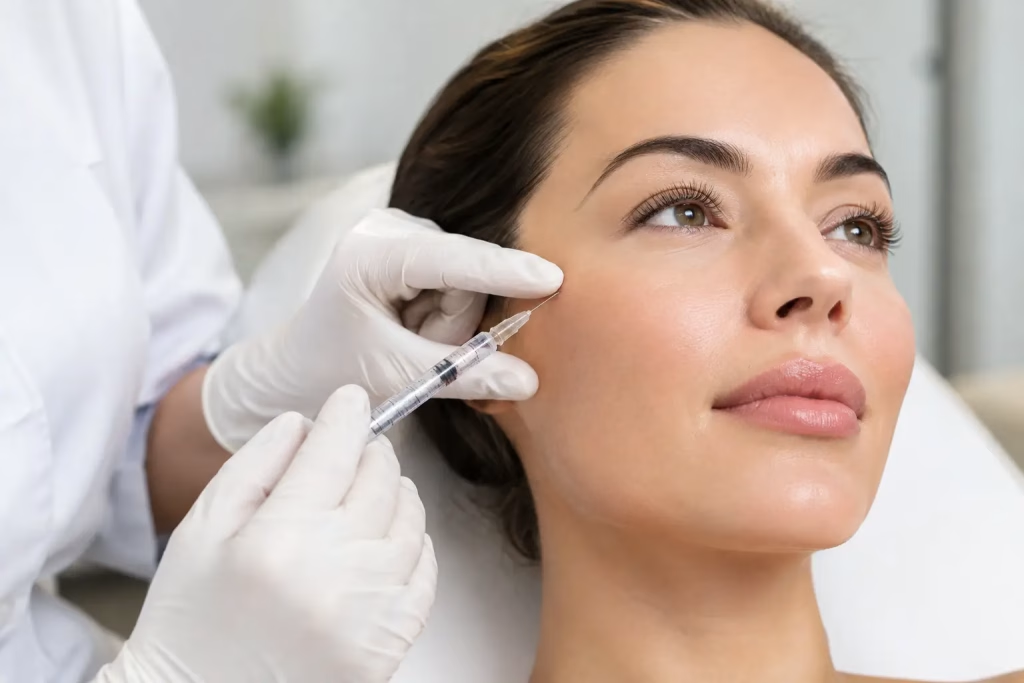
Dermal fillers are gel-like injectable products placed beneath the skin to restore volume, refine contours, soften lines, or enhance selected facial features. Many commonly used fillers are made with hyaluronic acid, a substance naturally found in the body that attracts water and supports hydration.
Migration describes filler moving from the original injection plane or treatment area into surrounding tissue. This may occur gradually, rather than overnight, and can present as fullness, puffiness, or a blurred contour beyond the area that was intended to be enhanced. In the lip area, for example, migration above the upper lip may create a shadow or fullness that interrupts the natural border of the lip.
True migration is possible, but it is not inevitable. In experienced hands, it is generally uncommon. Many cases described as migration are instead related to post-treatment swelling, residual filler from previous appointments, fluid retention, changes in facial anatomy over time, or an amount of product that no longer suits the face.
Why Filler May Move From Its Intended Area
The face is not a fixed surface. It is an intricate landscape of skin, fat compartments, muscle activity, ligaments, and bone. An injector must consider not only where volume is visible, but also the layer where filler can sit appropriately and how the tissues will move during expression.
Migration may be more likely when filler is placed too superficially, injected in excessive volume, or layered repeatedly into the same area without reassessing what remains from earlier treatments. Product selection can also matter. A firmer filler may be suitable for structural support in one area but inappropriate for a delicate, mobile region.
Technique is equally significant. The chosen injection plane, placement pattern, amount delivered at each point, and level of pressure all affect how filler integrates with surrounding tissue. This is why facial injectables should never be approached as a one-size-fits-all treatment.
Certain areas deserve particular restraint. The lips, tear troughs, and region around the mouth are mobile and anatomically nuanced. They can look exquisitely refined with the right approach, but they are less forgiving of overfilling or treatment performed too frequently.
What Can Be Mistaken for Filler Migration
A result can appear different for reasons that have little to do with product movement. Immediately after treatment, swelling may temporarily make the area look fuller, less symmetrical, or more projected than expected. This often settles as the tissue recovers.
Hyaluronic acid filler also binds water. Some patients notice variable puffiness in the days or weeks after treatment, particularly around the lips and under-eye area. Hydration, inflammation, allergies, sleep, and individual tissue characteristics can influence this appearance.
Previous filler is another consideration. Filler may remain longer than a patient expects, especially after repeated sessions. If more product is added before the existing filler has been properly assessed, the cumulative effect may create heaviness or distortion. That does not always mean the newest treatment has migrated. It may mean the area needs a more thoughtful reset rather than additional volume.
Facial aging can further change how filler appears. As bone, fat, and skin quality evolve, a once-flattering treatment plan may no longer create the same harmony. The goal should be to review the whole face, not to keep correcting a localized concern with more filler.
Signs That Deserve a Professional Assessment
A subtle change in the first two weeks after treatment is not usually a reason to panic. It is wise to allow swelling to settle before judging a final result, unless your treating provider has advised otherwise. Take clear photographs in consistent lighting if you notice an area changing, as this can help with a clinical review.
Arrange an assessment if you develop persistent fullness outside the intended area, an uneven or firm contour, a visible ridge, or a result that seems to worsen over time. Your injector should examine the treated area in person, review your treatment history, and distinguish between swelling, retained filler, tissue changes, and possible migration.
Urgent symptoms require immediate medical attention. Severe or escalating pain, unusual blanching or dusky discoloration of the skin, marked coldness, or changes in vision are not normal recovery effects. These can indicate a rare but serious vascular complication and should be assessed without delay.
How Thoughtful Treatment Planning Reduces the Risk
The best prevention begins before the first injection. A high-quality consultation should go beyond identifying a line or feature you would like to change. It should consider your facial proportions, skin quality, degree of movement, prior injectable history, and the level of enhancement that will still look elegant in motion.
A conservative approach is often the most sophisticated one. Rather than pursuing maximum volume in a single appointment, carefully staged treatment allows the injector to see how the product settles and how your features respond. This is particularly valuable for lips and other high-movement areas.
It is also essential to disclose every previous injectable treatment, even if it was performed years ago or at another clinic. Details such as the treatment area, approximate timing, and product type can inform safe planning. If you are uncertain, be honest about that uncertainty rather than assuming previous filler has fully dissolved.
At Kelly Oriental Aesthetic Clinic, a doctor-led consultation can help establish whether filler is the appropriate option for your concern or whether skin-focused treatments, collagen-stimulating approaches, or a combination plan may offer a more refined result. The right treatment is not always more volume.
Can Migrated Filler Be Treated?
Management depends on the product used, the location, the amount present, and the nature of the concern. For hyaluronic acid fillers, an experienced medical professional may recommend observation, a period without further injections, or treatment with hyaluronidase, an enzyme that can dissolve hyaluronic acid filler.
Dissolving filler is not a casual corrective step. The treatment should be planned carefully, since the response can vary and more than one session may be needed. After dissolution, the tissues may need time to settle before considering any new filler placement. Rushing to refill can repeat the same cycle that caused the concern.
Not all fillers are hyaluronic acid-based, and not all can be dissolved with hyaluronidase. This is one reason product knowledge and accurate treatment records are so valuable. A proper review should guide the next step rather than a generalized solution from social media.
Choosing Filler With a Long-Term View
The most natural injectable results are rarely about making one feature larger or sharper. They are about preserving proportion, softness, and expression. A well-designed plan respects the face at rest and in movement, with enough restraint to remain believable over time.
Ask your provider how they select the product and injection layer for your concerns, how they evaluate previous filler, and what follow-up support is available if a result does not settle as expected. Clear answers reflect the level of care behind the treatment.
When fillers are approached as part of a personalized aesthetic journey rather than a quick correction, the focus shifts from chasing volume to protecting the quiet confidence that makes a result feel truly yours.
