
Uncategorized
RF Microneedling Versus Laser Resurfacing Compared
Oct
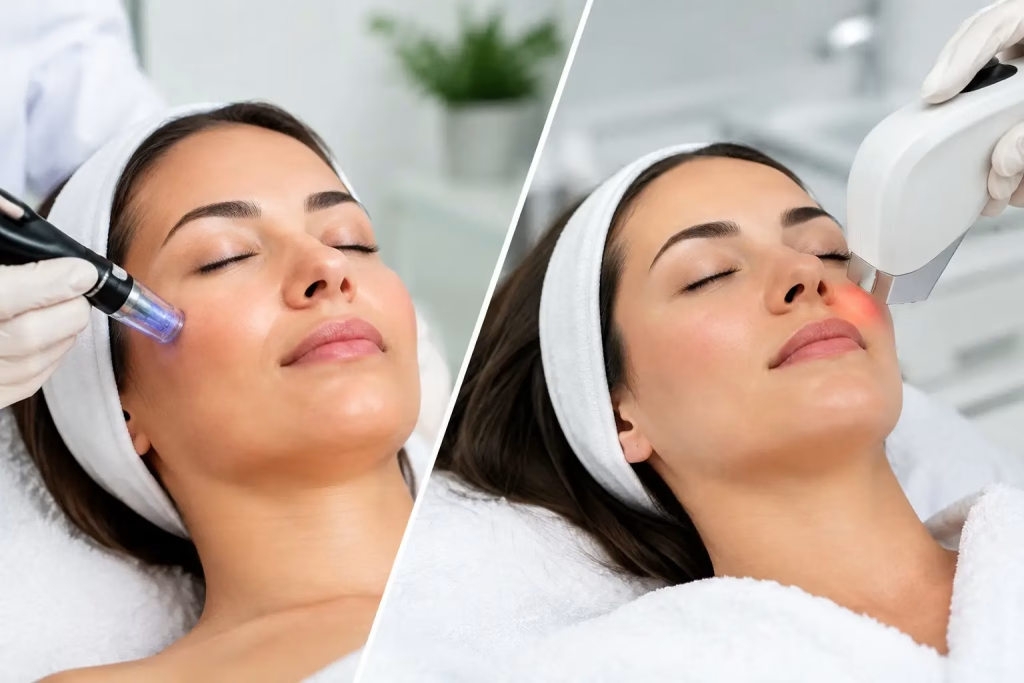
A treatment menu may place both options under “skin rejuvenation,” but RF microneedling versus laser resurfacing is not a simple choice between two versions of the same procedure. One uses insulated needles and radiofrequency heat to remodel collagen below the skin’s surface. The other uses focused light energy to renew the skin from the surface downward. The better choice depends on what you see in the mirror, how much downtime you can accommodate, and how your skin responds to energy-based treatments.
For refined, natural-looking improvement, the decision deserves more than a trend-led recommendation. It calls for a thoughtful assessment of skin quality, scar type, pigment history, lifestyle, and the degree of change you hope to achieve.
RF Microneedling Versus Laser Resurfacing: The Core Difference
RF microneedling creates controlled microchannels in the skin while delivering radiofrequency energy at selected depths. This combination stimulates the skin’s wound-healing response and encourages new collagen and elastin production. Because the heat is delivered beneath the outermost layer of skin, RF microneedling can improve texture and firmness with relatively limited disruption to the surface.
Laser resurfacing uses concentrated laser energy to create change in the skin. Depending on the device and setting, a laser may gently heat the dermis without removing skin, or it may remove precise microscopic columns of tissue. This process can address superficial irregularities while prompting collagen remodeling at deeper levels.
In practical terms, RF microneedling is often chosen for concerns that benefit from dermal remodeling, such as enlarged pores, early laxity, and certain acne scars. Laser resurfacing is especially compelling when surface concerns are prominent, including fine lines, uneven tone, sun-related damage, and rough texture. There is meaningful overlap, but their strengths are not identical.
When RF Microneedling May Be the Better Fit
RF microneedling is valued for its versatility and measured recovery. Treatments such as Sylfirm X combine microneedling with radiofrequency energy and can be customized according to the area, depth, and intensity required. It is commonly considered for the cheeks, jawline, neck, and areas where pores or textural scarring affect the skin’s smoothness.
For acne scarring, the type of scar matters. Rolling scars and some boxcar scars often respond well to collagen-stimulating approaches, although deeper or tethered scars may also require subcision, targeted scar release, or other complementary treatments. No single device resolves every scar pattern, which is why a close assessment is more useful than an online before-and-after comparison.
Another advantage is that RF microneedling may be suitable for a broader range of skin tones when performed with appropriate settings and clinical judgment. This is particularly relevant for patients who are prone to post-inflammatory hyperpigmentation. It does not mean pigment risk disappears. Any treatment that creates controlled injury can trigger discoloration in reactive skin, especially with sun exposure or improper aftercare. It means the approach can often be tailored thoughtfully.
Most patients experience temporary redness, mild swelling, and a sun-kissed appearance for one to three days. Makeup is often possible after the initial recovery period advised by the provider. Results develop gradually as collagen remodels, usually over several weeks to months, and a series of treatments is commonly recommended.
What RF Microneedling Does Not Do Best
RF microneedling is not always the first choice for significant sun spots, pronounced surface wrinkles, or extensive photodamage. It can improve overall skin quality, but it may not deliver the same degree of epidermal renewal as an ablative laser. Patients seeking a more dramatic correction of etched lines or rough, weathered texture may find laser resurfacing more aligned with their goal.
When Laser Resurfacing May Be the Better Fit
Laser resurfacing can be broadly divided into non-ablative and ablative approaches. Non-ablative lasers heat the deeper skin while leaving the surface largely intact. They generally involve gentler recovery and more gradual results. Ablative lasers remove a controlled amount of skin tissue, offering more intensive resurfacing but requiring greater downtime and diligent aftercare.
The appeal of laser resurfacing lies in its ability to address visible surface change. Fine lines around the mouth and eyes, uneven texture, sun damage, and selected pigmentation concerns may respond beautifully to a well-planned laser program. When the skin has a crepey or rough quality that topical skincare cannot meaningfully improve, resurfacing can create a clearer, smoother canvas.
Recovery varies widely by laser type and treatment intensity. A lighter non-ablative treatment may involve a few days of redness and dryness. More intensive ablative resurfacing can bring swelling, crusting, peeling, and a longer social recovery period. The latter also requires strict sun avoidance and careful adherence to post-treatment instructions.
Laser is not automatically “stronger” in every sense. It is simply more surface-focused in many applications. A high-intensity treatment can produce substantial change, but intensity should be selected for the skin’s needs, not for the sake of pursuing the most aggressive option.
Pigmentation Risk Requires Careful Planning
For patients with melanin-rich skin or a history of post-inflammatory hyperpigmentation, laser selection and settings matter greatly. Certain lasers and aggressive resurfacing protocols can increase the chance of unwanted darkening or uneven pigmentation when not appropriately matched to the patient.
This is where doctor-led planning has value. A clinician may recommend a more conservative laser setting, pre-treatment skincare, RF microneedling, or a staged combination approach rather than a single intensive session. The safest route is often the one that respects the skin’s biology and gives it time to respond.
Downtime, Comfort, and Results: What to Expect
Neither treatment should be evaluated only by the appointment length. Consider recovery, maintenance, and the timeline for visible improvement.
RF microneedling tends to fit patients who want progressive refinement with minimal interruption to work and social plans. Numbing cream is typically used, and the treatment can feel like heat and pressure with brief areas of increased sensitivity. Collagen remodeling is gradual, so results are often subtle after the first session and more apparent after a series.
Laser resurfacing can offer more immediate visible renewal once peeling and redness settle, especially with ablative treatments. Yet the recovery commitment is greater, and skin must be protected carefully during healing. For some, scheduling laser resurfacing before a quieter period is sensible. For others, a lower-downtime RF microneedling plan feels more practical.
The right answer is not necessarily the treatment with the shortest recovery or the fastest visible shift. It is the treatment whose benefits, risks, and recovery profile fit your real life.
Can You Combine RF Microneedling and Laser Resurfacing?
Yes, but not casually or all at once. In a comprehensive skin plan, the two may be used at different stages because they address different dimensions of skin aging and texture. RF microneedling may focus on pores, acne scars, and dermal support, while laser treatments may target pigmentation, dullness, or surface irregularities.
Timing is essential. Skin needs adequate recovery between energy-based treatments, and the sequence should be based on the primary concern. For example, active acne, inflammation, or compromised skin barrier function may need to be addressed before any intensive collagen-stimulating procedure. Similarly, patients with melasma need a conservative plan that prioritizes pigment stability rather than repeated irritation.
At Kelly Oriental Aesthetic Clinic, a personalized assessment can help clarify whether one modality is sufficient or whether a staged treatment journey would better serve your skin. Premium care is not about adding more procedures. It is about selecting the right interventions with precision.
Questions Worth Asking at Your Consultation
Before choosing either procedure, ask what concern is being treated first and why. Ask whether your scars are tethered, whether your pigmentation is stable, how many sessions are realistically needed, and what recovery will look like for your particular skin. It is also reasonable to ask about the device being used, the provider’s experience with your skin type, and the plan if you develop prolonged redness or pigmentation changes.
A credible consultation should leave you with a clear rationale, not pressure to choose the most intensive option. Photographs, skin analysis, and an honest conversation about expectations can prevent disappointment later.
Beautiful skin rarely comes from chasing the newest device. It comes from choosing a treatment plan that respects your skin’s history, your schedule, and the kind of improvement you want to enjoy long after the initial glow has settled.
