
Uncategorized
The Future of Non Surgical Lifting in Aesthetics
A lifted appearance is no longer defined by how dramatically a face can be changed. For many discerning patients, the future of non surgical lifting lies in something more refined: restoring facial support, improving skin quality, and preserving the character that makes a face recognizably their own.
That distinction matters. A sharp jawline, smoother lower face, or subtly elevated brow should not come at the expense of expression. The next generation of aesthetic planning is moving away from one-size-fits-all tightening treatments and toward carefully layered protocols that consider skin laxity, collagen health, facial anatomy, and the pace at which each person wishes to see change.
Why Non-Surgical Lifting Is Changing
For years, non-surgical lifting was often discussed as though one device or procedure could solve every sign of aging. In reality, facial aging is multidimensional. Skin gradually loses collagen and elastin, fat compartments shift, bone structure changes, and the ligaments that support the face become less resilient. A treatment that improves one layer may not fully address another.
The future is therefore not simply about stronger energy or faster procedures. It is about better treatment matching. A patient with early lower-face laxity and good skin quality may benefit from a collagen-stimulating energy treatment. Someone with crepey skin, textural changes, and fine lines may need a plan that prioritizes skin remodeling. Another patient may have lost facial support and require thoughtfully placed injectable treatment alongside energy-based care.
This approach also reflects a welcome shift in aesthetic preferences. Patients increasingly want to look rested, defined, and well cared for rather than visibly “done.” The most successful outcomes tend to be gradual and proportional, with treatments selected for how they work together over time.
The Future of Non Surgical Lifting: Layered, Not Singular
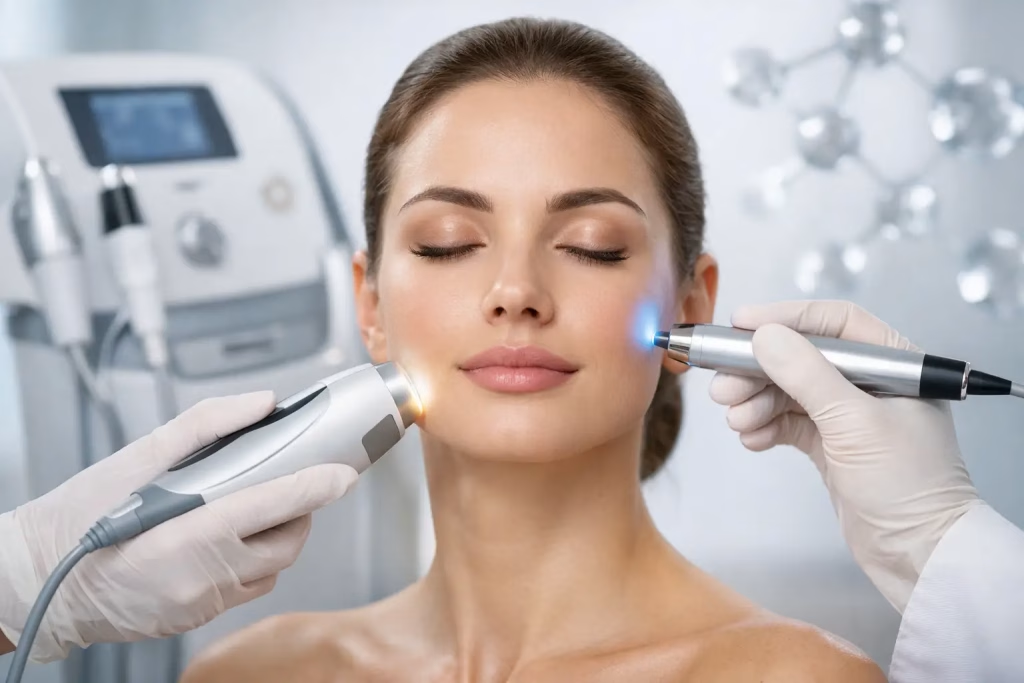
Non-surgical lifting technologies work in different ways, and their differences should guide the treatment plan. Ultrasound-based treatments can deliver focused energy to deeper structural layers, where they encourage a wound-healing response and fresh collagen formation. They are often considered when the concern is mild to moderate laxity around areas such as the brow, jawline, neck, or lower face.
Radiofrequency treatments use controlled heat to stimulate collagen remodeling within the dermis and, depending on the technology, deeper tissue. Treatments such as Thermage are valued for patients seeking progressive skin tightening with little interruption to a busy schedule. Results develop over time as the body produces and reorganizes collagen, rather than appearing as an overnight transformation.
Radiofrequency microneedling adds another dimension by pairing controlled micro-injuries with heat energy. This can be particularly useful where laxity is accompanied by enlarged pores, acne scarring, uneven texture, or fine lines. Technologies such as Sylfirm X illustrate where the field is heading: devices designed not only to firm but also to improve the overall quality and resilience of the skin.
None of these modalities is automatically “best.” Ultrasound may be more appropriate for one patient’s anatomical concerns, while radiofrequency or microneedling may offer a better fit for another’s skin profile and tolerance for downtime. The future of good aesthetic care is not device-led. It is diagnosis-led.
Better Imaging, More Precise Planning
One of the most promising developments in facial aesthetics is the growing use of high-quality imaging and more detailed facial assessment. Standardized photography already helps doctors identify subtle asymmetries, changes in skin texture, and shifts in facial proportion that are easy to miss in a mirror. As imaging tools become more sophisticated, consultation planning can become even more precise.
This does not mean technology should replace clinical judgment. A computer can map facial contours, but it cannot determine whether a more angular jawline suits an individual’s features, whether someone values softness over definition, or how conservative their desired result should be. Those decisions remain deeply personal.
What advanced assessment can do is support better conversations. It can help clarify whether the main concern is true laxity, volume loss, skin thinning, muscle activity, or a combination of factors. When the cause is understood, treatment choices become more purposeful and expectations more realistic.
Injectables Will Play a More Selective Role
Injectables remain an important part of non-surgical facial rejuvenation, but the direction is toward restraint and anatomical precision. In the past, volume replacement was sometimes used too broadly in an effort to lift the face. Excess filler can create heaviness, particularly in the midface and lower face, which may work against the refined contour a patient hoped to achieve.
A modern plan may use small, strategic amounts of dermal filler to restore structural support in areas where volume loss is contributing to a tired or descended appearance. Neuromodulators may soften downward-pulling muscle activity or refine the neck and jawline. Biostimulating injectables can also be considered for suitable patients seeking gradual collagen support rather than immediate volume.
The key is knowing when not to inject. If a face appears puffy, if skin laxity is the main issue, or if there is already substantial filler present, adding more product may not be the right answer. A thoughtful doctor-led assessment protects both safety and aesthetic balance.
The Skin Itself Will Matter More
A lifted contour can look less convincing when the skin is dehydrated, dull, unevenly pigmented, or visibly creased. For this reason, the future of non-surgical lifting will place equal value on skin health. A smoother, brighter, more hydrated complexion reflects light more evenly and can make facial contours appear fresher even before any structural treatment is performed.
This is where complementary care becomes meaningful. Skin boosters may improve hydration and elasticity, while targeted lasers can address pigmentation and certain textural concerns. Medical-grade skincare, sun protection, and treatments that support barrier health also help preserve the gains made through in-clinic procedures.
These treatments are not substitutes for lifting when laxity is significant. They are, however, part of a more complete result. The goal is not merely a tighter face, but skin that looks as healthy as the contour appears refreshed.
What Patients Should Expect From Results
Non-surgical lifting has real value, but it has limits. It is generally most effective for early to moderate laxity, patients with good underlying skin quality, and those who prefer subtle improvement without surgical downtime. Collagen remodeling is gradual, which means results may continue to emerge over several weeks or months.
For more pronounced jowling, substantial neck laxity, or significant excess skin, surgery may still provide the most visible and durable lift. Presenting this honestly is part of responsible aesthetic care. Non-surgical treatments should never be positioned as a direct replacement for a surgical facelift in every situation.
Maintenance also deserves discussion. Aging continues, and collagen stimulation is not permanent. Some patients choose annual or periodic treatments to maintain skin firmness, while others alternate energy-based procedures with injectables and skin-focused therapies. The ideal rhythm depends on age, anatomy, lifestyle, sun exposure, and the result being maintained.
A Bespoke Path to Facial Definition
At a premium aesthetic clinic, the treatment experience should feel as considered as the treatment itself. An effective plan begins with listening: what the patient notices, what they want to preserve, what level of change feels comfortable, and how much downtime fits their life. It should then be guided by a medical assessment rather than a passing trend or a package built around a single machine.
At Kelly Oriental Aesthetic Clinic, this philosophy supports a tailored journey, combining doctor consultation with advanced technologies and therapist-supported care in a setting designed for both clinical confidence and personal comfort. For some patients, one carefully selected procedure is enough. For others, a staged plan creates a more balanced result with less need for aggressive intervention.
The most compelling future is not one in which every face looks tighter. It is one in which each treatment respects facial identity, responds to genuine anatomical needs, and gives patients the confidence to look like themselves at their most rested and refined. A professional consultation is the right place to begin that conversation.
