
Uncategorized
A Guide to Collagen Stimulating Treatments
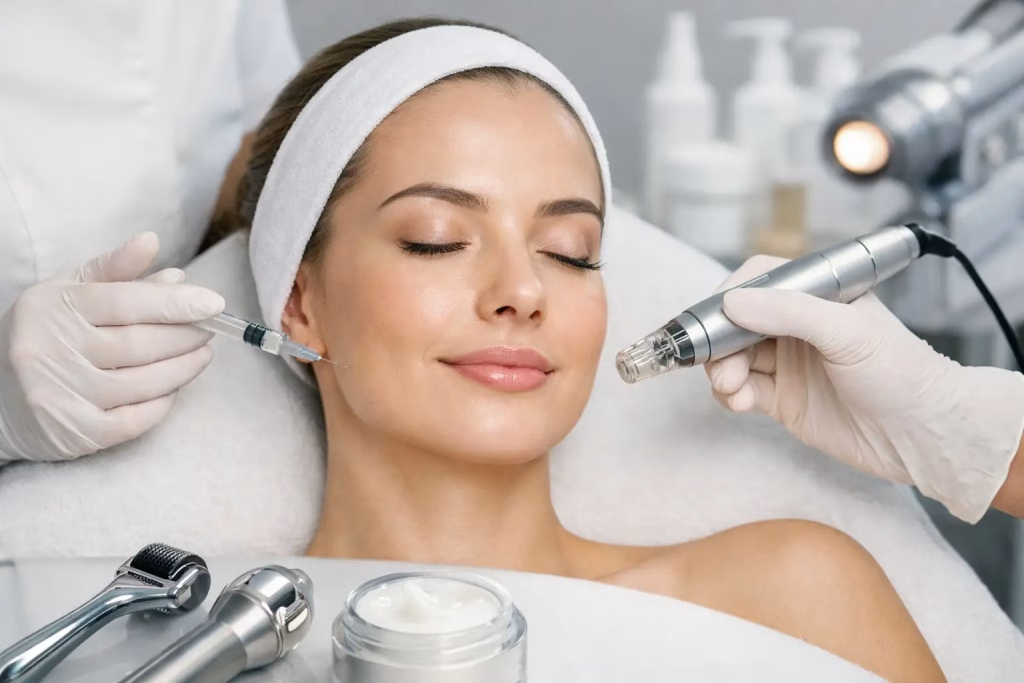
A face can look tired long before it looks lined. The change is often structural: skin that once felt springy may begin to appear less defined around the cheeks, jawline, eyes, or mouth. This guide to collagen stimulating treatments explains how doctor-led procedures can support the skin’s natural renewal process for a firmer, smoother, more rested-looking complexion.
Collagen stimulation is not about changing your features or pursuing a one-size-fits-all version of youth. It is a considered approach to skin quality. The right treatment plan takes account of your facial anatomy, degree of laxity, skin texture, pigmentation concerns, downtime preferences, and the pace at which you would like to see change.
What Collagen Does for Skin
Collagen is a structural protein that gives skin much of its strength, density, and resilience. In younger skin, collagen production and breakdown are relatively balanced. Over time, that balance shifts. Sun exposure, stress, hormonal changes, smoking, and the natural aging process can accelerate collagen loss, contributing to fine lines, enlarged pores, acne scarring, crepiness, and a softer facial contour.
Topical skincare can help protect the skin barrier and support its appearance, particularly when it includes sunscreen, antioxidants, and retinoids prescribed where appropriate. However, skincare alone may not address deeper changes in collagen architecture. Collagen stimulating treatments are designed to create controlled signals within targeted layers of the skin, encouraging a gradual repair response.
The word “gradual” matters. Results tend to evolve over weeks or months as new collagen develops and remodels. For many patients, this natural progression is part of the appeal: improvements can look refined rather than abruptly different.
A Guide to Collagen Stimulating Treatments by Technology
The most suitable technology depends on whether your primary concern is laxity, texture, scars, pores, fine lines, or a combination of these. During a consultation, a doctor should assess not only the area you wish to improve but also skin thickness, volume distribution, sensitivity, and any existing pigment concerns.
Radiofrequency for firmness and texture
Radiofrequency treatments deliver controlled heat into the skin and underlying tissue. The heat can stimulate collagen remodeling and, depending on the device and treatment depth, may help improve the appearance of mild to moderate laxity, fine lines, and overall skin texture.
Thermage is a well-known radiofrequency treatment often selected for patients seeking non-surgical skin tightening in areas such as the face, eye area, neck, and body. It is typically performed as a single session, with results appearing progressively as collagen remodeling takes place. It may suit someone who values minimal disruption to a busy schedule, although the treatment can involve temporary warmth and sensitivity.
Radiofrequency microneedling, including Sylfirm X, combines very fine needles with radiofrequency energy. This approach can be particularly useful when texture is a central concern, such as enlarged pores, acne scars, fine lines, or uneven skin quality. Because the needles deliver energy at selected depths, treatment can be tailored more precisely. A course of sessions may be recommended, especially for more established scarring or textural change.
Focused ultrasound for lifting support
Focused ultrasound treatments, such as Ultherapy, deliver energy to deeper tissue planes associated with structural support. This makes them a considered option for mild to moderate laxity around the brow, lower face, jawline, and neck.
Unlike treatments that primarily target surface texture, ultrasound is generally chosen when a patient is noticing a loss of definition or a gentle descent in facial contours. It does not replace a surgical facelift, and it should not be presented as one. For the right candidate, however, it may provide a discreet, gradual improvement in lift and firmness without incisions.
Biostimulating injectables for collagen support
Some injectable treatments are designed to encourage the body to produce collagen over time. Rather than acting only as an immediate volumizer, a biostimulating injectable may be used to improve the look of skin quality, structure, and diffuse volume loss in carefully selected areas.
Technique is especially important here. Product selection, placement, dilution, and the patient’s facial proportions all affect the final result. This category is not ideal for every concern. Those seeking immediate correction of a specific line may need a different approach, while patients with very thin skin, active inflammation, or certain medical histories may require a more cautious plan.
Choosing the Right Treatment for Your Concern
The best treatment is rarely the device with the loudest reputation. It is the one that addresses your concern at the correct skin depth and fits your lifestyle.
For acne scars and visible pores, radiofrequency microneedling may be more relevant than a lifting treatment because the priority is collagen remodeling within the skin. For a jawline that has begun to look less defined, focused ultrasound or radiofrequency skin tightening may be more appropriate. If the concern is both laxity and loss of facial support, a carefully sequenced plan that combines energy-based treatment with injectables may offer a more balanced result.
Pigmentation-prone skin deserves additional care. Any procedure that creates heat or controlled injury can carry a risk of post-inflammatory hyperpigmentation if settings, aftercare, and skin preparation are not thoughtfully managed. This does not mean collagen treatments are automatically unsuitable. It means your clinician should select the modality conservatively and build a plan around your skin’s specific behavior.
Age alone is not a treatment indication. Some patients in their thirties seek prevention and early support, while others in their fifties or sixties have excellent skin quality but need more targeted help with laxity. What matters is the condition of the skin and the result you hope to achieve.
What to Expect Before, During, and After Treatment
A premium treatment journey begins with a proper consultation, not a menu of procedures. Your clinician should discuss your medical history, previous aesthetic treatments, medications, tendency to scar or pigment, and any active skin conditions. Clear photographs may be taken to track subtle progress over time.
On the day, comfort measures vary by procedure. Some treatments use topical numbing cream, while others may involve cooling or adjusted energy settings to make the experience more tolerable. You may feel heat, pressure, prickling, or brief pulses of energy. The appropriate level of treatment is not simply the highest setting possible; it is the setting that balances efficacy, comfort, and safety for your skin.
Afterward, temporary redness, warmth, swelling, or tenderness can occur. Microneedling treatments may involve a few days of visible redness or a sandpaper-like texture, whereas some tightening treatments allow a quicker return to normal activities. Your clinician will advise when to resume active skincare, exercise, makeup, and sun exposure.
Daily sun protection is essential. New collagen is worth protecting, and ultraviolet exposure can undermine the very improvements you are working to achieve. A gentle cleanser, hydrating moisturizer, and high-quality broad-spectrum sunscreen are often the foundation of post-treatment care.
When Will You See Results?
Some treatments create an early glow or a temporary sense of tightness, but collagen remodeling takes time. Many patients begin to notice changes within several weeks, with continued improvement over two to six months depending on the treatment. Scar revision and texture-focused programs may require multiple sessions and longer evaluation periods.
Maintenance also varies. Collagen production continues to decline naturally with age, so a treatment plan may include periodic review sessions alongside medical-grade skincare and sun protection. Think of it as skin stewardship rather than a single event. Consistency is often more valuable than chasing frequent, intensive procedures.
At Kelly Oriental Aesthetic Clinic, a personalized plan can bring together advanced technology, doctor-led assessment, and restorative care in a setting designed to feel as considered as the result. The goal is not to pursue more treatment, but to choose the right treatment at the right time.
The most rewarding collagen strategy is one that respects your features, your schedule, and your skin’s capacity to respond. Begin with an honest assessment, allow time for biology to do its work, and let visible improvement unfold with quiet confidence.
