

Uncategorized
Your Guide to Facial Maintenance Treatments
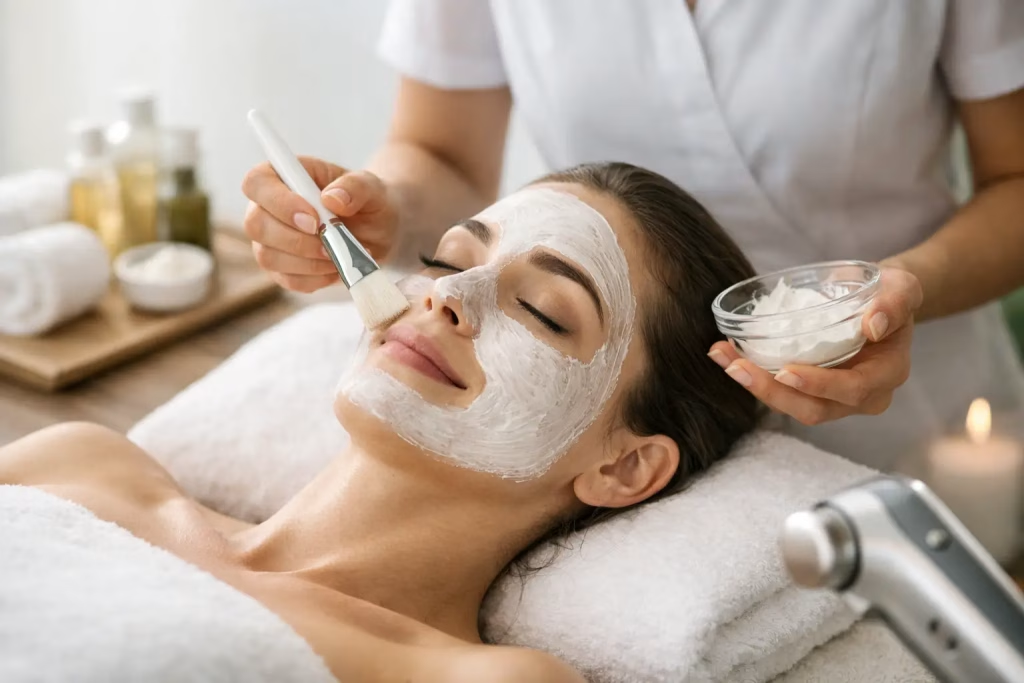
Great facial maintenance rarely announces itself with one dramatic change. It is the well-rested look after a demanding month, makeup that sits more smoothly, a more even tone in natural light, and skin that appears cared for rather than overtreated. This guide to facial maintenance treatments is designed for those who want to approach aesthetic care with the same discernment they bring to the rest of their routine: thoughtfully, consistently, and with professional guidance.
Maintenance is not about chasing perfection or scheduling every available procedure. It is about choosing treatments that support your skin’s current needs while respecting its biology, your lifestyle, and the results you would like to preserve over time.
What Facial Maintenance Really Means
Facial maintenance is a personalized program of non-surgical treatments and home care intended to sustain skin quality, facial balance, and a rested appearance. For some, the priority is hydration and luminosity. For others, it may be keeping pigment under control, softening early lines, refining pores, managing acne, or maintaining the definition achieved with prior contouring treatments.
The right cadence depends on your skin condition, age, sun exposure, travel schedule, stress level, and history of aesthetic treatments. A person with reactive rosacea-prone skin requires a very different plan from someone managing photoaging, acne scarring, or lower-face laxity. This is why a treatment calendar copied from social media is rarely the most elegant or effective approach.
At Kelly Oriental Aesthetic Clinic, maintenance planning begins with an assessment of skin health and facial anatomy, not a preset package. Doctor-led recommendations can help distinguish between a concern that benefits from gentle, regular skin support and one that calls for a more targeted medical treatment.
Build Your Guide to Facial Maintenance Treatments Around Goals
A considered maintenance plan usually has three layers: skin health, correction, and preservation. Skin health includes hydration, barrier support, cleansing, and sun protection. Correction addresses active concerns such as pigmentation, acne scars, enlarged pores, redness, or fine lines. Preservation helps extend the effects of treatments that improve collagen support, facial contours, or muscle-related lines.
Trying to address all three layers at once can be counterproductive. Skin that is inflamed or dehydrated may need calming treatments before energy-based procedures. Similarly, a patient considering wrinkle-relaxing injections or skin boosters may benefit from resolving active breakouts first. A skilled practitioner sequences treatments so the skin has time to respond and recover.
For hydration, texture, and a healthy glow
Hydrafacial-style cleansing and infusion treatments can be appropriate for regular upkeep when dullness, congestion, and dehydration are the main concerns. They are often chosen before an event because they involve little downtime, but their value is not limited to occasions. Performed at intervals recommended for your skin, they can support smoother texture and a more polished appearance.
LDM, or localized dynamic micromassage, may also be considered when the skin needs gentle support. It is commonly incorporated into care plans focused on hydration, sensitivity, recovery, and overall skin comfort. The ideal frequency varies. More is not automatically better, especially if your skin barrier is compromised.
Skin boosters work differently from topical hydration or facial treatments. When clinically appropriate, injectable skin hydration treatments may improve the look of fine lines, elasticity, and skin radiance over a series of sessions, followed by maintenance. Results develop gradually, making them well suited to patients who prefer subtle refinement rather than an abrupt change.
For pigment, pores, and uneven tone
Pigmentation maintenance requires discipline as much as technology. Sun exposure, heat, hormones, and inflammation can all contribute to recurrence, particularly in pigment-prone skin. Broad-spectrum sunscreen, appropriate skincare, and regular clinical review form the foundation.
Pico laser treatments may be recommended for concerns such as sunspots, uneven tone, and certain forms of pigmentation, depending on a detailed diagnosis and skin type. Sessions are typically spaced apart to allow the skin to respond. The treatment plan should be adjusted if there is irritation, tanning, or a change in your skin’s sensitivity.
For enlarged pores, textural irregularities, and early signs of aging, microneedling radiofrequency treatments such as Sylfirm X can support collagen remodeling. These treatments are usually performed as a course rather than a casual monthly add-on. Once the initial goals are reached, occasional maintenance may help support results, but the timing should be individualized.
For lines, laxity, and facial definition
Dynamic lines caused by repeated muscle movement may be managed with carefully placed neuromodulator injections. The goal is not to erase expression, but to soften lines while retaining a natural, rested quality. Maintenance is often needed as the effect gradually wears off, though the interval is personal and should never be rushed simply because a calendar reminder appears.
For concerns related to skin laxity, treatments such as Thermage and Ultherapy use energy to support collagen stimulation at different depths. They are not interchangeable, and neither is a shortcut to surgery. They can be valuable options for appropriate candidates who want progressive tightening with little to no downtime, particularly around the brow, cheeks, jawline, and neck. Because collagen remodeling takes time, evaluating results too early can lead to unnecessary treatment.
Facial slimming or double-chin treatments also require careful diagnosis. Fullness under the chin may be related to fat, skin laxity, bone structure, or a combination of factors. A tailored plan may involve injectable treatments, energy devices, or simply the decision that treatment is not indicated. That restraint is part of good aesthetic care.
How Often Should You Schedule Treatments?
There is no universal facial maintenance schedule. As a broad guide, gentle facial treatments may suit a monthly rhythm for some patients, while laser, radiofrequency microneedling, and collagen-stimulating procedures are commonly spaced weeks or months apart. Injectable treatments have their own clinical timelines, based on product choice, treatment area, metabolism, and desired outcome.
A better question than “How often should I come in?” is “What are we maintaining, and what evidence tells us it is time?” This may be a visible return of pigmentation, a gradual loss of hydration, increased congestion, recurring redness, or a change in facial definition. High-quality maintenance is responsive rather than automatic.
Seasonality matters, too. Patients often prefer pigment-focused treatments during periods when they can be diligent about avoiding sun exposure. Before a wedding, presentation, or vacation, choose lower-downtime options well ahead of the date and avoid experimenting with a new treatment at the last minute. Your clinician can map treatment timing around important commitments.
The Details That Protect Your Results
Even the most advanced in-clinic treatment has limits if daily habits work against it. Consistent sunscreen use is essential after pigment and rejuvenation treatments. A gentle cleansing routine, appropriate moisturizer, and clinician-recommended active ingredients can help maintain results between appointments without overwhelming the skin.
Share relevant information before every procedure, including recent sun exposure, new medications, a history of cold sores, active acne, allergies, pregnancy or breastfeeding, and any previous reaction to injectables or energy-based devices. These details may change the safest treatment choice or mean postponing a session. Honest consultation protects both your comfort and your outcome.
It is also wise to avoid stacking aggressive treatments without a clear reason. Combining procedures can be effective when planned by an experienced provider, but doing too much too quickly can prolong redness, compromise the barrier, or produce results that look less natural than intended. Quiet, cumulative improvement is often the most beautiful result.
Choosing a Clinic for Ongoing Care
A maintenance relationship should feel considered, not transactional. Look for a clinic where your treatment history is reviewed, changes in your skin are documented, and recommendations are explained with clarity. You should understand what a treatment is designed to improve, what it cannot change, the expected downtime, and when a different approach would be more suitable.
The environment matters as well. A premium aesthetic experience should be calm and discreet, but clinical standards remain central. Doctor oversight, properly trained therapists, thoughtful aftercare, and realistic expectations create the conditions for results that continue to look like you.
The most enduring facial maintenance plan is one you can follow with confidence. Begin with a professional consultation, give your skin time to respond, and let each treatment earn its place in your routine.
