

Uncategorized
A Guide to Lip Filler Safety Before You Book
Sep
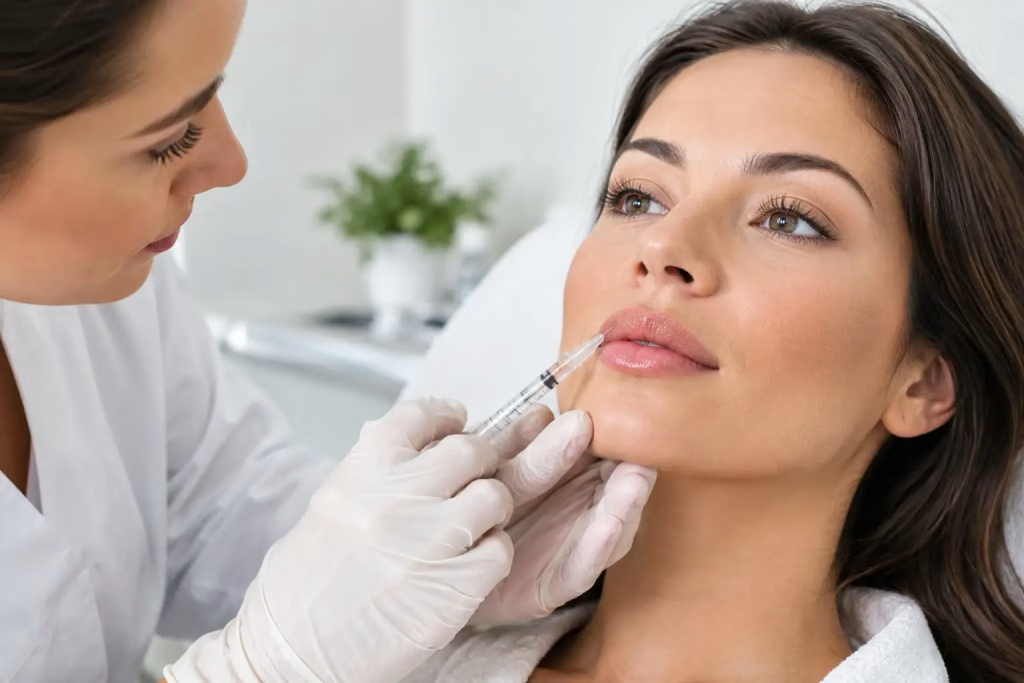
A beautifully balanced lip enhancement should never begin with a trend, a discounted package, or a rushed appointment. It begins with sound medical judgment. This guide to lip filler safety is designed to help you ask the right questions, understand the real considerations behind treatment, and make a decision that feels as confident as your result should look.
Lip fillers can softly restore definition, improve symmetry, add hydration, or create fuller volume. Yet the lips are a delicate, highly vascular area of the face. Technique, product selection, anatomy, and aftercare all influence both the aesthetic outcome and, more importantly, your safety.
Lip filler safety starts with the right provider
The person performing your treatment matters as much as the filler itself. Seek a qualified, medically trained injector who understands facial anatomy in detail and who conducts a proper assessment before recommending a treatment plan. A refined result is rarely about placing the maximum amount of product. It is about understanding your lip structure, natural movement, proportions, and the way your lips relate to the rest of your face.
A responsible consultation should feel unhurried. Your provider should ask about your medical history, allergies, previous injectable treatments, current medications, and any history of cold sores. They should also examine your lips and surrounding facial anatomy, discuss what is realistically achievable, and explain the potential risks in language you understand.
Be cautious if an appointment is presented as a one-size-fits-all treatment, if there is pressure to inject more than you are comfortable with, or if a provider promises a particular look without assessing your features. Social media images can be useful references, but they are not treatment blueprints. What looks balanced on another person may not complement your anatomy.
At a doctor-led aesthetic clinic, an injector should also have a clear escalation plan. This means knowing how to recognize a complication promptly and having the appropriate medication and clinical protocols available when needed.
Know what is being injected
Most modern lip filler treatments use hyaluronic acid, a substance that occurs naturally in the body and attracts water. Hyaluronic acid fillers are widely used because they can offer a soft, adaptable result and can generally be dissolved with an enzyme called hyaluronidase if medically necessary.
That does not mean every hyaluronic acid filler is interchangeable. Products vary in firmness, spread, longevity, and suitability for different areas of the lips. A filler selected for structural support in the cheeks may not be the ideal choice for the lip body or border. The best product is not necessarily the longest-lasting one. It is the one that supports your treatment goals while respecting the natural movement and delicacy of the lips.
Ask what product is being used, whether it is approved and sourced through authorized channels, and why it suits your treatment plan. You should never feel uncomfortable asking to see the product packaging. Legitimate, reputable practices welcome informed questions.
Permanent or unverified injectable materials carry a different and potentially greater level of risk. If the substance, source, or credentials of the provider are unclear, it is wise to walk away.
A consultation should include an honest discussion of risk
Every injectable procedure has possible side effects. Temporary swelling, tenderness, redness, bruising, and small areas of firmness are common after lip filler. Swelling can make the lips look fuller or uneven at first, particularly during the first 24 to 72 hours. The settled result is not always visible immediately.
There are also less common but more serious complications, including infection, allergic reaction, filler migration, nodules, asymmetry, and vascular occlusion. Vascular occlusion occurs when filler compromises blood flow to an area of tissue. It is uncommon, but it requires urgent clinical attention. This is why technical expertise and immediate access to appropriate management are non-negotiable.
A credible provider will not minimize these risks to make treatment sound effortless. They will put them in context, explain how they reduce them, and tell you exactly what to do if you have concerns after leaving the clinic. Safety is not about creating fear. It is about creating clarity.
When to contact your provider urgently
Mild swelling and bruising are expected for many patients. However, contact your treating provider immediately if you experience any of the following:
- Severe or increasing pain, especially pain that seems out of proportion to the treatment
- Blanching, whitening, grayish discoloration, mottling, or unusual coolness of the lip or surrounding skin
- Blisters, skin breakdown, or rapidly spreading redness
- Changes in vision, severe headache, dizziness, or other sudden neurological symptoms
Do not wait for a scheduled review if you notice these signs. Follow your clinic’s emergency instructions and seek urgent medical care when advised.
Preparation can make treatment safer and recovery easier
Your provider may give you individualized instructions based on your health history. In general, arrive well hydrated and avoid booking lip filler immediately before an important event. Even with excellent technique, temporary swelling or bruising can occur, and your lips may need time to settle.
Tell your provider about prescription medications, supplements, and over-the-counter products. Some substances may increase bruising risk, but do not stop prescribed medication without guidance from the clinician who manages it. Alcohol, intense exercise, and excessive heat are often best avoided around the time of treatment according to your provider’s instructions, as they can contribute to swelling or bruising.
If you are prone to cold sores, discuss this before treatment. Lip injections can occasionally trigger an outbreak, and your provider may recommend preventive antiviral medication. Treatment may also need to be postponed if you have an active cold sore, skin infection, dental infection, or significant irritation around the mouth.
Pregnancy and breastfeeding are typically reasons to defer elective filler treatment, not because a problem is expected, but because safety data are limited. The same thoughtful approach applies if you are unwell, recently had dental work, or have an autoimmune condition. It does not automatically mean you cannot be treated. It means your provider should consider timing and suitability carefully.
Less filler can be the more elegant choice
A common safety concern is not only a medical complication but also an aesthetic one: overfilling. Repeated injections without sufficient time for assessment can distort lip shape, blur the natural border, or lead to migration above the lip. The result may be difficult to correct and may not reflect the polished, understated enhancement many patients want.
For first-time patients, a conservative approach is often sensible. Starting with a modest amount allows your provider to evaluate how your lips respond and how the product settles. A follow-up appointment can be used to assess whether further refinement is appropriate.
This approach does require patience. If you are seeking dramatic volume in one session, your provider may recommend a staged plan instead. Gradual treatment can be gentler on the tissue and more likely to preserve a natural-looking shape. The ideal timeline depends on your starting anatomy, previous filler, desired result, and the condition of your lip tissue.
Aftercare is part of the treatment, not an afterthought
Once your appointment is complete, follow the instructions provided by your clinic. Avoid pressing, massaging, or manipulating your lips unless your injector specifically tells you to do so. Unnecessary pressure can affect the way filler settles and may worsen swelling.
Use a cool compress gently if recommended, keep the area clean, and choose simple, soothing lip care while the injection points heal. It can also be helpful to sleep with your head slightly elevated on the first night. Avoid arranging dental procedures, facials involving significant facial pressure, or other treatments around the mouth until your provider advises that it is appropriate.
Take clear photographs before treatment and at intervals during recovery. They can help you and your injector distinguish temporary swelling from a true concern. Most importantly, do not rely on online advice to diagnose a complication. Your treating clinic knows the product used, the injection technique, and your individual treatment history.
Choose a setting that values care beyond the appointment
A premium experience is not defined by a beautiful treatment room alone. It is defined by rigorous standards, a thoughtful consultation, sterile clinical practices, and responsive support after treatment. At Kelly Oriental Aesthetic Clinic, the approach to injectable care is grounded in tailored planning, doctor-led expertise, and results that respect the character of each face.
The most satisfying lip filler result is often the one that looks effortless: a little more definition, a softer balance, a renewed sense of confidence. Give yourself the same care in choosing your provider as you do in choosing your desired look. A considered consultation is the right place to begin.
