
Uncategorized
Radiofrequency Versus HIFU Lifting Explained
Oct
A face can look tired long before it looks deeply wrinkled. The first changes are often subtle: a softer jawline in photographs, a little looseness around the cheeks, or skin that no longer seems to sit as firmly over the contours beneath it. In the conversation around radiofrequency versus HIFU lifting, the most useful question is not which treatment is universally better. It is which technology best matches the layer of aging you want to address.
Both treatments are non-surgical options for skin tightening and facial rejuvenation. Both work by delivering controlled energy beneath the surface to encourage the skin’s natural collagen response. Yet they work at different depths, create different sensations, and are often selected for different facial concerns. A thoughtful recommendation begins with your anatomy, skin quality, degree of laxity, and appetite for gradual change.
Radiofrequency versus HIFU lifting: the core difference
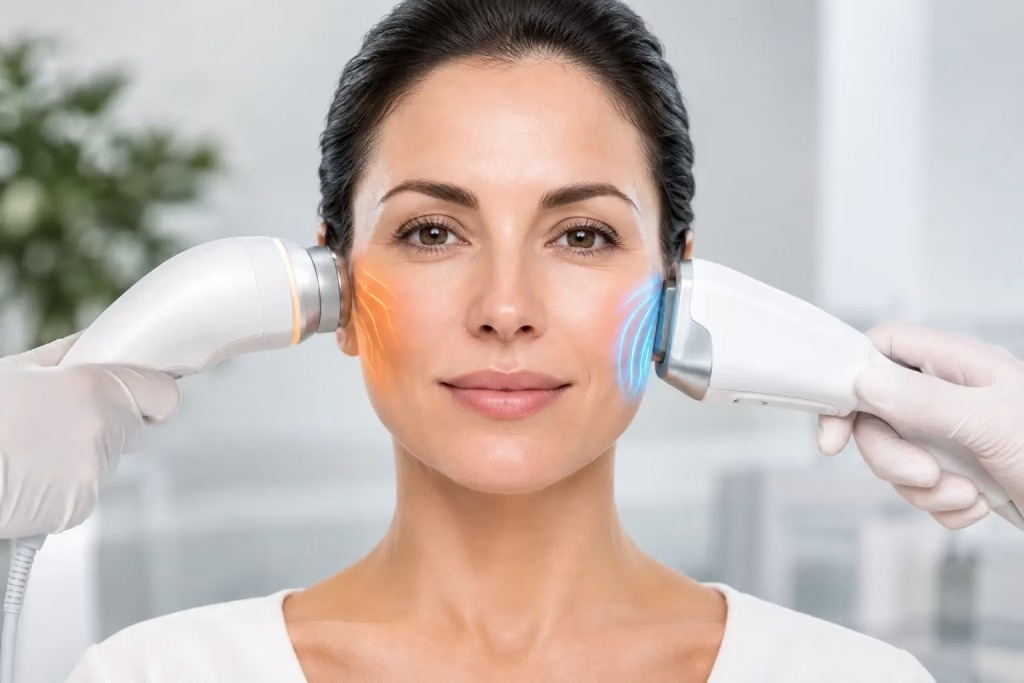
Radiofrequency treatments use electrical energy to gently heat the skin and underlying tissue. This controlled heating supports collagen remodeling and can encourage new collagen production over time. Depending on the device and treatment protocol, radiofrequency may target superficial skin layers, deeper dermal tissue, or a broader volume of tissue for an overall tightening effect.
HIFU, short for high-intensity focused ultrasound, uses focused sound-wave energy. Rather than heating a broad area, it creates precise thermal points at selected depths beneath the skin. HIFU is often chosen when the goal is a more structural approach to mild-to-moderate facial laxity, particularly around the brow, lower face, jawline, and beneath the chin.
The distinction matters because facial aging is not only a skin issue. Collagen depletion, changes in fat distribution, and gradual relaxation of deeper support structures can all contribute to a less defined appearance. Radiofrequency is often especially valuable for improving skin quality and firmness. HIFU may be better suited when deeper lifting support is the priority.
What radiofrequency lifting does best
Radiofrequency is known for its versatility. By warming tissue in a controlled manner, it can address crepey texture, fine lines, enlarged-looking pores, and early skin laxity while preserving a natural-looking result. Many patients appreciate that it supports a fresher, firmer appearance without changing their facial expression or adding volume.
For the face, advanced monopolar radiofrequency treatments such as Thermage are often considered for global tightening. The energy is delivered across broader treatment zones, which can make it a compelling choice for patients who notice diffuse laxity around the cheeks, lower face, eyelids, or neck. Results develop progressively as collagen remodels, with many people noticing improvements over the following months.
Radiofrequency can also be appropriate for individuals whose primary concern is skin rather than deep tissue descent. If your cheeks still sit relatively well but the skin feels less taut, makeup settles into fine lines, or the lower face appears less crisp than before, radiofrequency may offer a refined and measured approach.
Treatment comfort varies according to the device, energy settings, and individual sensitivity. A session may feel warm, with brief deeper sensations as energy is delivered. Redness or mild swelling can occur afterward, but many patients return to their normal routine quickly. The specific recovery experience should always be discussed during consultation, especially if you have an event planned.
Where HIFU lifting has an advantage
HIFU is distinctive because it can reach deeper layers without an incision or surface injury. In facial treatments, focused ultrasound may be delivered at multiple depths, including levels associated with the deeper support framework of the face. This makes it particularly relevant for patients who want more definition rather than simply smoother skin.
A well-planned HIFU treatment can be considered for a subtly lowered brow, early jowling, softening at the jawline, or fullness and laxity beneath the chin. It is not a substitute for a surgical facelift, and it should not be presented as one. However, for the right candidate, it can create a meaningful improvement in contour and firmness with no surgical downtime.
HIFU may involve more noticeable momentary sensations during treatment, often described as small pulses of heat, tingling, or deep pressure. Comfort measures and careful technique are central to the experience. Some tenderness can persist for a short period afterward, although visible downtime is generally limited.
Results also require patience. The body needs time to respond to the thermal stimulation and build new collagen. Some patients see an early tightening effect, while the more developed result often emerges gradually over two to three months. The degree of improvement depends on age, baseline laxity, collagen reserves, treatment parameters, and lifestyle factors such as sun exposure and smoking.
Choosing by concern, not by trend
The most polished treatment plans are built around what is actually changing in the face. Choosing only by a treatment’s popularity can lead to disappointment, particularly when the technology is asked to solve a concern outside its best use.
Radiofrequency may be favored when the concern is fine creasing, thinning skin, mild looseness, or an overall loss of firmness. It can be especially appealing for patients who want a skin-focused treatment with a gradual, understated result. It may also complement a broader skin-maintenance plan that includes hydration, pigment management, or texture refinement.
HIFU may be favored when facial contours need more support. If the brow, jawline, or submental area appears less lifted, focused ultrasound can offer a deeper strategy. This does not mean HIFU is automatically stronger or better. A patient with delicate, dehydrated, or very thin skin may need a different approach than someone with good skin thickness and early tissue descent.
Age alone is not a reliable guide. A person in their 30s with early jawline laxity may benefit from HIFU, while someone in their 50s whose main complaint is crepey skin around the eyes may find radiofrequency more relevant. Facial assessment is more valuable than a one-size-fits-all age range.
Can radiofrequency and HIFU be combined?
Yes, in selected cases, radiofrequency and HIFU can be complementary rather than competing treatments. HIFU can address deeper structural laxity, while radiofrequency can support skin firmness and surface quality. The timing, sequence, and intensity should be carefully planned so that the skin has adequate recovery time and the treatment plan remains purposeful.
Combination care is not always necessary. If concerns are mild and focused, one technology may be sufficient. If there is volume loss in the cheeks or temples, energy-based tightening alone may not provide the balance you are seeking. In those cases, a doctor may discuss whether skin boosters, injectables, or other modalities would better support facial harmony.
This is where an aesthetic plan should feel curated rather than transactional. The best outcome is rarely created by applying every available technology. It comes from selecting the few interventions that respect your facial proportions, lifestyle, and desired level of change.
Safety and candidacy deserve equal attention
Both treatments should be performed after a proper medical assessment. Your provider should review skin condition, previous aesthetic procedures, implants or medical devices, medications, history of scarring, active inflammation, and any health factors that may affect suitability. Pregnancy, certain implanted electronic devices, active skin infections, and specific medical conditions may require postponement or exclusion.
A skilled provider also knows when not to overtreat. Excessive energy or poorly chosen treatment zones can compromise comfort and produce an outcome that does not align with your goals. This is particularly relevant for patients with naturally lean faces, where an overly aggressive approach may not be appropriate.
At Kelly Oriental Aesthetic Clinic, treatment planning is guided by a doctor-led assessment and a clear understanding of whether your concern lies primarily in skin quality, contour, or both. The aim is not to chase a dramatic transformation. It is to help your features look rested, defined, and consistent with you.
What to expect after treatment
Neither radiofrequency nor HIFU offers an instant, fixed result like surgery. Both rely on the body’s collagen response, so changes unfold over time. You may notice early firmness, but the more meaningful evolution is usually gradual. Photography taken in consistent lighting before treatment and at follow-up can be helpful, since day-to-day mirror checks rarely capture subtle improvement accurately.
Your provider may recommend skin care, sun protection, hydration, and maintenance treatments to protect the quality of the result. Collagen naturally continues to change with age, so periodic review can help determine whether and when another session is worthwhile.
The right choice is the one that treats the concern you can see while respecting the structure beneath it. A careful consultation can turn the question of radiofrequency or HIFU into something more personal: how would you like your face to feel and look when it is at its most rested, refined, and confident?
