

Uncategorized
Thermage Versus Radiofrequency: What Changes?
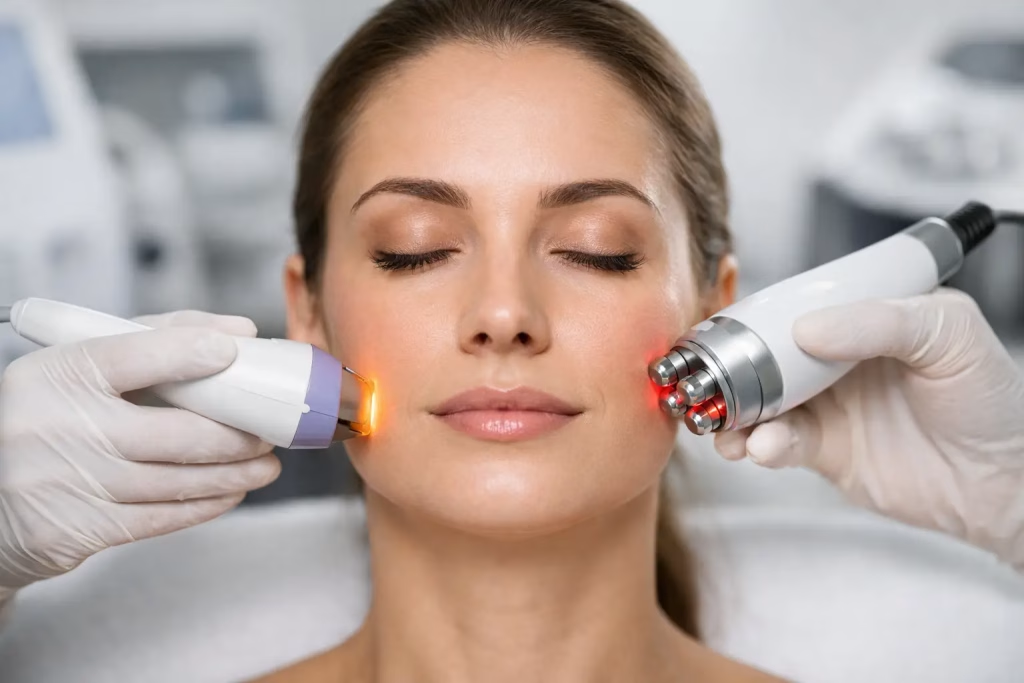
A softer jawline, fine lines that remain after a good night’s rest, and skin that no longer feels as firm as it once did are concerns that deserve more than a one-size-fits-all answer. The conversation around Thermage versus radiofrequency can be confusing because Thermage is, in fact, a radiofrequency treatment. The more useful question is how Thermage differs from other radiofrequency technologies, and which approach best suits your skin, concerns, comfort preferences, and desired level of refinement.
For patients seeking non-surgical rejuvenation, both can support collagen remodeling and firmer-looking skin. Yet the technology, treatment experience, precision, and treatment schedule may differ considerably.
Thermage versus radiofrequency: the key distinction
Radiofrequency, often shortened to RF, is a category of energy-based aesthetic technology. It works by delivering controlled heat into the skin and, depending on the device, the tissue beneath it. This thermal stimulation is designed to encourage the body’s natural collagen renewal process, helping skin appear smoother, tighter, and more resilient over time.
Thermage is a specific, established radiofrequency platform. It is commonly associated with monopolar radiofrequency, which allows energy to reach deeper tissue levels than many surface-focused RF treatments. Rather than thinking of the choice as Thermage or radiofrequency, think of it as Thermage compared with other forms of radiofrequency, such as bipolar, multipolar, or radiofrequency microneedling.
That distinction matters. Two treatments may both be called RF, but their energy delivery, treatment depth, and ideal indications can be very different.
How Thermage approaches skin tightening
Thermage is often selected for patients who want a single-session treatment designed to address mild to moderate laxity. It is commonly used on the face, eyelids, neck, abdomen, arms, thighs, and other areas where the skin has begun to lose definition.
During treatment, the handpiece delivers radiofrequency energy while a cooling mechanism helps protect the skin’s surface. The goal is controlled heating of deeper collagen-rich tissue. Existing collagen fibers may contract initially, while the longer-term visible changes develop gradually as new collagen is formed.
The result is not intended to mimic a surgical facelift. A well-selected patient may instead see a more rested, refined appearance: improved jawline definition, subtly firmer cheek and neck skin, softened crepiness around the eyes, or a smoother texture in areas of body skin laxity.
Thermage is particularly appealing to those with demanding schedules because it is commonly performed as a one-time treatment, with results evolving over several months. The procedure can involve brief sensations of heat or a deeper prickling feeling as energy is delivered. Comfort protocols and careful energy settings are central to making the experience tolerable while maintaining appropriate treatment intensity.
When Thermage may be a thoughtful fit
Thermage may suit someone noticing early to moderate skin laxity who prefers a gradual, natural-looking outcome and does not wish to commit to a series of frequent sessions. It can also be considered when treating larger areas or when a patient’s concern lies in deeper structural support rather than only surface texture.
However, treatment suitability is never determined by age alone. Skin thickness, degree of laxity, facial volume, previous treatments, and medical history all influence whether Thermage is likely to provide a worthwhile result.
How other radiofrequency treatments differ
Other radiofrequency devices are not lesser versions of Thermage. They are simply engineered with different clinical purposes in mind. Some use bipolar or multipolar energy, which generally concentrates heating more superficially between electrodes. These treatments may be selected for skin maintenance, mild firmness concerns, or a series-based approach to texture and tone.
Radiofrequency microneedling is another distinct category. It combines tiny needles with RF energy delivered directly into the skin at selected depths. This approach is often considered when laxity is accompanied by concerns such as acne scarring, enlarged pores, uneven texture, fine lines, or certain pigment irregularities. Because the skin is being treated through controlled microchannels as well as heat, the recovery profile and aftercare differ from non-invasive surface RF.
Some patients benefit most from a treatment series with a non-Thermage RF device. Others may prefer the convenience and deeper heating profile associated with Thermage. The choice depends on the treatment objective, not simply which option sounds more advanced.
Results, timing, and maintenance
Neither Thermage nor other radiofrequency treatments delivers the instant transformation associated with surgery or dermal fillers. Collagen remodeling takes time. A subtle initial change may be visible soon after treatment, but more meaningful improvement generally appears progressively over the following two to six months.
Thermage results may last a year or longer for some patients, although the skin continues to age and maintenance is often considered as part of a long-term aesthetic plan. Results from other RF treatments vary according to device type, treatment area, and whether a series has been completed. A series may be recommended at intervals of several weeks, followed by periodic maintenance.
The quality of the result also depends on realistic expectations. Radiofrequency can improve the appearance of mild to moderate laxity, but it cannot remove significant excess skin, replace lost facial volume, or correct every concern at once. When facial hollowing is prominent, for example, tightening alone may not create the most balanced outcome. A clinician may discuss a more tailored combination involving skin boosters, injectables, ultrasound-based lifting, laser treatments, or other modalities where appropriate.
Comfort and downtime considerations
Non-invasive Thermage usually involves little to no social downtime. Temporary redness or mild swelling can occur, but many patients return to regular activities shortly after their appointment. As with any energy-based procedure, response varies, and a properly trained provider should explain expected sensations and aftercare before treatment.
Traditional non-invasive RF treatments also tend to have minimal downtime. Radiofrequency microneedling, however, typically involves visible redness and sensitivity for a short period, with recovery depending on treatment settings and individual skin response. This may be a worthwhile trade-off for patients whose priorities include scars and texture, not only skin tightening.
Safety relies on more than the device name. Energy settings, applicator placement, skin assessment, treatment technique, and provider experience all matter. A comprehensive consultation should include discussion of medical conditions, implanted electronic devices, pregnancy status, active skin inflammation, recent procedures, and any history that could affect candidacy.
Choosing the right treatment for your skin
A refined treatment plan begins with a precise assessment of what is actually changing. Is the concern loose skin at the jawline, fine lines around the eyes, acne scars, enlarged pores, or loss of volume through the mid-face? These may look similar in the mirror, but they call for different strategies.
At Kelly Oriental Aesthetic Clinic, the consultation process is designed to look beyond a single concern and consider the proportions, texture, and long-term needs of the individual. For someone seeking discreet firming with minimal interruption to work or social life, Thermage may be an elegant option. For someone focused on pores, textural irregularities, or acne scars, another RF approach may offer a more targeted path.
The most satisfying aesthetic results rarely come from choosing the most talked-about technology. They come from selecting the treatment that respects your skin’s current condition, supports your goals, and fits naturally into the way you want to look and live. A doctor-led consultation can provide the clarity to choose with confidence.
