
Uncategorized
Ultherapy for Jawline Lifting: What to Expect
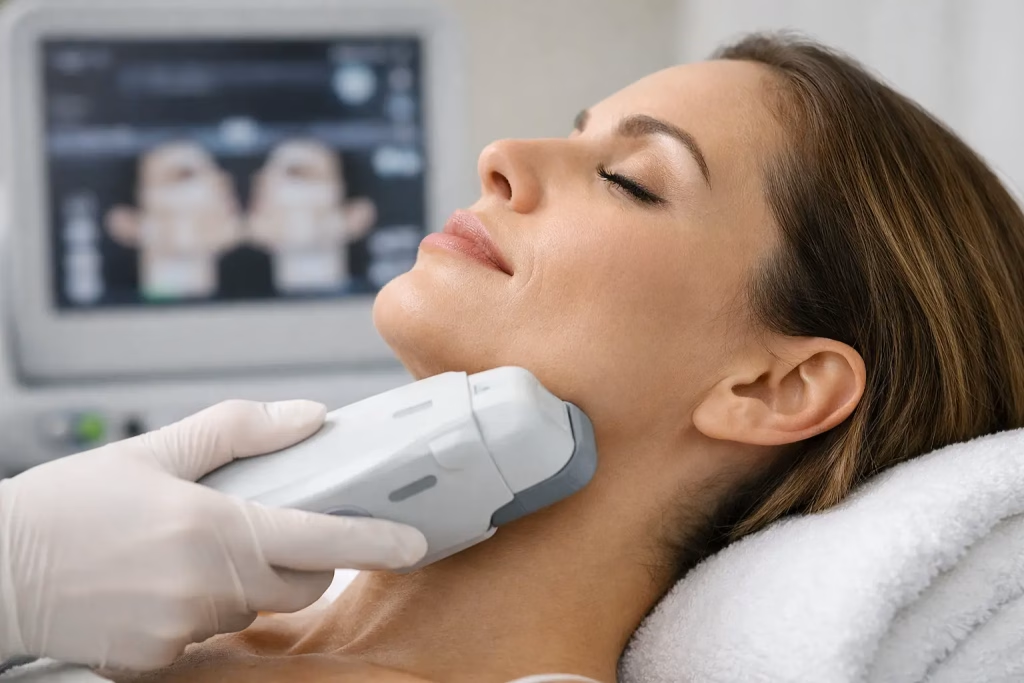
A softened jawline tends to show up in photos before it bothers you in the mirror. The angle looks less defined, the lower face feels heavier, and what used to read as sculpted starts to blur. For many patients, ultherapy for jawline lifting becomes appealing at exactly this stage – when they want a firmer, cleaner contour without surgery or significant downtime.
What makes the treatment so compelling is not just that it is non-invasive. It is that it approaches laxity with precision. Rather than treating only the surface, Ultherapy uses focused ultrasound energy to reach deeper structural layers of tissue, including the foundational plane often addressed in surgical lifting. That distinction matters when the concern is definition along the jaw rather than simply skin texture.
Why the jawline changes first
The jawline is one of the most revealing areas of the face because it depends on both skin quality and structural support. Even mild collagen loss can make this area look less taut. Add a little heaviness under the chin, early jowling, or changes in cheek support, and the lower face can appear less refined than it once did.
This is why jawline concerns are rarely about one issue alone. In some patients, the problem is loose skin. In others, it is volume descent, facial fullness, or a combination of skin laxity and muscle-related bulk. A thoughtful assessment is essential because the best treatment plan depends on what is actually creating the blur along the lower face.
How ultherapy for jawline lifting works
Ultherapy delivers micro-focused ultrasound energy at specific depths beneath the skin. The energy creates controlled thermal points, which stimulate a natural regenerative response. Over time, the body produces new collagen and elastin, helping the skin and underlying tissues feel firmer and better supported.
For the jawline, this can translate into a more defined transition from face to neck, reduced early sagging, and a tighter overall appearance along the lower face. The treatment is guided by real-time ultrasound imaging, which allows the provider to visualize the tissue layers being treated. That level of precision supports both safety and customization.
Unlike treatments that mainly improve surface radiance or hydration, Ultherapy is chosen for lifting and tightening. It is not designed to replace a surgical lower facelift, and it does not physically remove excess skin. Its role is more nuanced. It is often most rewarding for patients with mild to moderate laxity who want visible improvement with a natural finish.
Who is a good candidate
The ideal candidate is usually beginning to notice that the jawline looks softer, the skin under the chin feels less firm, or the lower face appears slightly heavier than before. They still look like themselves, but less rested and less defined. In this range, Ultherapy can be an elegant option because it supports what is already there rather than dramatically altering facial structure.
Patients with severe skin laxity may still see some benefit, but expectations need to be realistic. If there is significant jowling, marked skin redundancy, or pronounced neck laxity, a single energy-based treatment may not deliver enough lift to match the concern. In those cases, a doctor may recommend combining modalities or considering a more intensive approach.
Age alone is not the deciding factor. Tissue quality, skin thickness, collagen reserve, and the degree of lower-face descent matter more than a number. Men and women can both benefit, especially those seeking discreet rejuvenation that does not look obvious or overdone.
What treatment feels like
Ultherapy is often described as tolerable but not effortless. During treatment, patients may feel brief pulses of heat or tingling as energy is delivered at depth. The sensation varies depending on the treatment area, individual sensitivity, and the treatment settings selected.
For the jawline and lower face, comfort is very manageable for many patients, especially when the session is planned thoughtfully. A premium clinical setting also makes a difference. The experience should feel structured, well-supported, and tailored to your comfort threshold rather than rushed.
A typical session for the lower face and jawline may take under an hour, though timing depends on whether adjacent areas such as the chin or neck are also treated. Because there is no cutting, no needles for the energy delivery itself, and no mandatory recovery period, most patients return to normal activity shortly afterward.
Results and timeline
One of the most important things to understand about ultherapy for jawline lifting is that the result is gradual. This is collagen stimulation, not instant mechanical lifting. Some patients notice a subtle early firmness, but the more meaningful change develops over the following two to three months, with continued improvement for up to six months.
The look is typically refined rather than dramatic. The jawline may appear sharper, the lower face a little lighter, and the skin more supported. Friends may say you look fresher or better rested without being able to identify why. For many discerning patients, that natural quality is exactly the point.
Results also vary. Someone with early sagging and good skin tone may see a noticeable contour improvement. Someone with thicker skin, more heaviness under the chin, or deeper jowling may find the lift modest unless the treatment is paired with other modalities.
When Ultherapy alone may not be enough
The jawline can lose definition for different reasons, and not all of them respond best to ultrasound lifting alone. If fullness under the chin is a major factor, fat-reduction strategies may be more relevant. If the lower face is widened by strong masseter muscles, face slimming treatments may create a cleaner contour. If skin quality is compromised by texture, redness, or crepiness, additional skin-focused procedures may improve the final outcome.
This is where a bespoke plan becomes more valuable than a single trending treatment. In a doctor-led aesthetic clinic, the consultation should clarify whether your concern is primarily laxity, volume, fat, or facial shape. Sometimes Ultherapy is the centerpiece. Sometimes it is one part of a broader rejuvenation strategy.
That does not diminish its value. It simply places it in the right context. Premium aesthetic care is rarely about forcing one device to solve everything.
Downtime, aftercare, and safety
Downtime is minimal, which is one reason busy professionals often choose Ultherapy. Mild redness, tenderness, swelling, or a temporary sensation of tightness can occur, but these effects are typically short-lived. Some patients feel a little sore along the jawline for a few days, especially when pressing the area.
Because the skin surface remains intact, aftercare is usually straightforward. Gentle skincare, sun protection, and avoiding unnecessary friction on the treated area are often enough. Most patients can resume meetings, social plans, and routine commitments the same day.
Safety depends heavily on appropriate patient selection and proper technique. Ultherapy should be performed in a clinical environment where anatomy, treatment depth, and facial balance are carefully considered. The jawline is not an area for guesswork. Precision matters, especially when the goal is elegant definition rather than generic tightening.
How long results last
Results are not permanent because the aging process continues, but many patients enjoy improvement for a year or longer. Longevity depends on age, collagen health, lifestyle, and the starting degree of laxity. Some choose maintenance treatments periodically to preserve definition and support collagen over time.
This longer-view approach tends to suit patients who prefer subtle, cumulative refinement. Rather than waiting for more advanced sagging and then seeking a dramatic correction, they invest earlier in preserving structure. For the right patient, that can be a very effective aesthetic philosophy.
The value of a personalized consultation
A jawline that looks less defined can be frustrating because it affects the whole face. It can make the profile seem heavier, the neck less elegant, and facial features less lifted even when the change is relatively mild. But treating it well requires more than choosing a popular device. It requires reading the face accurately.
In a high-touch setting such as Kelly Oriental Aesthetic Clinic, the consultation should feel as considered as the treatment itself. The right plan accounts for your anatomy, your tolerance for downtime, your preference for subtlety, and the result you actually want to see in photographs and everyday life.
For patients seeking graceful, non-surgical refinement, Ultherapy can be a very strong choice when used for the right indication. The best outcomes tend to come from that balance of technology, medical judgment, and restraint – because a beautiful jawline is not just tighter, but more naturally defined.
