

Uncategorized
Best Treatment for Pigmentation Explained
Apr
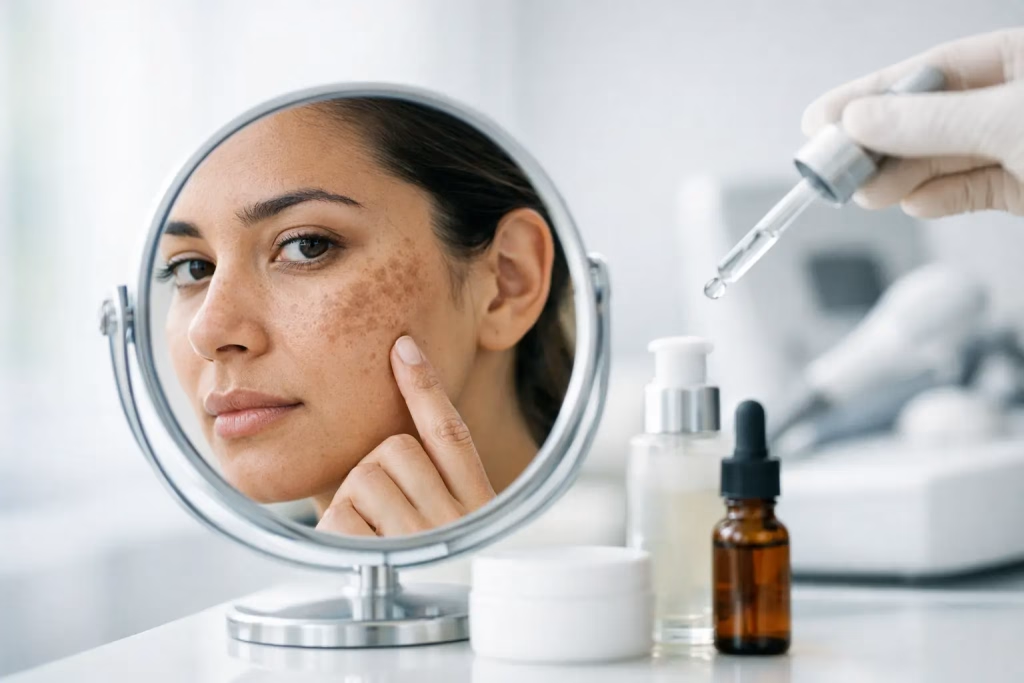
Pigmentation rarely appears all at once. More often, it builds quietly – a few sun spots after weekends outdoors, lingering post-acne marks, patches of melasma that seem to deepen no matter how carefully you apply sunscreen. That is why the best treatment for pigmentation is almost never a single answer. It depends on what is causing the discoloration, how deep it sits in the skin, and how your skin responds to treatment.
For patients who want visible improvement without guesswork, the most effective approach is a tailored one. Pigmentation is not one condition. It is a category that includes sun damage, post-inflammatory hyperpigmentation, melasma, and mixed discoloration. Each behaves differently, and each requires a different level of caution, technology, and maintenance.
What makes pigmentation difficult to treat
Pigment can sit in the epidermis, which is the more superficial layer of skin, or in the dermis, where it tends to be more stubborn. Some pigment responds beautifully to laser energy. Some fades better with prescription topicals and careful skin barrier support. Some, especially melasma, can worsen with heat, irritation, or overly aggressive treatment.
This is where many people lose time and money. They are told that one cream, one laser session, or one facial is the answer. In reality, successful treatment begins with diagnosis. If the pigment was triggered by acne inflammation, the strategy should not look the same as treatment for age spots or hormonally driven melasma.
Best treatment for pigmentation by type
If you are looking for the best treatment for pigmentation, start with the type of pigment you have rather than the trendiest device on the market.
Sun spots and age spots
Sun spots, often called lentigines, usually respond well to pigment-targeting lasers. These are among the more satisfying pigmentation concerns to treat because the pigment is often well defined and linked to cumulative UV exposure.
Pico Laser is a popular option because it delivers short pulses of energy that break down pigment with less heat than older technologies. For many patients, this means effective brightening with reduced downtime. It can be especially appealing for professionals who want meaningful results without stepping too far away from their routine.
That said, even when laser performs beautifully, the results will not hold if UV protection is inconsistent. New sun exposure can quickly bring fresh discoloration to the surface.
Post-inflammatory hyperpigmentation
This type of pigmentation tends to appear after acne, eczema, friction, or any event that triggers inflammation. It is especially common in medium to deeper skin tones and can linger for months.
The best treatment here is often a combination of calming the underlying trigger and gradually fading the marks. If breakouts are still active, treating pigment alone is inefficient. Topical brighteners, professional skin renewal treatments, and carefully selected laser settings can all help, but the skin must be respected. Over-treatment can provoke more inflammation and create a cycle that keeps the pigmentation alive.
For this reason, a slower, more strategic plan often delivers better long-term results than a forceful one.
Melasma
Melasma is the most nuanced form of pigmentation. It is commonly influenced by hormones, sun exposure, visible light, heat, and genetics. It often appears in patches across the cheeks, forehead, upper lip, or jawline.
Melasma requires restraint. Patients are often surprised to learn that the strongest treatment is not always the best one. Excess heat can make melasma rebound, which is why treatment selection matters. Pico Laser may be used in carefully planned protocols, but it is often paired with medical-grade skincare, strict photoprotection, and maintenance sessions rather than approached as a one-time fix.
When melasma improves, it usually improves through consistency, not intensity.
Why laser is often part of the best treatment for pigmentation
Laser technology remains one of the most effective tools for visible pigment reduction because it can target excess melanin with precision. In a clinical setting, this allows practitioners to treat discoloration more directly than topical products alone.
Among modern options, Pico Laser stands out for patients seeking clearer, more even-looking skin with minimal disruption. Its ultra-short pulses shatter pigment into smaller particles that the body can clear more efficiently. It can also support overall skin quality, which matters because pigmentation rarely exists in isolation. Many patients also want smoother texture, brighter tone, and a more refined complexion.
Still, laser is not automatically the best first step for everyone. If the skin barrier is compromised, if melasma is highly active, or if there is ongoing inflammation, pre-conditioning the skin may be the wiser path. Good treatment plans respect timing.
Topicals still matter more than many patients think
A polished in-clinic result is only as stable as the home care supporting it. This is particularly true with pigmentation, where recurrence is common.
Topical ingredients such as hydroquinone, tranexamic acid, azelaic acid, retinoids, vitamin C, niacinamide, and cysteamine can all play a role depending on the diagnosis. The right formula can suppress excess pigment production, accelerate cell turnover, and help maintain gains achieved with in-clinic treatments.
Not every patient needs every active. In fact, layering too many brightening products can create irritation, and irritation often deepens pigmentation rather than resolving it. A refined plan is usually more effective than an aggressive shelf of products.
The role of facials and supportive treatments
Supportive treatments are not the headline act for moderate to severe pigmentation, but they can improve treatment tolerance and skin quality. Hydrating facials, gentle exfoliation, and barrier-supportive therapies help create healthier skin, which often responds better to laser and topical care.
This is especially useful for patients who have dehydrated, reactive, or sensitized skin. When the skin is inflamed, even excellent technology can perform less predictably. A doctor-led plan that combines corrective treatments with skin-calming support tends to feel more sustainable and more elegant.
At a clinic such as Kelly Oriental Aesthetic Clinic, this kind of tailored journey is often what distinguishes a premium result from a rushed one.
How many sessions does pigmentation treatment take?
This depends entirely on the diagnosis. Sun spots may show visible improvement relatively quickly. Post-acne marks often fade over a course of sessions combined with home care. Melasma usually requires a longer commitment and an understanding that control is a more realistic goal than permanent removal.
A thoughtful provider should set expectations clearly. Pigmentation can improve dramatically, but the skin remembers sun, heat, hormones, and inflammation. Maintenance is part of good care, not a sign that treatment failed.
What to look for when choosing the best treatment for pigmentation
The best treatment plan should account for your skin tone, lifestyle, downtime tolerance, and history of recurrence. Someone with a demanding public-facing job may prioritize low-downtime laser sessions. Someone with reactive melasma may need a slower regimen with more emphasis on prevention and maintenance.
It is also worth asking whether your pigmentation has been properly identified. Freckles, lentigines, post-inflammatory marks, dermal pigment, and melasma can appear similar to the untrained eye, but they do not behave the same way. Device quality matters, but judgment matters more.
You should also expect a conversation about sun protection that goes beyond a casual reminder. Daily broad-spectrum sunscreen is essential, but for melasma-prone patients, visible light protection and behavioral habits matter too. Car exposure, outdoor lunches, and even incidental heat can influence outcomes.
When combination treatment works best
Some of the most refined results come from combining modalities rather than relying on one intervention. A patient might begin with barrier repair and pigment-suppressing skincare, move into a course of Pico Laser, and then continue with maintenance topicals and periodic skin renewal sessions.
This layered approach is often where the best treatment for pigmentation becomes more than a treatment – it becomes a management strategy designed around your skin’s tendencies. That is particularly valuable for patients who want results that look natural, polished, and lasting rather than dramatic for a month and disappointing by the next season.
If you are trying to choose the best path forward, the smartest question is not which treatment is best in general. It is which treatment is best for your specific pigmentation, your specific skin, and your specific goals. That is where real clarity begins, and where better skin usually follows.
