

Uncategorized
Pico Laser for Melasma: Does It Work?
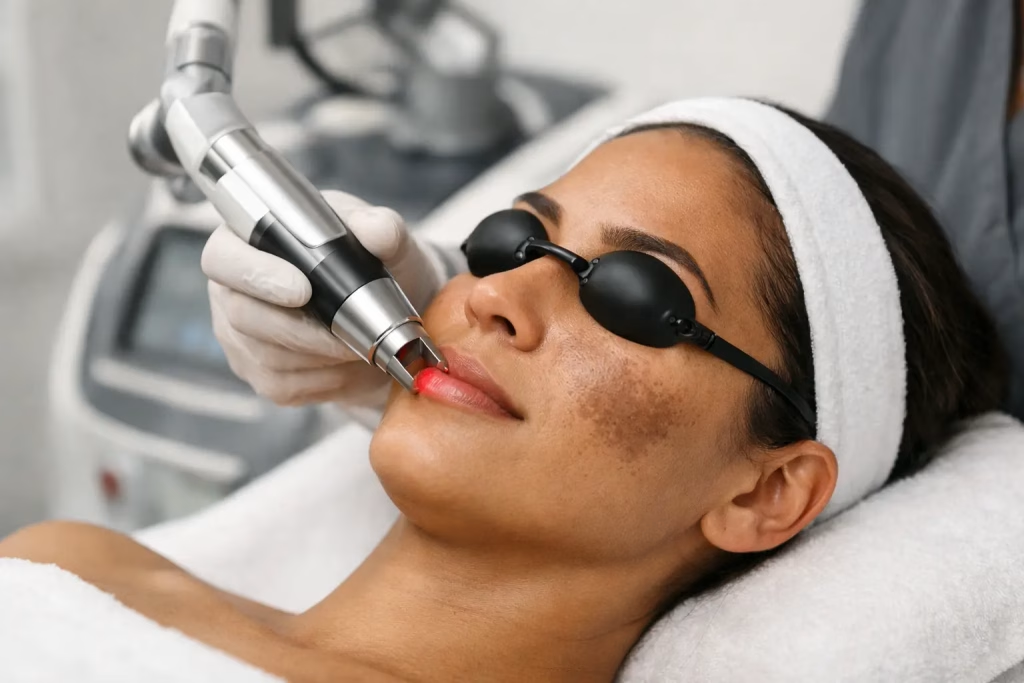
Apr
Melasma rarely behaves like ordinary pigmentation. It can look lighter one month, deepen after a beach day, flare with heat, hormones, or stress, and resist products that seem to work for other dark spots. That is why pico laser for melasma often draws attention – not as a quick fix, but as a more precise option within a carefully managed treatment plan.
For many patients, the real question is not simply whether a laser can lighten pigment. It is whether the skin can be treated without provoking more inflammation, rebound darkening, or disappointment. With melasma, that distinction matters.
What makes melasma so difficult to treat?
Melasma is a chronic pigment condition driven by more than one factor. Sun exposure is a major trigger, but it is not the only one. Hormonal changes, visible light, heat, genetic tendency, and underlying inflammation can all contribute to the pattern of brown, gray-brown, or patchy discoloration most often seen on the cheeks, forehead, upper lip, and jawline.
What makes treatment challenging is that melasma often sits deeper than routine sun spots, and the skin affected by it can be reactive. Aggressive treatment may lighten it temporarily, then trigger irritation that leads to post-inflammatory hyperpigmentation or recurrence. That is why experienced providers tend to approach melasma with restraint, strategy, and consistency rather than intensity.
How pico laser for melasma works
Pico laser technology delivers ultra-short pulses of energy measured in picoseconds. These pulses are designed to target pigment particles with high precision while reducing surrounding heat compared with some older laser platforms. In aesthetic medicine, that matters because excess heat can be one of the factors that worsens melasma.
The goal of pico laser for melasma is not to burn off pigment from the surface. Instead, it breaks pigment into smaller particles that the body can gradually clear. Depending on the device, settings, and wavelength used, treatment may also support a degree of skin renewal, which can improve overall tone and clarity.
That said, the phrase works can be misleading. Pico laser is not a universal answer, and melasma is not a one-treatment condition. The best outcomes usually come when laser sessions are part of a broader protocol that may also include medical-grade topical care, strict sun protection, and maintenance treatments tailored to the patient’s triggers and skin behavior.
Is pico laser always a good choice for melasma?
Not always. This is where nuance matters.
Some patients with stubborn epidermal or mixed pigmentation can respond well to carefully selected pico laser settings. Others, especially those with highly reactive skin, recent sun exposure, or poorly controlled melasma, may do better by stabilizing the skin first before any energy-based procedure is introduced.
Skin tone also matters. Deeper skin tones can absolutely be treated, but they require thoughtful parameter selection and conservative planning to reduce the risk of rebound pigmentation. A doctor-led assessment is especially valuable here because the treatment decision should not be based on the pigment alone. It should account for skin sensitivity, prior treatments, current skincare, lifestyle exposure, and how quickly the skin tends to inflame.
In a premium clinical setting, this is where personalization makes the difference. The right treatment is not always the most aggressive one. It is the one your skin can tolerate while still moving you toward a clearer, more even complexion.
What results can you realistically expect?
Patients often want a simple timeline, but melasma does not usually reward simple expectations. Some see visible brightening after a few sessions. Others improve gradually over several months. The aim is often reduction and control rather than permanent eradication.
A realistic outcome may include softer edges of pigmentation, a more even-looking skin tone, and a brighter overall complexion. In many cases, the skin can appear fresher and more refined even before the melasma has fully settled. That is one reason many patients appreciate pico laser when it is appropriately indicated – it can support both pigment management and general skin rejuvenation.
Still, maintenance is part of the conversation. Melasma can return with sun, heat, travel, hormonal shifts, or inconsistent aftercare. Even beautifully achieved results need protection.
When results tend to be better
Results are often more favorable when melasma is mild to moderate, when the patient is disciplined with sunscreen and shade habits, and when the treatment plan includes supportive skincare. Those who understand that melasma management is ongoing usually do better than those looking for a one-time solution.
When expectations should be more cautious
If the pigmentation is deep, longstanding, hormonally active, or previously aggravated by lasers or peels, progress may be slower. In these cases, a cautious start is usually wiser than a dramatic one.
Risks and trade-offs to know before treatment
Any honest conversation about pico laser for melasma should include the trade-offs. While pico technology can be gentler than some traditional approaches, it is still an energy-based treatment and should not be treated casually.
Temporary redness, warmth, mild swelling, and dryness can occur after treatment. Some patients notice darkening of pigment before it begins to lift. More importantly, there is always a possibility of irritation or rebound pigmentation if settings are too aggressive, aftercare is poor, or the skin was not an ideal candidate to begin with.
This is why melasma treatment should never be reduced to a device name alone. The machine matters, but the treatment philosophy matters more. Conservative settings, proper spacing between sessions, and combination planning often produce better long-term outcomes than chasing rapid clearance.
What a thoughtful treatment plan usually includes
A sophisticated melasma protocol rarely relies on laser alone. In practice, the most refined plans usually combine in-clinic treatment with daily skin discipline.
Before laser is even considered, the skin may need calming. If the barrier is irritated or the patient is using too many active ingredients, that can increase risk. Once the skin is more stable, laser sessions can be introduced with a clear schedule and response monitoring.
Topical care often plays a supporting role. Depending on the patient, this may involve pigment-regulating ingredients, anti-inflammatory actives, or barrier-repair formulas. Broad-spectrum sunscreen is essential, but with melasma, visible light protection matters too, which is why tinted formulations are often recommended.
Heat management is another overlooked piece. Frequent outdoor exercise, steam rooms, long hot showers, and even cooking over high heat can aggravate some cases. For patients who are used to thinking only about UV exposure, this can be an eye-opening part of the consultation.
At Kelly Oriental Aesthetic Clinic, this kind of tailored approach is central to how complex skin concerns are evaluated – with equal attention to technology, skin behavior, and the patient’s lifestyle.
Questions to ask before choosing pico laser for melasma
The quality of your consultation often predicts the quality of your outcome. A provider should be able to explain not just what the laser does, but why it is appropriate for your specific pattern of melasma.
Ask whether your pigmentation appears epidermal, dermal, or mixed. Ask how your skin tone affects treatment settings. Ask what the plan is if your skin becomes irritated or if pigment rebounds. And ask what home care will be necessary between sessions.
These are not small details. Melasma treatment is often successful when it is managed like a long-term skin condition rather than a cosmetic inconvenience.
Who may be a strong candidate?
A strong candidate is usually someone with stable skin, realistic expectations, and a willingness to commit to maintenance. Patients who do well are often consistent with sun protection, open to combination treatment, and patient enough to improve gradually.
Someone who wants immediate, permanent removal after one session is usually not approaching melasma in a realistic way. The better mindset is controlled improvement with a plan to preserve results.
A more elegant way to think about treatment
Melasma can be frustrating because it asks for restraint when most people want speed. Yet skin often responds best when treated with precision, not force. Pico laser can be a valuable part of that process for the right patient, in the right hands, at the right stage of care.
If you are considering treatment, look for a plan that respects both the science of pigmentation and the individuality of your skin. That is where visible results become more than a short-lived improvement – they become something your skin can maintain with confidence.
