

Uncategorized
How to Treat Acne Scars the Right Way
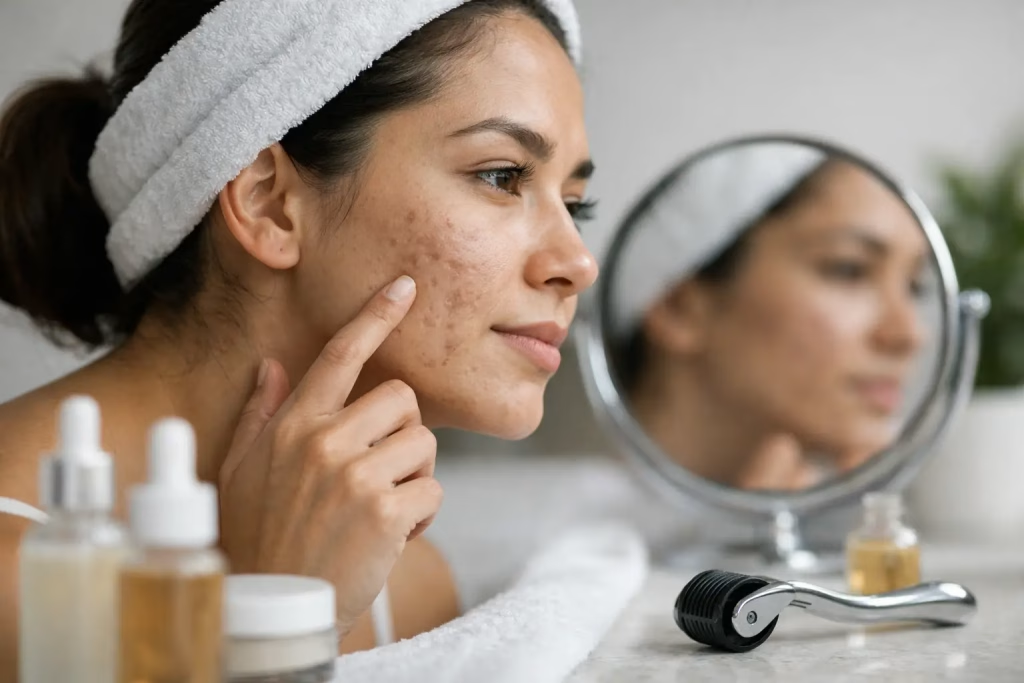
Acne may be long gone, but the marks it leaves behind can change the way skin looks in bright light, under makeup, and in photos. If you are wondering how to treat acne scars, the first thing to know is that there is no single best treatment for everyone. Acne scars vary in depth, shape, color, and skin behavior, so the most effective approach is usually a personalized one.
That is where many people get stuck. They try one cream, one facial, or one device they saw online and expect a complete reset. In reality, acne scar treatment is more precise than that. Results depend on the type of scar, your skin tone, how sensitive your skin is, and how much downtime you can realistically manage.
How to treat acne scars starts with the right diagnosis
Not every mark left after acne is a true scar. Some people are dealing with post-inflammatory hyperpigmentation, which appears as brown or gray marks. Others have post-inflammatory redness, which lingers as pink or red patches. True acne scars involve a change in skin texture, where the skin becomes indented, uneven, or in some cases raised.
This distinction matters because pigment marks and textural scars are treated differently. Dark marks may respond well to topical skin care, chemical peels, and selected laser treatments. Depressed scars often need collagen remodeling treatments such as fractional lasers, radiofrequency microneedling, or subcision. Raised scars may require an entirely different plan.
A proper consultation should assess more than your scars alone. A clinician should also look at your current acne activity, your skin tone, your history of sensitivity or pigmentation, and whether your skin barrier is healthy enough to tolerate treatment well. Starting before active acne is controlled can lead to frustration, because new breakouts can create new scars while you are trying to improve old ones.
The main types of acne scars
Atrophic acne scars are the most common. These are indented scars caused by collagen loss during the healing process. They usually fall into three categories.
Ice pick scars are narrow and deep. They look like tiny punctures in the skin and can be the most stubborn because they extend further down than they appear on the surface.
Boxcar scars are broader with more defined edges. They create a pitted appearance and may respond well to resurfacing treatments depending on depth.
Rolling scars create a wave-like unevenness. The skin looks tethered underneath, which is why these scars often need more than surface treatment alone.
Some patients also have hypertrophic or keloid scars, which are raised rather than indented. These are less common on the face but can appear on the jawline, chest, shoulders, or back. Treating them requires a more cautious, medically directed approach.
Most people do not have just one scar type. They have a mix. That is why combination treatment often gives more elegant, natural-looking improvement than relying on a single modality.
The most effective treatments for acne scars
If you want to know how to treat acne scars with visible improvement, in-office procedures are usually where meaningful change happens. Skin care can support the process, but deeper scars generally need collagen stimulation and structural remodeling.
Laser treatments
Laser technology remains one of the most established options for acne scars. Fractional lasers work by creating controlled micro-injuries in the skin, which trigger collagen renewal over time. This helps soften indented scars and refine texture.
The trade-off is that laser treatments are not one-size-fits-all. Settings need to be tailored carefully, especially for medium to deeper skin tones, where overtreatment can increase the risk of post-inflammatory pigmentation. The right device, the right energy level, and the right treatment interval matter as much as the laser itself.
Pico Laser may also play a role in selected cases, particularly when acne scars are accompanied by uneven tone or lingering pigmentation. It is not always the primary treatment for deep textural scarring, but it can be valuable as part of a broader plan.
RF microneedling
Radiofrequency microneedling is a strong option for patients who want collagen stimulation with less surface disruption than traditional ablative resurfacing. By delivering heat into the deeper layers of the skin through fine needles, it can improve acne scars, pores, and overall skin texture.
This treatment is especially appealing for patients who want a balanced approach – clinically effective, but with a more manageable recovery period. It can also suit patients who are cautious about lasers or who need a treatment strategy that respects pigmentation risk.
Subcision
For rolling acne scars, subcision is often one of the most important treatments, yet it is still less understood by patients. This technique releases the fibrous bands that pull the skin downward. Once those bands are loosened, the skin can lift and heal in a smoother way.
If a scar is tethered, surface treatments alone may only do so much. That is why some scars improve dramatically once subcision is added to the plan. It treats the structure beneath the scar, not just the texture on top.
Chemical peels and skin remodeling treatments
Chemical peels can help with post-acne marks, superficial textural irregularities, and overall skin clarity. They are rarely enough for moderate or deep scarring on their own, but they can be very useful as part of a staged treatment journey.
The same is true for supportive skin treatments that improve hydration, inflammation, and skin recovery. When the skin is calm and healthy, procedural treatments often perform better and heal more beautifully.
How to treat acne scars at home – and what home care cannot do
At-home care matters, but it helps to keep expectations realistic. Skin care cannot remove deep acne scars in the way a procedural treatment can. What it can do is improve skin quality, support collagen health, reduce pigmentation, and help maintain results.
Retinoids are among the most valuable ingredients because they encourage cell turnover and long-term collagen support. They can gradually improve fine textural irregularity and help prevent future breakouts. Vitamin C may help brighten discoloration, while ingredients such as niacinamide can support barrier function and calm inflammation.
Sunscreen is non-negotiable. Without daily UV protection, post-acne marks can linger longer, and freshly treated skin may pigment more easily. This is especially important if you are investing in laser or microneedling treatments and want your results to progress well.
What home care should not do is irritate your skin into chronic redness, peeling, or sensitivity. Over-exfoliating with acids, scrubs, and harsh actives can leave skin inflamed and less able to tolerate the procedures that genuinely improve scars.
Why combination treatment often works best
Acne scars rarely respond perfectly to a single intervention because they do not all form in the same way. One person may need laser resurfacing for boxcar scars, subcision for rolling scars, and pigment correction for post-acne marks. Another may benefit more from RF microneedling with carefully selected maintenance treatments.
This is where a bespoke plan makes a visible difference. The goal is not simply to choose an advanced device. It is to choose the right sequence. Sometimes skin needs calming and acne control first. Sometimes collagen remodeling should begin before pigment work. Sometimes the skin looks smoother after only a few sessions, but deeper scars continue to soften gradually over several months as collagen rebuilds.
At a doctor-led aesthetic clinic such as Kelly Oriental Aesthetic Clinic, this level of planning is what turns treatment into a more refined journey rather than a trial-and-error experience.
What results should you realistically expect?
One of the most reassuring truths about acne scar treatment is that improvement is possible, even when scars have been present for years. The more practical truth is that perfection is rarely the goal. Most patients see the best outcomes when they aim for smoother texture, softer edges, better light reflection, and clearer overall skin quality.
That may sound subtle, but it is often exactly what makes skin look healthier and more polished in daily life. Scars may become less noticeable under natural light, makeup may sit better, and the skin can appear more even from different angles.
The number of treatments needed depends on scar severity and type. Mild scarring may improve with a shorter series, while deeper or mixed scars usually require a more committed plan. It is also worth remembering that collagen remodeling takes time. Results continue to evolve after treatment, and patience is part of the process.
When to seek professional help
If your scars are indented, long-standing, or affecting your confidence, it is worth getting a professional assessment rather than relying on general advice online. The earlier you get a clear diagnosis, the easier it becomes to avoid spending time and money on treatments that are simply not designed for your scar pattern.
It is also wise to seek help if you still have active acne, frequent inflammation, or a history of pigmentation after facials or lasers. In these cases, treatment should be guided carefully to protect skin health while still pursuing visible improvement.
Acne scars can be stubborn, but they are not untreatable. The most effective path is usually thoughtful rather than aggressive – a plan built around your skin, your scar type, and the kind of result that looks naturally refined. When treatment is chosen with precision, smoother skin becomes less about chasing perfection and more about restoring confidence in a way that feels entirely your own.
