
Uncategorized
Ultherapy for Sagging Skin: Is It Worth It?
Sagging rarely arrives all at once. It tends to show up in small, telling ways – the jawline looks softer in photos, the skin under the chin feels less firm, and the brows seem a touch heavier by the end of the day. That is usually when interest in ultherapy for sagging skin begins: not because someone wants to look different, but because they want their features to look more defined, rested, and like themselves again.
Ultherapy has earned its place in aesthetic medicine because it addresses a very specific concern. It is not a facial, and it is not a filler treatment pretending to be a lift. It is an ultrasound-based procedure designed to stimulate collagen deep beneath the skin, in the same foundational layer that surgeons target during a facelift. For patients who want improvement without surgery or extended downtime, that distinction matters.
What ultherapy for sagging skin actually does
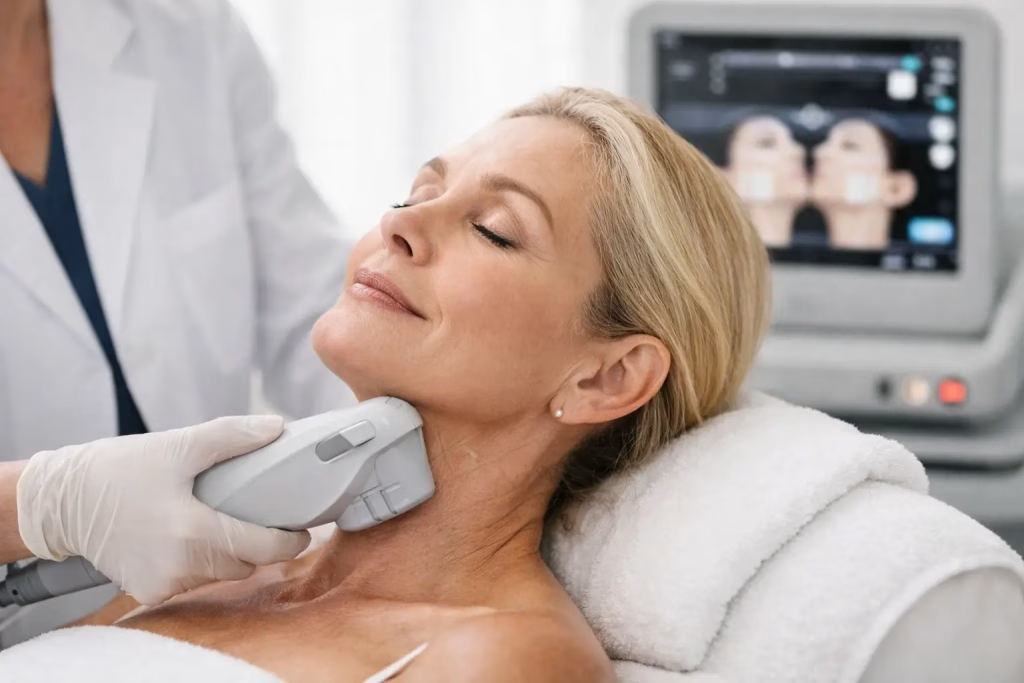
Ultherapy uses focused ultrasound energy to heat tissue at precise depths below the skin’s surface. That controlled thermal effect triggers the body to produce new collagen over time. As collagen rebuilds, the skin gradually becomes firmer and more lifted.
What makes this treatment especially appealing is its ability to reach deeper structural layers while leaving the surface largely untouched. There is no peeling, no ablation, and usually no dramatic post-treatment recovery. Most patients return to normal routines quickly, which is one reason it remains popular among busy professionals who want subtle, credible rejuvenation.
That said, ultherapy is not an instant lift. It is a collagen-stimulation treatment, so the improvement unfolds gradually. Some people notice an early tightening effect, but the more meaningful change typically appears over two to three months, with continued improvement for several months after.
Who is a good candidate for ultherapy for sagging skin?
The best candidate is usually someone with mild to moderate laxity. Think early jowling, a softening jawline, loosening beneath the chin, or brows that have started to descend. In these cases, ultherapy can create a refined, refreshed effect that looks natural rather than obvious.
It is often well suited to patients in their 30s to 50s who are noticing the first structural signs of aging and want to intervene before laxity becomes more advanced. It can also appeal to older patients who are not ready for surgery but still want some degree of lifting.
Where expectations need to be managed is in cases of significant skin laxity, heavy jowls, or substantial excess tissue. Ultherapy can still improve firmness, but it may not deliver the level of correction some patients are hoping for. In those situations, combination treatment plans or surgical options may be more appropriate. A thoughtful consultation matters because the right treatment is not always the most marketed one.
Areas ultherapy can treat
Ultherapy is most commonly used on the lower face, jawline, under-chin area, neck, and brow. These are areas where subtle lifting can make a noticeable difference in overall facial definition.
The brow is often overlooked, but it can be one of the most elegant uses of the treatment. A slight lift in this area can make the eyes appear more open and refreshed without changing expression. Along the jawline and under the chin, the goal is usually better contour rather than dramatic tightening. That nuance is part of what makes the treatment attractive to patients who prefer discreet rejuvenation.
Some providers also use ultherapy on the upper chest to improve lines and creasing. Whether that is worthwhile depends on the quality of the skin and the patient’s broader concerns.
What treatment feels like
One of the most common questions is whether ultherapy is painful. The honest answer is that it can be uncomfortable, though the experience varies. As the ultrasound energy is delivered, patients may feel heat, tingling, or brief zapping sensations under the skin. These sensations are a sign that energy is reaching the targeted tissue.
Comfort management is important. A well-run clinic will talk through options, set expectations clearly, and tailor the experience where possible. Treatment duration depends on the areas being addressed, but a full face and neck session can take around 60 to 90 minutes.
Afterward, the skin may look slightly flushed, and some tenderness, swelling, or sensitivity can occur. Most of these effects are temporary and mild. Because the surface of the skin is not significantly disrupted, downtime is generally limited.
Results: subtle, gradual, and highly dependent on skin quality
Ultherapy rewards patience. This is not the treatment to book if you have a major event next week and want immediate sculpting. Instead, it suits people who appreciate a more progressive shift – the kind of improvement others notice without being able to identify exactly why you look better.
Results depend on age, collagen reserves, degree of laxity, and individual healing response. Some patients see a pleasing lift after one session, while others benefit from maintenance treatments over time. Skin with stronger baseline elasticity tends to respond better than skin that is already heavily lax or depleted.
This is where clinical judgment becomes valuable. If a patient has volume loss, for example, sagging may not be the only issue. Replacing support with injectables or combining treatment with radiofrequency, skin boosters, or regenerative therapies may create a more balanced result than ultherapy alone.
Ultherapy vs other skin-tightening options
Patients often compare ultherapy with Thermage, RF microneedling, or injectable treatments. Each serves a different purpose.
Ultherapy is best known for lifting and tightening at deeper structural levels using ultrasound. Thermage uses radiofrequency and is often favored for overall tightening and smoothing, especially where crepey skin texture is part of the concern. RF microneedling can be excellent for skin quality, pores, fine lines, and mild laxity, with added remodeling closer to the skin’s surface. Injectables can restore volume or relax muscles, but they do not replace a true skin-tightening device.
So which is best? It depends on what is actually causing the face to look tired or less defined. Sagging, deflation, heaviness, skin texture, and fat distribution are different problems, even if they show up at the same time in the mirror. The most elegant outcomes usually come from treating the right problem first, not from chasing a trend.
Why personalization matters more than the device itself
A premium treatment experience is not just about having the machine. It is about proper assessment, thoughtful mapping, and a plan that respects both anatomy and aesthetics. Two patients can present with “sagging skin” and need completely different approaches.
One may have early laxity and do beautifully with ultherapy alone. Another may need contouring under the chin, collagen stimulation in the lower face, and volume restoration at the cheeks to create meaningful lift. The device matters, but the diagnosis matters more.
This is why doctor-led consultation remains essential in aesthetic medicine. The best outcomes come from understanding facial structure, tissue quality, and the patient’s comfort with gradual versus more visible change. In a refined clinical setting such as Kelly Oriental Aesthetic Clinic, that personalized approach is part of the treatment itself.
When ultherapy may not be the right choice
Ultherapy is a strong option, but not a universal answer. If the skin is very thin and crepey, another modality may better address surface quality. If there is pronounced heaviness or advanced jowling, surgery may deliver a more satisfying result. If the main concern is facial hollowing rather than laxity, collagen stimulation alone may not restore youthful balance.
This is not a weakness of the treatment. It simply reflects good aesthetic medicine. The goal should never be to fit every face into one procedure. It should be to choose the approach that creates the most natural and worthwhile improvement.
Is it worth it?
For the right patient, yes. Ultherapy can be worth it when the concern is genuine skin laxity, expectations are realistic, and the desire is for subtle lifting with little interruption to daily life. It is particularly appealing for patients who want non-surgical rejuvenation that looks polished rather than overdone.
Its value becomes less clear when someone expects dramatic, immediate change or is trying to correct concerns that stem from volume loss, excess fat, or advanced tissue descent. In those cases, a more layered plan usually offers better value than forcing a single treatment to do everything.
The most satisfying aesthetic results rarely come from doing the most. They come from doing the right thing at the right time. If your reflection is starting to show softer contours and less definition, ultherapy may be a beautifully measured place to begin.
