

Uncategorized
How to Treat Pigmentation Effectively
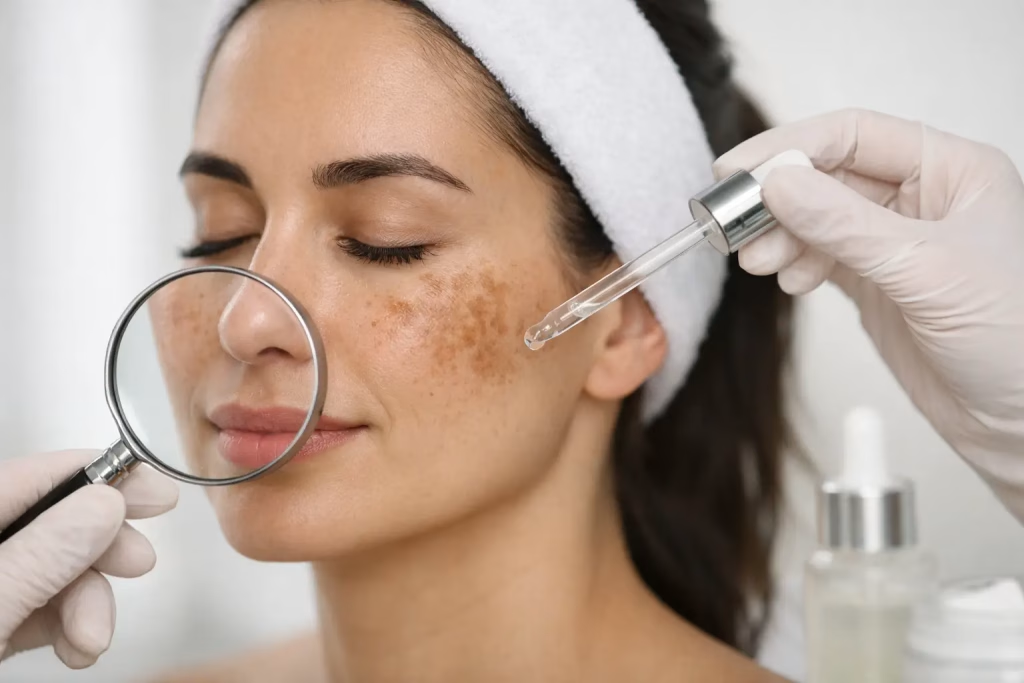
Pigmentation rarely appears all at once. More often, it creeps in gradually – a few sun spots near the cheekbones, lingering acne marks that stay longer than expected, or patches of melasma that seem to deepen no matter how carefully you apply concealer. If you are wondering how to treat pigmentation, the first step is understanding that not all discoloration behaves the same way, and not every treatment should be used in the same way.
For many patients, pigmentation feels frustrating because it can make skin look tired, uneven, or older than it is. The challenge is that dark spots are not a single condition. They are a visible result of excess melanin, but the cause can range from sun exposure and inflammation to hormones, heat, and genetics. Effective treatment starts with precision, not guesswork.
How to treat pigmentation starts with the right diagnosis
Pigmentation is a broad term, but in practice, several common patterns tend to show up. Sun spots, often called solar lentigines, usually develop after years of UV exposure and are common on the cheeks, forehead, and temples. Post-inflammatory hyperpigmentation appears after acne, eczema, friction, or irritation. Melasma tends to present as patchy, symmetrical discoloration and is often influenced by hormones, sun exposure, and heat.
This distinction matters because each type responds differently. Sun spots often improve well with targeted laser treatments. Post-inflammatory pigmentation may respond to brightening skincare and carefully selected energy-based treatments, but overly aggressive procedures can make it worse. Melasma is usually the most complex, because it can recur easily and often needs a long-term management plan rather than a one-time fix.
A proper assessment should look at skin tone, pigment depth, sensitivity, triggers, and lifestyle. That is why medically guided treatment tends to produce better outcomes than self-prescribing strong acids or buying every brightening serum on the market.
The foundation of pigmentation treatment is sun protection
If there is one non-negotiable part of how to treat pigmentation, it is daily sun protection. Without it, even the most advanced treatments can be undermined.
UV exposure stimulates melanin production, and visible light can also worsen certain forms of pigmentation, especially melasma. In a warm, bright climate, this becomes even more relevant. A broad-spectrum sunscreen with high SPF should be used every morning, with reapplication if you are outdoors, near windows for long periods, or sweating. Hats, sunglasses, and avoiding peak sun hours also make a meaningful difference.
Patients sometimes feel disappointed when they invest in clinical procedures but still see recurrence. In many cases, the issue is not that the treatment failed. It is that pigmentation is highly reactive, and without daily protection, the skin continues receiving signals to produce more pigment.
Skincare can fade pigmentation, but consistency matters more than intensity
Topical skincare remains an essential part of treatment, especially for mild discoloration or for maintaining results after procedures. The key is choosing ingredients that regulate pigment production without causing unnecessary irritation.
Vitamin C can help brighten the skin and defend against oxidative stress. Retinoids encourage cell turnover and can gradually soften uneven tone. Ingredients such as niacinamide, tranexamic acid, azelaic acid, kojic acid, and arbutin are also commonly used in pigmentation-focused routines. In some cases, prescription lightening agents may be appropriate, but they should be monitored carefully and used as part of a structured plan.
More is not always better. Over-exfoliating, layering too many actives, or using harsh formulas too often can trigger inflammation, which may deepen pigmentation rather than improve it. This is especially true in skin that is sensitive, acne-prone, or prone to post-inflammatory marks.
A refined routine is usually more effective than an aggressive one. Cleanse gently, support the skin barrier, use targeted pigment-correcting ingredients, and stay disciplined with sunscreen. Results from skincare are often gradual, but with the right formulation and enough time, they can be significant.
Professional treatments for pigmentation
When pigmentation is stubborn, deeper, or more diffuse, professional treatment may be the best way forward. The right approach depends on the type of pigmentation, its depth in the skin, and how reactive your skin is.
Laser treatments are among the most established options for visible discoloration. Pico Laser is widely used for pigmentation because it delivers ultra-short pulses of energy that break down pigment particles with precision while minimizing heat. This makes it a strong option for many patients who want clearer, brighter-looking skin with limited downtime. It can be particularly effective for sun spots, certain acne marks, and overall skin tone refinement.
That said, not every pigmented lesion should be treated in the same setting or with the same settings. Melasma, for example, requires a more cautious strategy. It may improve with laser, but only when carefully selected and paired with the right topical care and maintenance. If treatment is too aggressive, rebound pigmentation is possible.
Chemical peels can also help by encouraging turnover of pigmented surface cells and improving overall skin clarity. These can be useful for mild post-inflammatory hyperpigmentation and dullness, though the peel type and strength must be matched carefully to the skin. Stronger is not necessarily better, especially in deeper skin tones or reactive complexions.
Certain supportive treatments can complement pigmentation care by calming inflammation, improving hydration, and helping the skin recover more gracefully. This matters because a healthier skin barrier often responds better to brightening treatments and is less likely to become irritated along the way.
Why combination treatment often works best
Pigmentation usually responds best to a layered strategy. A patient may need one approach to break up existing pigment, another to suppress future pigment production, and a third to protect and stabilize the skin. This is why a personalized treatment plan often delivers more elegant, longer-lasting results than a single standalone procedure.
For example, someone with post-acne marks might benefit from a combination of medical-grade skincare, selected laser sessions, and barrier-supportive treatments between visits. A patient with melasma may need pigment-regulating skincare, strict sun protection, and very conservative in-clinic sessions spaced thoughtfully over time. Someone with scattered sun spots may respond quickly to laser, but still need maintenance to prevent new spots from forming.
At a doctor-led aesthetic clinic such as Kelly Oriental Aesthetic Clinic, this kind of treatment planning is where the experience becomes more bespoke. It is not simply about choosing a machine. It is about reading the skin carefully, respecting its thresholds, and designing a treatment journey that prioritizes both results and skin stability.
How long does it take to see improvement?
This depends on the cause and severity of the pigmentation. Some superficial sun spots may respond relatively quickly after a few sessions. Post-inflammatory pigmentation can take weeks to months to fade, even with treatment. Melasma often improves in cycles and may require maintenance over the long term.
This can feel slow, especially if you are used to instant cosmetic fixes. But pigmentation treatment is rarely about speed alone. The goal is not only to lighten visible discoloration, but to do so without triggering sensitivity, rebound darkening, or uneven results.
It is also worth setting realistic expectations. Many cases improve beautifully, but perfection is not always the right benchmark. Skin can look significantly clearer, brighter, and more even long before every trace of pigment disappears.
Common mistakes that can worsen pigmentation
One of the most common mistakes is treating all dark spots as the same issue. Another is using too many active ingredients at once in an attempt to force faster results. Heat exposure, frequent picking, unprotected sun exposure, and inconsistent skincare also work against progress.
Even certain facials or at-home devices can aggravate pigmentation if they create repeated inflammation. For patients prone to melasma or post-inflammatory marks, restraint is often part of good treatment.
That is why expert guidance matters. The best pigmentation plans are not built around trends. They are built around the biology of your skin.
Clearer, more even skin usually comes from a calm, measured approach – one that treats pigment with precision, protects the skin daily, and respects that lasting results are achieved through consistency rather than force.
