

Uncategorized
Facial Versus Medispa Treatment: Which Fits?
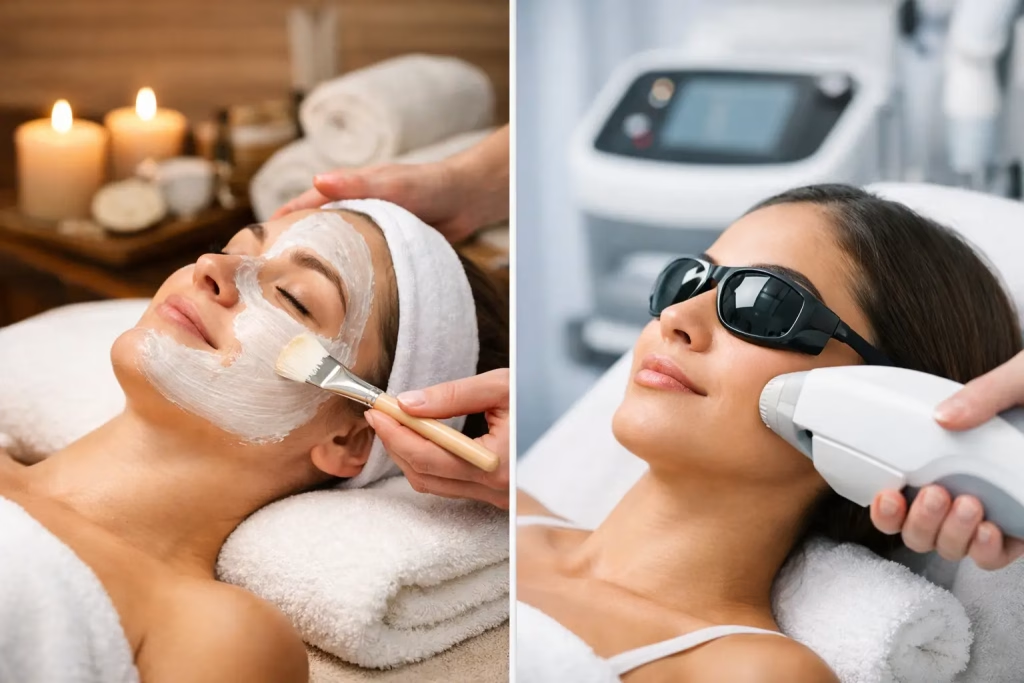
A glowing complexion can come from very different kinds of appointments. That is why the question of facial versus medispa treatment matters more than many people expect. On the surface, both can leave skin looking fresher. In practice, they serve different goals, involve different levels of technology and clinical oversight, and suit different stages of a person’s skin journey.
For anyone balancing busy workdays, social commitments, and a desire for visible yet refined results, choosing correctly saves more than time. It shapes how effectively you address concerns such as dehydration, dullness, congestion, acne marks, fine lines, or early skin laxity.
Facial versus medispa treatment: the core difference
A traditional facial is generally centered on maintenance, comfort, and surface-level skin improvement. It often includes cleansing, exfoliation, extraction, massage, masks, and topical serums selected to suit the skin at that moment. The experience can be deeply relaxing and is often ideal for regular upkeep.
A medispa treatment sits in a more advanced category. It usually combines the restorative atmosphere of a spa with evidence-based technologies, stronger treatment protocols, and more targeted outcomes. Depending on the clinic, this may include Hydrafacial, LDM, laser-based rejuvenation, skin boosters, radiofrequency, ultrasound lifting, or other device-led treatments developed to treat specific concerns with greater precision.
The easiest way to think about it is this: a facial refreshes the skin you have, while a medispa treatment is more likely to change the behavior and quality of the skin over time.
What results should you realistically expect?
A facial can deliver immediate softness, hydration, and a healthy-looking glow. If your skin is tired after travel, city exposure, lack of sleep, or a week of makeup and sunscreen buildup, a well-executed facial can restore comfort quickly. It is especially useful before an event when you want skin to look smoother and more luminous without much downtime.
The limitation is that facials tend to work best on the uppermost layers of the skin. If your concerns are persistent pigmentation, acne scarring, enlarged pores, rosacea-prone sensitivity, or noticeable sagging, a facial may feel pleasant but not transformative.
A medispa treatment is typically chosen for more visible and cumulative results. This does not always mean aggressive intervention. Some options focus on deep hydration, lymphatic support, or skin barrier recovery. Others are designed to stimulate collagen, improve elasticity, reduce uneven tone, or refine skin texture over a structured series of sessions.
That difference in ambition matters. If your priority is maintenance, a facial may be enough. If your priority is correction or long-term rejuvenation, medispa care is often the more strategic choice.
When a facial is the better fit
There is still a strong place for classic facials within a high-quality skin plan. Not every concern requires medical-grade intervention, and not every client wants technology-driven treatments at every visit.
A facial is often the better fit when your skin concerns are mild and temporary. Think dullness, light congestion, dehydration, or a general need for reset. It also suits those who are new to skincare appointments and want to begin with a gentler introduction before progressing into more advanced care.
Comfort is another factor. Some people value the ritual as much as the result. The massage, warmth, and tactile experience can reduce tension and make skin maintenance feel restorative rather than clinical. For busy professionals, that balance of visible freshness and emotional reset can be genuinely worthwhile.
There are also moments when a facial is the safer option. If your skin barrier is compromised, if you have recently overused actives at home, or if you need a conservative treatment before an important event, a gentle facial may be preferable to stronger modalities.
When a medispa treatment makes more sense
A medispa treatment tends to be the better fit when your skin goals are specific, measurable, and harder to solve with topical care alone. If you have spent months trying brightening serums for pigmentation or exfoliating products for texture and still feel stuck, this is usually the point where device-led or clinically supervised treatment becomes relevant.
For example, dehydrated skin may benefit from a Hydrafacial or a technology-supported protocol that cleanses, infuses, and improves product absorption more effectively than a standard facial. Skin showing early laxity may respond better to collagen-stimulating options such as radiofrequency or ultrasound-based lifting. Acne scars and lingering post-inflammatory marks often need a more targeted plan involving lasers, microneedling, or regenerative treatments.
This is where personalization becomes essential. A polished medispa environment should never offer advanced treatment as a one-size-fits-all menu item. The right plan depends on skin tone, sensitivity, lifestyle, tolerance for downtime, and how quickly you want to see change.
Facial versus medispa treatment for common concerns
If your main concern is dryness, both may help, but not in the same way. A facial can replenish moisture and instantly improve comfort. A medispa treatment may go deeper by improving hydration pathways, reducing inflammation, or enhancing the skin’s ability to retain moisture over time.
If your concern is acne or congestion, a facial can help with superficial buildup and extraction. But frequent breakouts, acne scarring, or oil imbalance usually need a more structured medical-aesthetic plan.
If pigmentation is the issue, facials may brighten the skin temporarily, but they rarely address stubborn discoloration at a meaningful level. Medispa options are generally better suited for this, especially when treatment is paired with disciplined skincare and sun protection.
If your focus is lifting and firming, a facial can create a short-lived plumping effect. It will not reproduce the collagen remodeling or deeper tissue support possible with advanced technologies.
And if sensitivity or redness is your concern, the answer depends. Some facials can calm the skin beautifully. Some may irritate it if they rely on overly active ingredients or vigorous extraction. Likewise, medispa care can be highly effective for redness-prone skin when the technology and protocol are chosen carefully, but not every advanced treatment is appropriate for reactive skin.
The role of medical oversight
One of the biggest distinctions in facial versus medispa treatment is supervision. In a standard facial setting, treatment is usually therapist-led. In a medispa environment, there may be therapist support, but treatment planning often benefits from clinical assessment, especially for concerns that overlap with inflammation, pigmentation patterns, collagen loss, or post-acne repair.
That medical element matters because skin does not always behave in a linear way. A person may think they need a brightening treatment when the primary issue is irritation. Another may chase pore reduction when dehydration and impaired barrier function are making texture appear worse. The more complex the concern, the more valuable professional diagnosis becomes.
In a doctor-led aesthetic setting, the treatment journey can also evolve more intelligently. A client might begin with calming and hydration, move into correction with lasers or collagen stimulation, and then shift into maintenance. That sequencing is often what creates elegant, natural-looking outcomes.
Cost, downtime, and commitment
A facial is generally more affordable per session and usually comes with little to no downtime. That makes it appealing for regular maintenance or occasional self-care. The trade-off is that results are often shorter-lived and may require more frequent visits to maintain the same level of freshness.
A medispa treatment typically carries a higher upfront investment. It may also involve temporary redness, dryness, or mild recovery depending on the modality. In return, it can produce deeper and more cumulative improvement. For many clients, that makes it more efficient over time, especially when treating a concern that standard facials cannot meaningfully shift.
Commitment is another point of difference. A single facial can be satisfying on its own. Medispa care often works best as a curated series, supported by home care and periodic review. That may sound like more effort, but it usually leads to a more coherent result.
How to choose well
The best choice is not about which option sounds more luxurious or more advanced. It is about what your skin actually needs now.
If you want relaxation, immediate radiance, and gentle upkeep, a facial may be exactly right. If you want visible correction, structural improvement, or a strategic answer to stubborn skin concerns, a medispa treatment is likely the better investment.
At a premium aesthetic clinic such as Kelly Oriental Aesthetic Clinic, the most thoughtful approach is often not facial or medispa in absolute terms. It is knowing when to use each. Skin maintenance, correction, and rejuvenation do not have to compete. They can work together as part of a bespoke plan that respects both results and experience.
The smartest skin decision is rarely the most dramatic one. It is the one that meets your skin where it is, with enough precision to improve what matters and enough restraint to keep the result looking beautifully like you.
