

Uncategorized
Skin Treatment for Wrinkles That Works
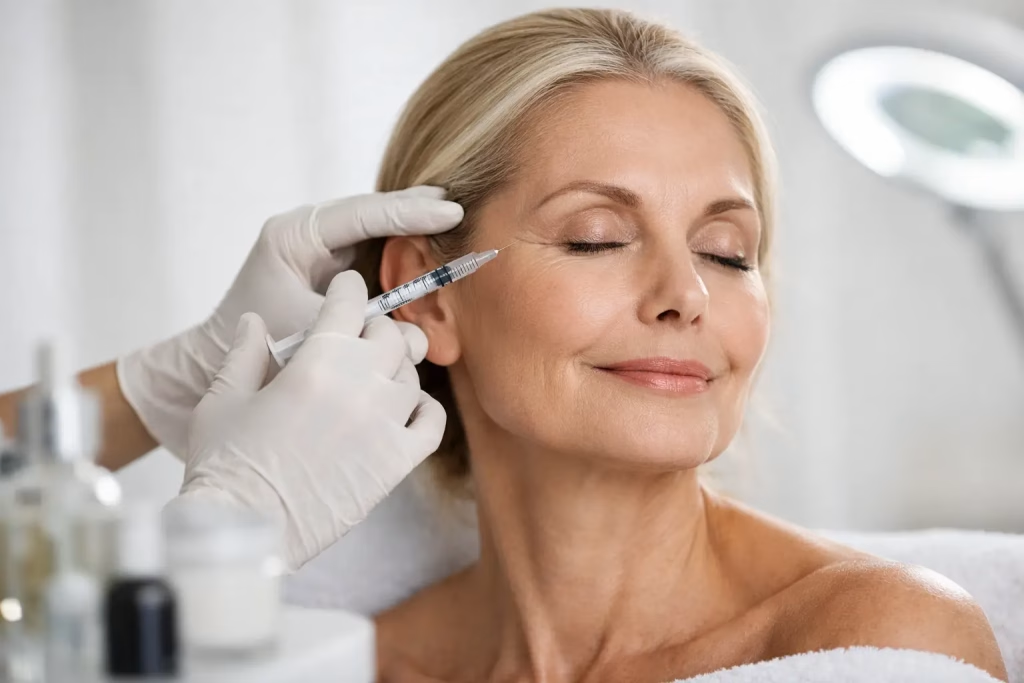
Wrinkles rarely appear all at once. They tend to arrive gradually – first as makeup settling into fine lines, then as creases that linger after expression, and later as deeper folds that change how the face reflects light. The right skin treatment for wrinkles is not simply about smoothing the surface. It is about understanding why the skin is aging, which layers are involved, and which treatments can restore a fresher, more refined look without making the face appear overdone.
That is where many people feel overwhelmed. There is no single anti-aging treatment that suits every face, every age, or every stage of skin aging. Fine lines from dehydration need a different approach than etched forehead lines, and early laxity calls for a different strategy than volume loss around the cheeks or mouth. A more elegant result comes from choosing treatments with precision rather than chasing trends.
What causes wrinkles to form
Wrinkles develop for several reasons, and they rarely stem from just one. Natural collagen decline is a major factor. As the skin ages, it becomes thinner, less elastic, and slower to repair itself. Repeated facial movement also plays a role, especially around the eyes, forehead, and mouth, where expression lines gradually become visible even at rest.
Sun exposure is another key driver. UV damage accelerates collagen breakdown and contributes to rough texture, uneven pigmentation, and premature wrinkling. Lifestyle factors such as stress, smoking, poor sleep, and dehydration can make skin appear more creased and fatigued. In some patients, the issue is not only the skin itself but also the support structure underneath. Loss of fat, reduced bone support, and sagging tissue can deepen folds and create a more aged appearance.
This is why effective wrinkle treatment begins with diagnosis. If the wrinkle is caused by movement, relaxing the muscle may help. If it is caused by laxity, energy-based lifting may be more appropriate. If the skin looks crepey, dry, or dull, the focus may need to shift toward resurfacing, hydration, and collagen stimulation.
Skin treatment for wrinkles is rarely one-size-fits-all
The most successful wrinkle treatment plans are tailored, layered, and realistic. In a clinical setting, the goal is not to erase every line. It is to improve skin quality, soften deeper creases, and preserve natural facial expression. This approach tends to deliver results that look polished rather than obvious.
Age matters, but not as much as skin condition. A patient in their early 30s may already show signs of sun damage and dynamic lines, while someone in their late 40s may have relatively smooth skin but increasing laxity along the jawline. Ethnicity, skin sensitivity, lifestyle, and tolerance for downtime also shape the best treatment plan.
For many patients, wrinkle correction works best in phases. First, address the primary cause. Then refine the texture, hydration, and firmness of the skin over time. This creates a result that feels both visible and sustainable.
The most effective treatment categories for wrinkles
Injectables remain one of the most precise ways to treat expression-related wrinkles. These treatments are often used for forehead lines, frown lines, and crow’s feet, where repeated muscle movement causes creasing. When performed with restraint and expertise, the effect is softened, refreshed, and controlled – not frozen.
For wrinkles linked to volume loss, carefully placed fillers may restore support in areas such as the cheeks, temples, or nasolabial folds. This is less about adding fullness and more about rebuilding structure so the face appears smoother and less tired. The trade-off is that fillers must be selected conservatively. Too much product, or product placed in the wrong layer, can make the face look heavy rather than youthful.
Energy-based devices are especially valuable when skin laxity is part of the picture. Treatments such as Thermage and Ultherapy are often chosen to stimulate collagen and tighten skin over time. Thermage uses radiofrequency energy to improve firmness, while Ultherapy uses focused ultrasound to target deeper structural layers. Both can support a more lifted appearance, particularly along the lower face, jawline, and neck. These treatments do require patience. Results are gradual, and the best candidates are those with mild to moderate laxity rather than very advanced sagging.
For patients concerned with texture, fine lines, pores, and overall skin quality, resurfacing and rejuvenation treatments can be highly effective. Pico Laser may help improve photoaging and uneven tone, while radiofrequency microneedling platforms such as Sylfirm X can address both texture and collagen remodeling. This category is especially useful when wrinkles are accompanied by dullness, enlarged pores, or acne scarring. The skin often looks smoother and more refined because the treatment is improving the canvas, not just targeting one isolated line.
Skin boosters and hydration-focused treatments also deserve attention. When skin is dehydrated, wrinkles appear more prominent. Injectable skin boosters and professional facial technologies can improve luminosity, elasticity, and moisture retention, which helps the skin reflect light more evenly. These treatments do not replace lifting or muscle-relaxing procedures, but they can elevate the overall result beautifully.
How to choose the right wrinkle treatment
A thoughtful treatment plan starts with the mirror test, but not in the way most people think. Rather than focusing on the deepest line first, it helps to ask what is making the face look older overall. Is it movement, sagging, volume loss, rough texture, or fatigue? Once that is clear, treatment choices become much more strategic.
If the lines disappear when the face is at rest, the issue is usually dynamic and often responds well to injectable wrinkle relaxers. If the lines remain visible even without expression, the skin may need resurfacing, collagen stimulation, or structural support. If the lower face looks heavier or less defined, lifting and tightening technologies may be more suitable than surface treatments alone.
Downtime is another practical consideration. Some patients want progressive improvement with little interruption to work or social life. Others are comfortable with a short recovery period in exchange for more intensive remodeling. There is also the question of maintenance. Wrinkle treatment is rarely a one-time event. Most results require upkeep, whether through periodic injectables, annual energy-based treatments, or a regular schedule of skin rejuvenation sessions.
This is where a personalized consultation becomes valuable. A doctor-led assessment can identify what the skin actually needs, rather than what is currently popular. For patients seeking a more elevated aesthetic experience, that level of customization makes a visible difference.
Why combination treatment often delivers the best result
The face does not age in one layer, so wrinkle treatment should not be limited to one layer either. A refined outcome often comes from combining complementary treatments. For example, expression lines may be softened with injectables, while skin laxity is addressed with Thermage or Ultherapy, and texture is improved with Sylfirm X or laser rejuvenation. Hydration-focused treatments can then support glow and skin resilience.
This kind of layering tends to look more natural because each treatment is doing a specific job. Rather than over-relying on one modality, the face is restored in a balanced way. The forehead remains expressive, the jawline appears cleaner, and the skin itself looks healthier and more luminous.
At a premium aesthetics clinic such as KOAC, this curated approach aligns with how many patients want to age – gracefully, confidently, and with discretion. The objective is not to chase perfection. It is to look well-rested, polished, and unmistakably like yourself.
What to expect from treatment results
Wrinkle treatments can be highly effective, but expectations should remain grounded in skin biology. Fine lines and early signs of aging often respond more quickly than deep-set folds that have developed over many years. Some treatments show visible improvement within days or weeks, while collagen-stimulating procedures may continue working for several months.
There are also limits. Very deep wrinkles may soften significantly without disappearing fully. Skin tightening can improve contour, but it does not replicate surgery. Injectables can refresh the upper face beautifully, but they cannot correct sun-damaged texture on their own. Honest treatment planning matters because it protects both the result and the patient experience.
The best outcomes usually come from consistency. Preventive care in the 30s and 40s can delay more advanced signs of aging, while a well-designed maintenance plan helps preserve results over time. Daily sun protection, medical-grade skincare, and timely in-clinic treatments all work together. Wrinkle correction is most effective when viewed not as a quick fix, but as part of a longer-term skin strategy.
When the treatment is matched properly to the cause, wrinkles can be softened in a way that feels elegant, not artificial. That is often the difference between looking treated and simply looking exceptionally well cared for.
