
Uncategorized
Face Slimming Treatment Guide for Real Results
May
A slimmer-looking face is rarely about one single fix. In practice, facial contour depends on bone structure, muscle size, fat distribution, skin laxity, and even daily habits such as salt intake or teeth grinding. That is why a thoughtful face slimming treatment guide should begin with diagnosis, not trends. What looks like a “chubby face” in photos may actually be a strong masseter muscle, early jowling, submental fullness under the chin, or mild skin sagging that softens the jawline.
For patients who want refinement without surgery, the good news is that modern aesthetic medicine offers several ways to create a more sculpted profile. The less obvious truth is that the best option depends entirely on what is making the face appear wider or heavier in the first place. A treatment that sharpens one person’s lower face can look ineffective, or simply inappropriate, on someone else.
A face slimming treatment guide starts with facial anatomy
When the goal is a more defined lower face, the first question is simple: what needs to be reduced, relaxed, tightened, or supported?
A broad lower face often comes from enlarged masseter muscles. This is common in people who clench their jaw, grind their teeth, or naturally have stronger chewing muscles. In these cases, softening the muscle can gradually narrow the lower face and create a gentler V-shape.
For others, the main concern sits under the chin. Submental fullness can blur the angle between the chin and neck, even in people who are otherwise slim. Genetics plays a role here, so this is not always a weight issue. If fat is the main cause, treatment needs to address fat reduction rather than muscle.
Then there is skin quality. As collagen declines, the jawline can lose structure, and early sagging around the cheeks or jowls can make the face look heavier. In that case, slimming is less about removing volume and more about restoring definition with tightening or lifting technologies.
Sometimes it is a combination. A patient may have strong masseters, a small pocket of double chin fullness, and mild laxity along the jawline. That is where a personalized plan matters most.
The main treatment categories for facial slimming
Non-surgical facial slimming generally falls into three categories: muscle reduction, fat reduction, and skin tightening or lifting. Some patients also benefit from contour-balancing treatments that improve harmony rather than literally making the face smaller.
Masseter slimming for a wider jawline
If the lower face appears square because the masseter muscles are prominent, injectable treatment into the muscle is often the most direct option. By relaxing the masseter over time, the muscle becomes less bulky and the jawline appears slimmer.
This is not an overnight transformation. Most patients notice gradual refinement over several weeks, with clearer results developing over two to three months. It is subtle in the best way – people tend to notice that the face looks softer or more refined rather than obviously treated.
The trade-off is that results are temporary and need maintenance. It is also a treatment that requires precision. Over-treatment can affect facial balance or chewing comfort, while under-treatment may produce little visible change. For patients with naturally narrow or sunken cheeks, aggressive jaw slimming may not be flattering.
Double chin and localized fat reduction
When fullness under the chin is the issue, the strategy changes. Fat reduction treatments aim to decrease the pocket of adipose tissue that blunts the chin-neck angle. This can create a cleaner profile and improve facial definition in a way that reads as slimmer overall.
Some patients are good candidates for injectable fat-dissolving treatments. Others may benefit from energy-based contouring technologies that help target small fat deposits while supporting skin quality. These treatments tend to work best for mild to moderate fullness rather than significant skin laxity.
This category requires patience. The process is usually gradual and may involve a series of sessions. Swelling can also be part of recovery, so the final result takes time to reveal itself. A good consultation should make that timeline clear from the beginning.
Skin tightening and lifting for definition
A face can appear heavier when the skin no longer holds the jawline cleanly. In these cases, lifting and tightening treatments can make a meaningful difference. Technologies such as ultrasound and radiofrequency are often used to stimulate collagen, improve tissue support, and sharpen facial contours over time.
For patients with mild jowling, early lower-face laxity, or softening around the jawline, treatments like Ultherapy or Thermage may be considered as part of a contouring plan. These are especially relevant for those who do not need volume reduction so much as better structure.
Results are not identical for everyone. Skin tightening works best when there is still enough collagen potential and the degree of sagging is not too advanced. It can be elegant and natural, but it is not a surgical substitute.
How combination treatment often gives the best result
The most sophisticated approach to facial slimming is often layered rather than singular. A patient with bulky masseters may also have early jawline laxity. Slimming the muscle alone can reduce width, but pairing that with tightening can improve contour much more convincingly.
Similarly, someone with a double chin may need fat reduction plus collagen stimulation so the skin contracts smoothly as fullness decreases. Without that second step, the result may be less crisp than expected.
At a doctor-led aesthetic clinic, this is where treatment planning becomes more than menu selection. The goal is not simply to offer more, but to sequence treatments in a way that respects anatomy, recovery, and facial harmony. Kelly Oriental Aesthetic Clinic takes this tailored view, which is especially important for patients who want visible refinement without an overdone look.
What to expect from a consultation
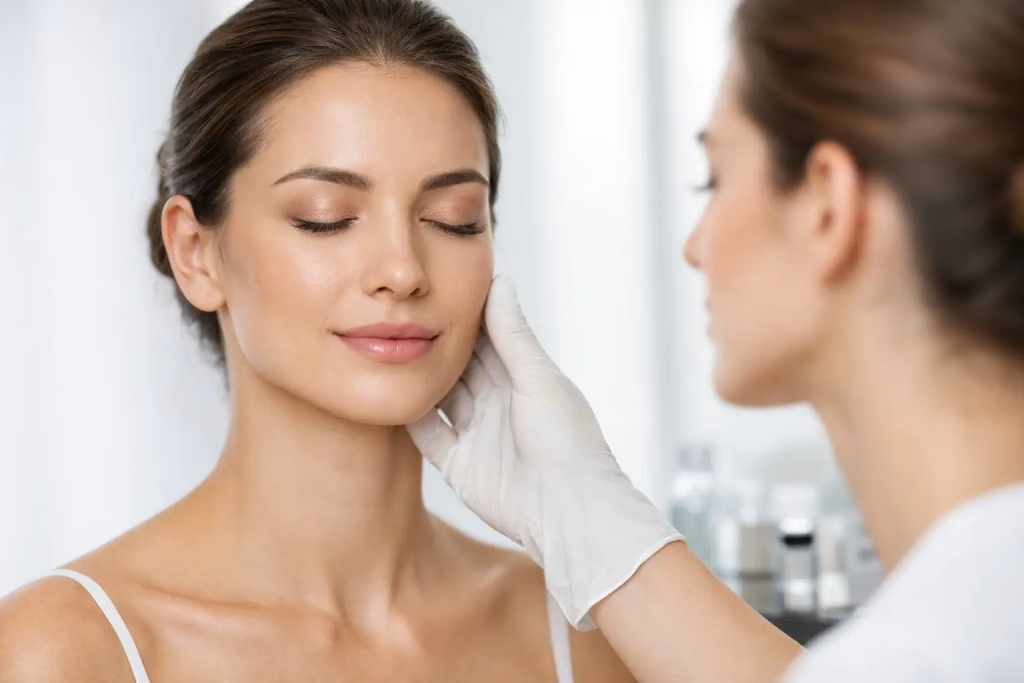
A proper consultation should assess the face from the front, side, and three-quarter view. Static photos and facial movement both matter. The practitioner should examine muscle activity, skin thickness, chin projection, submental fullness, and signs of laxity.
This step is important because not every patient asking for a slimmer face should actually be made smaller. In some faces, strategic support at the chin or jawline can create better balance than reducing volume. In others, treating only the lower face can make the mid-face look heavier by comparison. Good aesthetics is rarely about a single complaint in isolation.
You should also expect a realistic discussion of timelines. Muscle slimming may take weeks. Tightening treatments often continue improving over months. Fat reduction may require multiple sessions. If a clinic promises immediate dramatic slimming with no nuance, that is usually a reason to pause.
A realistic face slimming treatment guide for results and maintenance
The most satisfying results tend to be refined, not drastic. Facial slimming works best when it restores proportion, sharpens the jawline, and removes heaviness that does not belong there. The aim is not to erase character from the face, but to create a more polished version of it.
Maintenance depends on the treatment type. Muscle-reducing injectables wear off and generally need repeat sessions. Skin tightening may be spaced further apart, though aging continues and upkeep is part of the journey. Fat reduction can be long-lasting if the treatment successfully targets fat cells, but overall weight changes and natural aging still influence the face.
Lifestyle matters too. Poor sleep, chronic jaw clenching, high sodium intake, and weight fluctuations can all affect facial fullness. While these factors do not replace clinical treatment, they do shape how long results appear at their best.
Who is a good candidate for non-surgical face slimming?
The ideal candidate wants definition, not transformation. They may feel their face looks broad in photos, their jawline has become less sharp, or their profile appears softer than it used to. They usually prefer discreet, staged improvement and value treatment plans that feel considered rather than aggressive.
Patients with severe laxity, heavy jowls, or more advanced structural aging may still benefit from non-surgical treatment, but expectations need to be carefully managed. Sometimes the right answer is improvement rather than perfection.
There is also a broader aesthetic point worth making. A slim face is not automatically a youthful face. Excessive volume loss can age the appearance. The most elegant outcomes preserve softness where it flatters and create definition where it matters.
That is why the best face slimming treatment guide is not really about choosing the most popular procedure. It is about understanding what your face needs, what it does not, and how to refine it with restraint. When treatment is matched to anatomy and delivered with precision, the result tends to feel less like a cosmetic change and more like seeing your features come back into focus.
