
Uncategorized
Guide to Non Surgical Skin Lifting
May
When your reflection looks a little more tired, heavy, or less defined than it used to, the question is rarely whether aging has started. It is usually which treatment will actually make a visible difference without surgery, long downtime, or an overdone result. That is where a guide to non surgical skin lifting becomes genuinely useful – not as a trend report, but as a way to understand what these treatments can and cannot do.
For many patients, the goal is not dramatic change. It is a cleaner jawline, softer jowls, firmer cheeks, less creasing around the mouth, and skin that looks rested rather than slack. Non-surgical lifting treatments can address these concerns well, but only when the technology matches the skin quality, degree of laxity, and pace of results you are comfortable with.
What non-surgical skin lifting actually means
Non-surgical skin lifting refers to treatments designed to tighten, firm, and support the skin without incisions or surgical repositioning of tissue. Most work by delivering controlled energy into the skin or underlying support layers to stimulate collagen remodeling. Over time, that collagen response can improve skin texture, elasticity, and contour.
This is why results tend to look progressive rather than immediate. In many cases, your skin is not being physically pulled upward on the day of treatment. Instead, it is being prompted to rebuild structure from within. That distinction matters because expectations shape satisfaction.
A good candidate is often someone with mild to moderate laxity, early jowling, softening around the lower face, or a general loss of firmness. If there is significant sagging or substantial excess skin, a surgical lift may still produce the most meaningful outcome. There is no loss of elegance in saying that clearly.
A practical guide to non surgical skin lifting options
Not all lifting treatments do the same job. Some target deeper structural layers. Others improve the skin surface and support firmness indirectly by refining texture and encouraging collagen renewal.
Ultrasound-based lifting
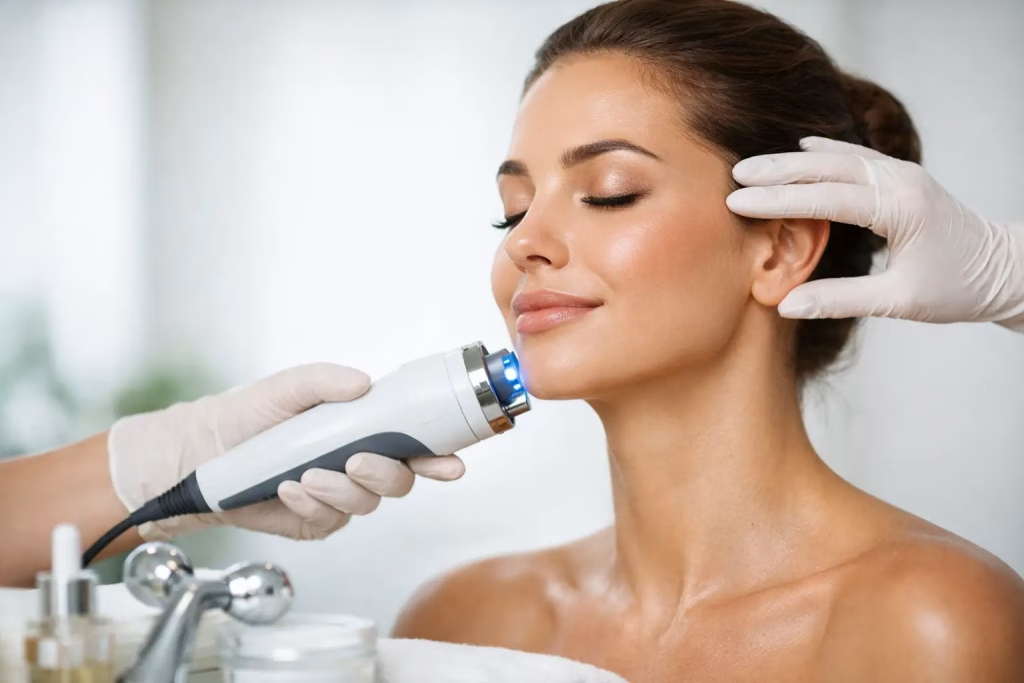
Focused ultrasound treatments are often chosen for patients concerned about sagging along the brows, cheeks, jawline, or under the chin. These technologies deliver energy at precise depths, including deeper foundational layers that are often discussed in surgical anatomy.
The appeal is straightforward: no needles in some cases, little interruption to routine, and gradual lifting over the following months. The trade-off is that results are not instant, and the experience can feel intense depending on the treatment settings and individual sensitivity. It is often best suited to patients who want natural-looking improvement and are willing to wait for collagen remodeling.
Radiofrequency tightening
Radiofrequency treatments use heat to stimulate collagen and tighten tissue. Some options are monopolar, some bipolar, and others combined with microneedling. The right choice depends on whether the concern is loose skin alone or loose skin with textural issues such as enlarged pores, acne scarring, or crepey areas.
This category is popular because it can create a firmer look with little downtime, and certain platforms are especially well known for contouring the face and softening early laxity. Still, radiofrequency is not one-size-fits-all. A patient with thinner skin, significant volume loss, or inflammation-prone skin may need a more tailored approach.
Microneedling with energy devices
When skin laxity appears alongside acne scars, rough texture, enlarged pores, or early wrinkling, energy-based microneedling can be a smart option. These treatments create controlled micro-injuries while delivering heat into targeted depths, encouraging both resurfacing and tightening.
The benefit is versatility. The trade-off is that downtime can be a little more noticeable than with some purely external lifting treatments, particularly if redness or sensitivity is a concern. For many patients, though, this route makes sense because it addresses more than just sagging.
Injectable support and contouring
Strictly speaking, injectables are not always classified as skin lifting devices, but they can play an important role in a non-surgical lifting plan. Strategic use of collagen stimulators, skin boosters, or dermal fillers may restore structural support, improve hydration, and enhance contour in a way that complements energy-based lifting.
This matters because not every heavy-looking face is caused by loose skin alone. Sometimes the issue is volume loss at the temples or cheeks. Sometimes it is skin quality. Sometimes it is lower-face heaviness with a weaker chin profile. Treating all of those with a single device is rarely the most refined answer.
How to choose the right treatment
The best guide to non surgical skin lifting is one that begins with diagnosis, not marketing. A treatment that is excellent for one face can be underwhelming for another.
Age is only one factor. Skin thickness, degree of sun damage, facial volume, muscle activity, and even bone structure affect what will look lifted afterward. A patient in their late thirties with mild lower-face laxity may respond beautifully to ultrasound or radiofrequency alone. A patient in their fifties may need a combination approach that addresses collagen loss, volume support, and skin texture together.
You should also consider your timeline. If you have an event in two weeks, a collagen-stimulating treatment with delayed results may not be the most practical choice. If you prefer subtle improvement that unfolds gradually and discreetly, that same treatment may be ideal.
Pain tolerance, downtime, and maintenance matter too. Some lifting treatments are performed once with results that build over several months. Others work best as a series. Some fit neatly into a busy professional schedule. Others require a few quieter days.
What results should look like
The most elegant non-surgical lifting results are often the least obvious to everyone else. People may say you look fresher, less tired, or more defined, without noticing a specific intervention.
Typically, patients see improvement in jawline sharpness, skin firmness, cheek support, and fine wrinkling. There may also be better makeup sit, a smoother profile on video calls, and less pooling or heaviness around the lower face. These are subtle but meaningful changes, especially for patients who want to preserve their natural features.
What non-surgical lifting does not usually do is replicate a surgical facelift. If someone promises that level of correction without surgery, caution is wise. The goal here is refinement, not reinvention.
Downtime, safety, and maintenance
One reason these treatments appeal to busy patients is that downtime is often limited. Depending on the technology used, you may experience temporary redness, mild swelling, tenderness, or a warm sensation for a short period. Microneedling-based treatments may come with a few days of visible recovery, while some ultrasound or radiofrequency procedures allow a quicker return to normal routines.
Safety depends on proper assessment, suitable settings, and clinical judgment. Energy-based treatments should never be treated as casual add-ons. Skin type, facial anatomy, existing fillers, active inflammation, and medical history all influence the treatment plan.
Maintenance is another point worth discussing honestly. Collagen continues to decline with age, which means results are not permanent. Many patients benefit from periodic maintenance sessions, supported by a broader skin strategy that may include hydration-focused treatments, pigment management, sun protection, and medical-grade skincare.
Why combination plans often work best
A single treatment can be excellent, but combination planning is often what creates polished, believable results. Skin lifting is rarely just about lift. It is also about clarity, texture, density, and proportion.
For example, a patient with mild jowling and dull, dehydrated skin may benefit from a lifting device paired with skin boosters or a hydrating facial protocol. Someone with laxity and redness may need a more measured sequence that strengthens the skin without aggravating sensitivity. Someone with acne scars and early sagging may do better with a platform that improves both contour and texture over time.
This is where a doctor-led assessment becomes especially valuable. It helps avoid overtreatment, mismatched technologies, and unrealistic expectations. At a clinic such as Kelly Oriental Aesthetic Clinic, the strength of the experience lies not simply in access to premium devices, but in tailoring them into a treatment journey that feels considered, precise, and aligned with how you want to look.
When to start a guide to non surgical skin lifting journey
The best time is usually earlier than patients think, but not because younger is always better. It is because mild laxity tends to respond more predictably than advanced sagging. Starting when changes are still subtle often allows for more natural outcomes and lighter maintenance.
That said, later intervention can still be worthwhile. It simply requires clarity about what improvement is realistic. For many adults, especially those balancing professional visibility with a desire for discretion, non-surgical lifting offers a thoughtful middle ground between skincare alone and surgery.
If you are considering treatment, look for a plan that respects your anatomy, your schedule, and your threshold for downtime. The right approach should feel measured, not excessive. Good aesthetic work does not chase youth at any cost – it restores definition, supports confidence, and lets your features read clearly again.
